
Casnoidea
Casnoidea
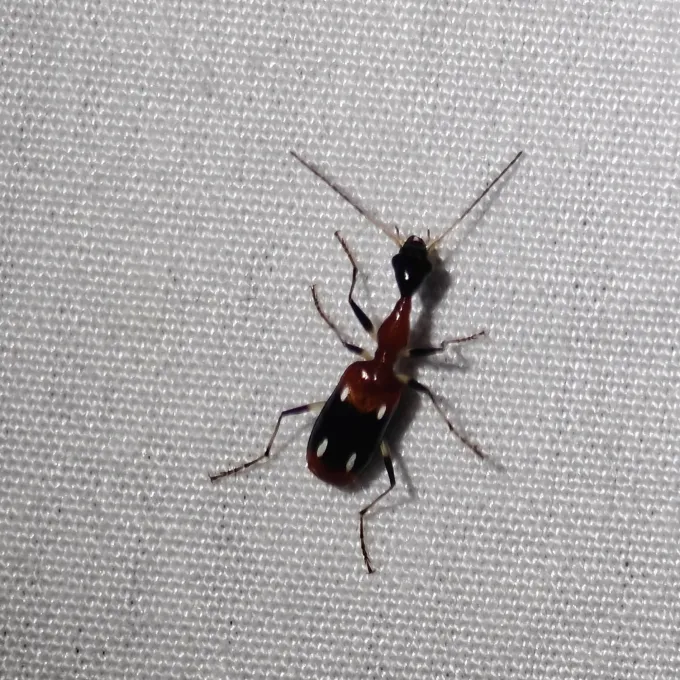
Description
How to identify
Beetles of the genus Casnoidea belong to the family Carabidae (Ground Beetles). While many carabids are beneficial predators, some species within this genus can be found in agricultural fields and may exhibit behaviors that classify them as minor pests depending on the ecological context.
The adults are characterized by an elongated body shape and are often active hunters. Their morphology allows them to navigate effectively through dense vegetation and leaf litter, making them elusive to spot during daylight hours.
The life cycle involves complete metamorphosis (egg, larva, pupa, adult). Development is highly influenced by soil moisture levels and the availability of shelter, where they spend the colder months in diapause.
Larvae primarily reside in the soil or in the leaf litter at the base of plants. They possess strong mandibles, which they use to forage, sometimes causing accidental or incidental damage to soft plant tissues.
Field identification is best achieved through the use of pitfall traps during the growing season. Agronomists should observe for adult activity in the evenings when these beetles are most mobile.
What it damages
The damage caused by Casnoidea is often secondary, but in high population densities, they can cause significant stress to young crops, including cereals and leafy vegetables.
Larval feeding on the root collar and young stems of seedlings can lead to stunted growth, wilting, and increased susceptibility to soil-borne pathogens like fungi and bacteria.
Adult beetles may feed on the foliage, causing irregular holes in leaves. This reduces the overall photosynthetic capacity of the plant, which is particularly detrimental during the early stages of development.
The cumulative damage often serves as an entry point for secondary infections. Therefore, the economic impact is often tied to the spread of plant diseases rather than the direct feeding damage alone.
Crops grown in fields with high organic matter or previous crop residues are more prone to infestation, as these conditions favor the survival of overwintering populations.
Control measures
Cultural control is the most effective approach. Deep plowing in the autumn helps to disrupt the soil environment, significantly reducing the survival rate of larvae and pupae during winter.
Crop rotation remains a fundamental practice to break the life cycle of the pest. Diversifying crop sequences helps minimize the build-up of localized populations in the soil.
Proper field maintenance, including weed control and the removal of crop residues, minimizes hiding spots for the beetles and makes the habitat less hospitable for reproduction.
In cases where infestations exceed the economic threshold, insecticidal seed treatments provide early-season protection to seedlings, significantly reducing the impact of soil-dwelling larvae.
Integrated Pest Management (IPM) strategies suggest monitoring and applying chemical controls only when necessary, while prioritizing the preservation of natural predators within the field ecosystem.
Taxonomy
- Latin name
- Casnoidea
- Order
- Coleoptera (beetles)
- Family
- Carabidae
- EPPO code
- CASNSP
Discussion
No discussions yet — be the first.