
Carterus fulvipes
Carterus fulvipes
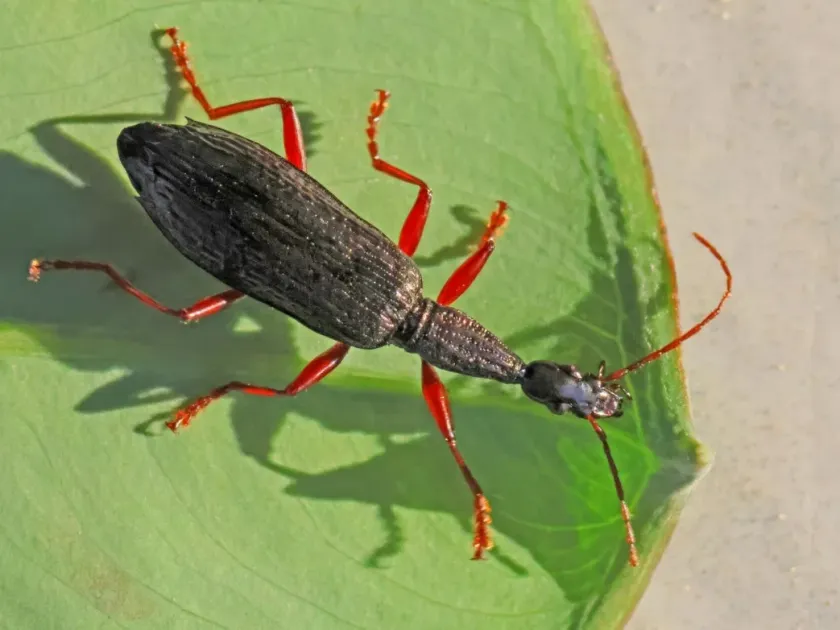
Description
How to identify
Carterus fulvipes is a species of ground beetle belonging to the family Carabidae within the order Coleoptera. Adult beetles are typically 8–10 mm in length with an elongated, dark-colored body.
The most distinctive feature of this species is its reddish-brown legs and antennae, which contrast with the dark elytra, allowing for quick identification in the field.
These beetles possess well-developed wings, enabling them to migrate efficiently between different agricultural habitats in search of food and suitable egg-laying sites.
As nocturnal insects, they spend their days hidden under soil debris or within dense vegetation, only becoming active during evening hours or under cloud cover.
The larvae are campodeiform and highly mobile, equipped with strong mandibles adapted for feeding on the tissues of various grasses and young grain crops.
What it damages
This beetle primarily affects cereal crops, including wheat, barley, rye, and oats, posing a significant risk to yield potential during the ripening stage.
Adult beetles are known to feed on developing grain kernels, often leaving behind hollowed-out ears or causing the grain to shrivel, which significantly reduces quality.
The larvae cause direct damage by feeding on the subterranean parts of young plants, specifically the root system and the tillering node, which can lead to seedling death.
Infestations are often characterized by spotty fields and reduced plant density, which impairs the overall growth and competitive ability of the crop against weeds.
In high-density scenarios, the economic damage to grain crops can be substantial, leading to both quantitative yield loss and qualitative degradation of the harvest.
When it appears
The activity of Carterus fulvipes typically peaks in late spring and early summer, coinciding with the flowering and grain-filling stages of cereal crops.
Adults emerge from their overwintering sites as temperatures rise, actively colonizing fields to feed and complete their reproductive cycle during the summer months.
Larval development occurs primarily in the soil, where they remain active during the autumn, feeding on remnants of the crop or early-emerging winter weeds.
Overwintering is predominantly carried out in the adult stage, with beetles burying themselves deep in the soil or protected under crop residue to survive winter conditions.
Population surges are often influenced by prevailing meteorological conditions, with warm and dry springs generally favoring increased survival rates for the next generation.
Signs of infestation
Visual confirmation of the pest often involves finding chewed ears in the field, showing clear signs of adult feeding activity on the developing grain kernels.
Wilted or yellowing seedlings that fail to develop properly are a common sign of larval feeding on the roots and underground stems of young grain plants.
Monitoring the soil surface under debris during the morning hours often reveals the presence of beetles, which retreat to these areas to avoid the daytime heat.
Edge-of-field infestation patterns are frequently observed, as the beetles migrate into the crop from surrounding uncultivated areas or weedy margins.
A significant reduction in the weight of a thousand grains at harvest time serves as a post-facto indicator of a serious infestation during the growing season.
Control measures
Integrated Pest Management (IPM) strategies are essential for minimizing the impact of this beetle on agricultural productivity through sustainable practices.
- Crop rotation to break the beetle's life cycle and reduce population build-up in the soil.
- Deep plowing in the autumn to disrupt overwintering sites and expose larvae to environmental stress.
- Strict weed management to eliminate alternative food sources for the larvae during the autumn season.
- Use of certified seed treated with systemic insecticidal protectants to shield young plants.
- Chemical intervention using registered insecticides when pest density exceeds established economic thresholds during the grain-filling stage.
Taxonomy
- Latin name
- Carterus fulvipes
- Order
- Coleoptera (beetles)
- Family
- Carabidae
- EPPO code
- CRTEFU
Discussion
No discussions yet — be the first.