
Dried fruit beetle
Carpophilus pilosellus
Description
How to identify
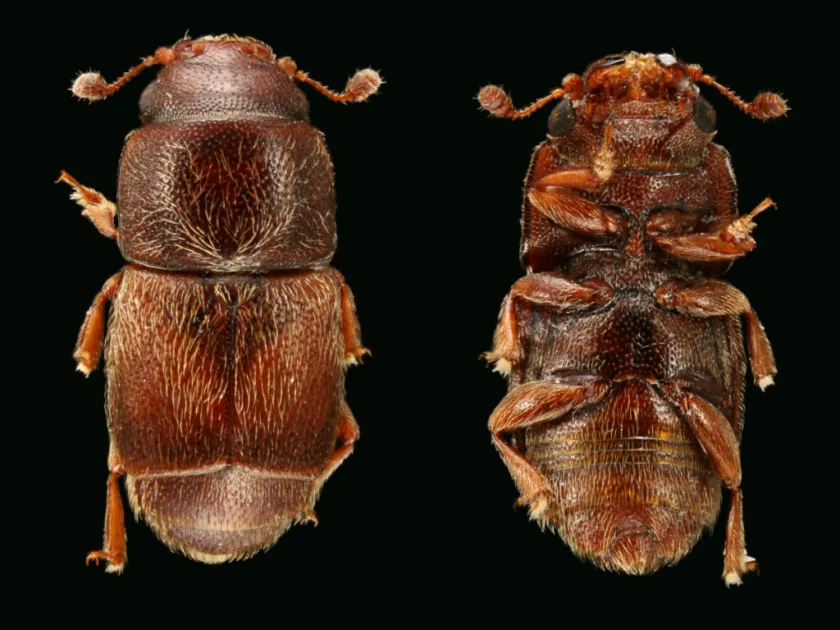
The dried fruit beetle (Carpophilus pilosellus) is a member of the Nitidulidae family. It is a small insect, measuring approximately 2 to 3 mm in length, with an oval, dark brown or black body.
A distinctive feature of this species is the presence of dense, short hairs covering the elytra (wing covers), which is characteristic of many members of the Carpophilus genus.
The larvae are creamy-white with a cylindrical body, featuring well-developed mandibles suitable for feeding on plant tissues and stored products. They undergo complete metamorphosis during their development.
The life cycle involves egg, larva, pupa, and adult stages. Under favorable temperatures (around 25-30°C) and sufficient humidity, the entire development cycle can be completed in approximately 3 to 4 weeks.
Adult beetles are strong flyers, allowing them to rapidly migrate from fields to storage facilities, processing plants, and warehouses as soon as the harvest begins.
What it damages
These beetles primarily target cereals such as wheat, corn, rice, and barley. They show a strong preference for grain with high moisture content, which facilitates their feeding and development.
Beyond grains, the dried fruit beetle is a common pest of dried fruits, nuts, and various vegetables in the field, particularly those that have suffered mechanical injury or are beginning to decay.
In storage, both adults and larvae feed on the grain embryo and endosperm. This feeding behavior causes significant loss in seed viability and reduces the total weight and market quality of stored stocks.
Damage caused by the beetles creates entry points for secondary infections, such as mold and fungal pathogens, which can rapidly spread through the grain mass and exacerbate quality loss.
Infestation often leads to the heating of grain piles, as metabolic heat from insects and associated fungi accumulates, potentially ruining entire batches of stored products.
When it appears
Activity is highly dependent on temperature. In heated storage facilities, the beetle can remain active and continue its reproductive cycle throughout the entire year.
Under field conditions, adults emerge in the spring when average daily temperatures exceed 15°C. They move onto ripening crops, often attracted by the scents released by fermenting or decaying fruit.
Peak infestation in storage typically occurs during the late summer and autumn, coinciding with the arrival of newly harvested crops into the warehouses.
During colder months, if temperatures drop below 10°C, development slows down significantly. The insects survive by overwintering in cracks in floors, wall crevices, or hidden debris.
Large populations often build up rapidly once grain is stored in suboptimal conditions (high moisture), as the beetles capitalize on the abundance of readily available nutrients.
Signs of infestation
One of the primary signs of infestation is a distinct, pungent, sour or musty odor emanating from the grain, which is a byproduct of the insects' feeding and fungal growth.
Visual inspection often reveals the presence of small, dark, active beetles moving on the surface of the grain or within the top layers of the grain pile.
Accumulation of fine dust, larval skins (exuviae), and fecal pellets within the grain mass are clear indicators of an active, established population.
Seeds affected by the larvae often show hollowed-out sections, particularly around the germ area, leading to poor germination rates and reduced nutritional value.
- Presence of beetles on the grain surface.
- Elevated temperature readings within the grain mass.
- Hollowed seeds and granular debris.
- Adults trapped in monitoring devices.
Control measures
Effective management begins with strict sanitation: thoroughly cleaning storage areas of all spilled grain and debris before the arrival of the new harvest is critical to preventing infestation.
Controlling grain moisture is the most effective preventative measure; keeping moisture levels below 13% prevents the beetles from thriving and limits fungal colonization.
Utilizing aeration systems to maintain low temperatures in the stored grain mass helps to slow down insect metabolic rates and prevents the localized heating that attracts the pests.
In cases of severe infestation, fumigation with registered chemical products is necessary to eliminate both larvae and adults, provided that strict safety protocols are observed.
Monitoring using pheromone-baited traps or adhesive strips allows for early detection of the beetles, enabling targeted interventions before the population reaches damaging levels.
Taxonomy
- Latin name
- Carpophilus pilosellus
- Order
- Coleoptera (beetles)
- Family
- Nitidulidae
- EPPO code
- CARHPI
Discussion
No discussions yet — be the first.