
Carpophilus pallipennis
Carpophilus pallipennis
Description
How to identify
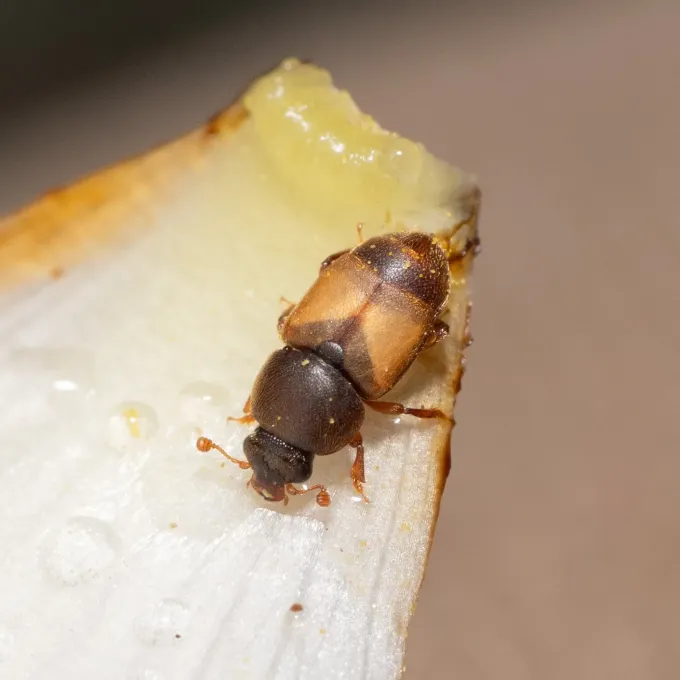
Carpophilus pallipennis is a small beetle belonging to the Nitidulidae family (sap beetles) within the order Coleoptera. Adult beetles typically measure between 2 and 3 millimeters in length.
The body is oval-shaped, generally ranging in color from reddish-brown to dark brown or black, often with distinctive light-colored patches on the wing covers (elytra).
The larvae are yellowish-white with a darkened head capsule and are adapted for life within the tissues of rotting or ripening fruit, reaching about 4-5 mm when mature.
Adults are highly mobile and are known to fly over significant distances, being strongly attracted to the odors emitted by fermenting plant materials and ripe produce.
The life cycle encompasses a complete metamorphosis, with pupation commonly occurring in the soil, which serves as a critical reservoir for the beetle's population maintenance.
What it damages
Both adult beetles and their larvae cause primary damage by feeding on the flesh of ripening or mechanically damaged fruits in fields or storage facilities.
The pest is a significant threat to cucurbits, including melons and watermelons, where they infiltrate the fruit through cracks or wounds in the rind to feed on the interior.
Beyond cucurbits, the beetle also targets tomatoes, peppers, and various tree fruits, particularly those that have suffered from sunscald or early signs of decay.
Feeding activities introduce various pathogens, including fungi and bacteria, which rapidly proliferate within the fruit, leading to total spoilage and mold development.
The resulting damage renders the produce unmarketable, causing substantial economic losses, especially if the infestation remains undetected until harvesting or shipping.
When it appears
The activity of Carpophilus pallipennis typically commences as temperatures rise in the late spring and early summer, marking the emergence from overwintering sites.
The population peaks during the mid-to-late summer months, coinciding with the fruit maturation stage when the release of aromatic compounds is at its highest.
In favorable climates, several generations can be completed within a single growing season, leading to cumulative pressure on crops as the summer progresses.
As temperatures decline during the autumn, the beetles seek protected habitats such as the soil, debris, or indoor storage areas to enter a state of dormancy.
If temperatures are maintained artificially, such as in heated storage facilities, the beetle can remain active throughout the winter, posing a continuous threat.
Signs of infestation
The initial indication of an infestation is the presence of small entry holes on the fruit surface, often accompanied by darkening or softening of the surrounding area.
A distinctive fermented or sour odor is frequently noticeable near infested produce, resulting from the microbial breakdown accelerated by the beetles' feeding.
Upon cutting open an affected fruit, one can find colonies of small larvae inhabiting the inner tissues, where they create irregular, tunnel-like damage.
Secondary signs include visible mold growth and surface lesions that serve as an entry point for additional pests and disease-causing organisms.
Visual monitoring during the early morning or evening hours often reveals groups of adult beetles clustered on overripe or damaged parts of the fruit.
Control measures
Sanitation is the most critical management practice; it involves the immediate removal and proper disposal of all culls, rotting fruit, and debris from the fields.
Deep plowing after harvest helps destroy overwintering pupae in the soil, significantly reducing the potential population size for the following season.
The use of mass-trapping techniques, utilizing bait stations with fermenting attractants, is an effective strategy for reducing adult beetle numbers in infested areas.
Chemical control via insecticides may be necessary in extreme cases, provided that harvest intervals are strictly observed to ensure food safety standards are met.
Crop rotation and keeping production areas distanced from composting sites or storage areas are essential to prevent cross-infestation from legacy sources of the pest.
Taxonomy
- Latin name
- Carpophilus pallipennis
- Order
- Coleoptera (beetles)
- Family
- Nitidulidae
- EPPO code
- CARHPA
Discussion
No discussions yet — be the first.