
Dried fruit beetle
Carpophilus hemipterus
Description
How to identify
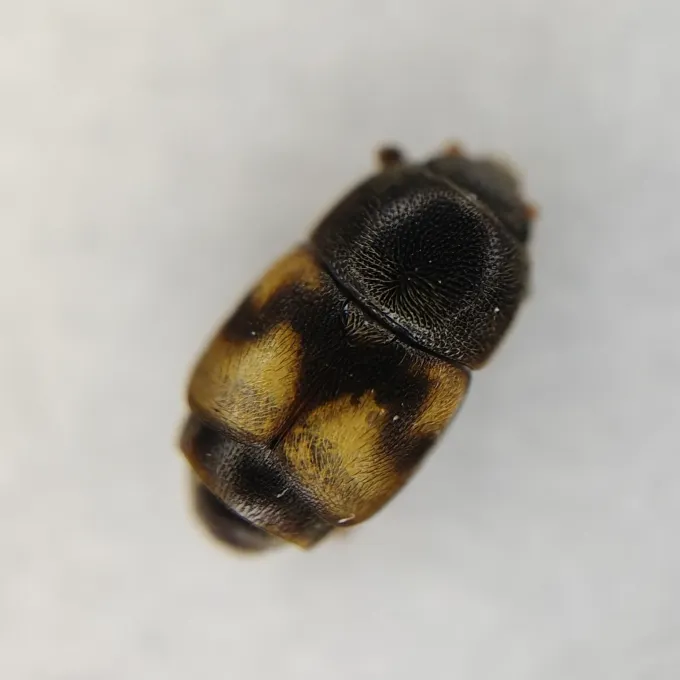
The dried fruit beetle (Carpophilus hemipterus) belongs to the Nitidulidae family. It is a small insect, typically measuring 2 to 4 mm in length, with an oval and slightly flattened body shape.
The beetle is generally dark brown or black in color. A key identifying feature is its short wing covers (elytra) which do not reach the end of the abdomen, exposing the last two abdominal segments.
Each elytron has two distinct yellowish or reddish spots, one near the base and another near the tip, which makes them easily distinguishable from other garden beetles.
Larvae of the beetle are creamy-white, reaching about 5 to 7 mm in length. They are highly active and possess a body structure optimized for feeding within soft, decaying plant tissues.
These insects are strong fliers and are attracted to the volatiles produced by fermenting fruits, allowing them to rapidly colonize new food sources over significant distances.
What it damages
This beetle is a serious pest of both field crops and stored agricultural commodities. It primarily targets fruits that are overripe, damaged by other pests, or already beginning to rot.
In orchards, it causes damage to stone fruits like peaches, apricots, and plums, as well as pome fruits like apples and pears. The damage often serves as an entry point for secondary infections.
Economic damage is most severe in drying facilities and warehouses. The beetle infests dried dates, figs, raisins, and prunes, often rendering entire batches unfit for human consumption.
By feeding on the produce, the beetles introduce spores of various molds and bacteria. This leads to rapid spoilage and a characteristic sour smell caused by the fermentation process.
In addition to fruits, the pest can infest stored grains and corn if the moisture levels are high enough to support the development of larvae and bacterial growth.
When it appears
The beetle's activity begins in late spring as temperatures rise. Warm, humid weather is the most favorable condition for its rapid reproduction and increased mobility.
Peak populations in orchards typically coincide with the fruit ripening season, especially when the weather is warm and conducive to the fermentation of bruised or cracked fruit.
In temperature-controlled storage facilities, the beetle can continue its life cycle throughout the year if conditions of high humidity and food availability are maintained.
During the winter, the beetles undergo a period of reduced activity. They overwinter in sheltered locations such as tree bark crevices, decaying plant debris, or cracks in warehouse structures.
Sanitation practices before the start of the next season are crucial, as the overwintered adults are the primary source of infestation for the new crop cycle.
Signs of infestation
Signs of infestation include irregular holes in the fruit flesh, often associated with a moist, fermenting appearance and a noticeable acidic odor emanating from the damaged tissue.
In stored dried fruits, evidence includes the presence of adult beetles, small larvae, and dark excrement or "frass" that gives the product a dusty or dirty appearance.
Orchard managers may observe premature fruit drop. When these fallen fruits are inspected, one can usually find multiple beetles or larvae actively feeding inside the cavities.
The development of mold patches on the surface of dried fruit is often a secondary indicator that a beetle population has already compromised the integrity of the storage container.
- Presence of larvae within the fruit pulp
- Visible adult beetles near damaged produce
- Acidic, fermented odor from infested storage units
- Fine frass or dust accumulation on packaged products
Control measures
Strict orchard sanitation is the most effective preventative measure. All dropped, rotting, or damaged fruit must be removed from the field and destroyed to eliminate breeding grounds.
Warehouse hygiene is equally critical. Regular cleaning of storage areas to remove fruit fragments, spills, and dust prevents the buildup of beetle populations.
Using pheromone traps or food-based lures is an effective strategy for monitoring beetle populations and reducing adult numbers during the critical ripening and harvest periods.
For stored goods, the use of airtight packaging and low-temperature storage is highly recommended to inhibit the growth and development of the pest larvae.
If large-scale infestations occur in warehouses, professional fumigation or the application of registered insecticides may be necessary, strictly following food safety regulations.
Taxonomy
- Latin name
- Carpophilus hemipterus
- Order
- Coleoptera (beetles)
- Family
- Nitidulidae
- EPPO code
- CARHHE
Discussion
No discussions yet — be the first.