
Violet ground beetle
Carabus violaceus
Description
How to identify
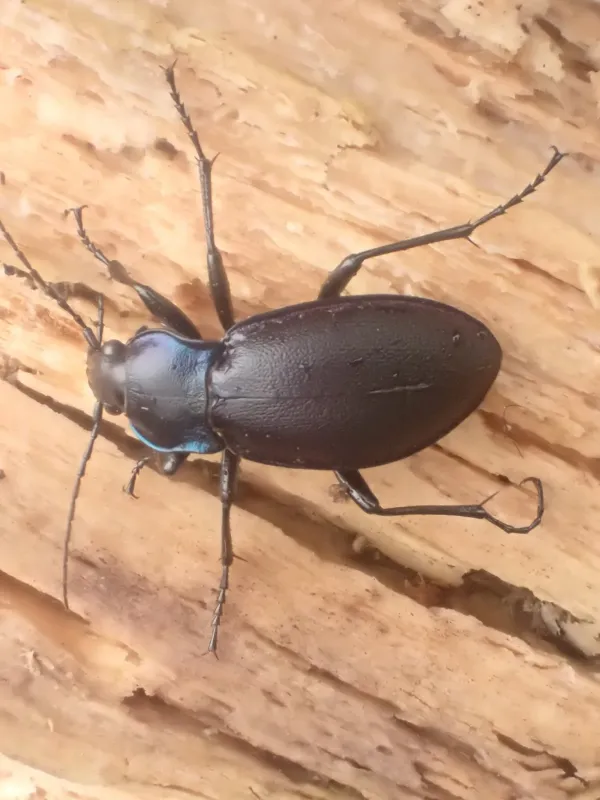
The violet ground beetle (Carabus violaceus) is a prominent member of the Carabidae family, measuring between 20 and 30 mm in length.
This beetle is easily recognized by its smooth, black body with a distinct violet or indigo iridescent metallic sheen along the edges of its elytra.
Unlike many other insects, this species is flightless as its wing cases are fused, restricting it to a terrestrial lifestyle.
They are primarily nocturnal, spending the daylight hours concealed under rocks, leaf litter, or within debris in the garden.
The larvae are equally predatory, possessing powerful mandibles that allow them to hunt effectively in the upper layers of the soil.
What it damages
The violet ground beetle is not a plant pest; it is a highly beneficial predator that contributes significantly to natural pest control.
Its primary diet consists of slugs, snails, and various soil-dwelling larvae, which are known to cause damage to vegetable crops.
There is no evidence that this species feeds on healthy vegetation, making it an essential ally for any gardener or farmer.
By consuming large numbers of slugs, it prevents potential outbreaks of these harmful mollusks that can decimate young lettuce and cabbage plants.
Treating this beetle as a pest is a common misconception that can result in the loss of one of your most effective natural defenders.
When it appears
Adults become active early in the spring as soon as the soil temperatures rise, beginning their hunting cycle in the garden.
Activity peaks throughout the summer, particularly on warm, humid nights when they forage extensively for prey.
As autumn approaches, the beetles prepare for winter, typically seeking shelter deep within the soil or under dense organic layers.
The life cycle involves a complete metamorphosis, ensuring that both larval and adult stages actively contribute to pest reduction.
The species generally overwinters as both adults and late-stage larvae, allowing them to remain a constant presence in the local ecosystem.
Signs of infestation
You can identify the presence of these beetles by checking under mulch, woodpiles, or garden stones during the day.
An indirect sign of their activity is a noticeable reduction in the slug and snail population across your vegetable beds.
Since they are nocturnal, you are unlikely to see them during the day unless you disturb their hiding places.
No leaf damage or root system degradation is associated with this species, confirming its status as a non-pest insect.
If you encounter a large, dark beetle with a purple sheen, you have an effective biocontrol agent patrolling your garden.
Control measures
No control measures are needed for the violet ground beetle; instead, efforts should be focused on conservation.
To encourage their presence, avoid the use of broad-spectrum insecticides which kill beneficial predators alongside pests.
Maintaining a variety of habitats, such as hedge strips or non-cultivated edges, provides essential shelter for these beetles.
- Minimize soil disturbance to protect overwintering sites.
- Avoid chemical slug pellets that could harm these natural predators.
- Promote biodiversity to support long-term ecological balance.
Integrating these beneficial insects into your pest management strategy is a fundamental practice in sustainable and organic horticulture.
Taxonomy
- Latin name
- Carabus violaceus
- Order
- Coleoptera (beetles)
- Family
- Carabidae
- EPPO code
- CARAVI
Discussion
No discussions yet — be the first.