
Problematic ground beetle
Carabus problematicus
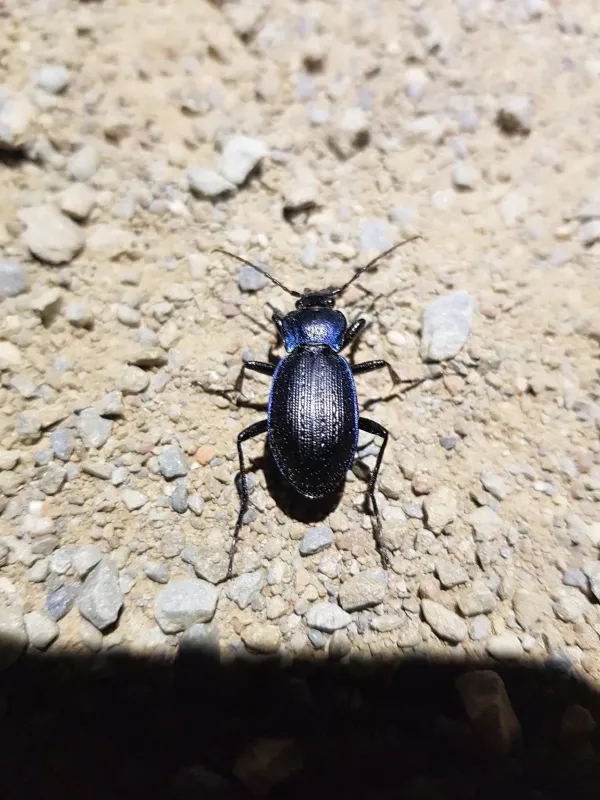
Description
How to identify
The problematic ground beetle, scientifically known as Carabus problematicus, belongs to the family Carabidae. It is a large, flightless beetle often found in damp habitats and agricultural fields.
Adult beetles typically measure between 20 and 30 millimeters in length. Their bodies are elongated, dark in color, and possess a rough, granulated surface texture on the elytra.
Larvae are mobile and campodeiform, primarily living within the topsoil or under debris. They share the same nocturnal habits as the adults, making them elusive during the day.
Identification often requires careful examination of morphology, as they can be easily confused with other ground beetle species that are beneficial predators of harmful agricultural insects.
These beetles are primarily nocturnal, emerging from their soil shelters only after dark to forage. Their powerful mandibles are adapted for feeding on various organic materials, including plant tissues.
What it damages
While many Carabidae are beneficial, C. problematicus can occasionally act as a pest, especially when their populations reach high densities in areas with sensitive young crops.
The damage is primarily inflicted during the early stages of plant growth. Both adults and larvae can consume the succulent tissues of seedlings, leading to gaps in the stand.
Cereal crops are particularly susceptible during the germination and early vegetative phases, where feeding on stems and leaves can cause significant plant stress or mortality.
In vegetable gardens or vegetable fields, these beetles may target the root neck or tender stems, causing the plant to wither and eventually collapse.
Crop loss due to this beetle is often underestimated because the nocturnal feeding habit hides the direct link between the damage observed and the perpetrator.
When it appears
Adult beetles are most active during the spring and early summer months, which coincide with the most vulnerable developmental stages of many annual crops.
The life cycle involves overwintering as adults, usually deep in the soil or protected under thick layers of leaf litter, emerging when temperatures rise in spring.
Breeding and egg-laying occur in the soil. The subsequent development of larvae takes several months, making them a continuous presence throughout the growing season.
Environmental conditions like humidity play a key role in their activity levels. Wet, mild weather during the spring months often leads to increased surface movement.
As the season progresses toward autumn, adults move back into the soil to prepare for their hibernation period, reducing their overall impact on late-season crops.
Signs of infestation
Visual signs of infestation include uneven edges on leaves or completely severed stems in young plants, which are characteristic of the beetle’s chewing mechanism.
In the field, farmers may notice patches of missing or stunted plants. Night-time monitoring with light sources is the most effective way to detect the insects directly.
Soil excavations in suspected areas may reveal the presence of large larvae, serving as an indicator of a potential infestation risk for the next planting season.
The presence of beetle feces near the base of damaged plants can also serve as a diagnostic sign during field surveys conducted early in the morning.
Persistent damage in areas where plant density is lower often points to localized clusters of this pest, which thrive in moist, undisturbed soil conditions.
Control measures
Effective management of Carabus problematicus relies on integrating cultural practices with chemical interventions only when necessary to preserve beneficial insects.
Crop rotation is one of the most effective methods to prevent the build-up of beetle populations in a specific field, as it disrupts their preferred habitat and food sources.
Deep plowing in the autumn helps disturb the soil environment, exposing hibernating beetles and larvae to harsh weather conditions and natural predators.
- Apply targeted insecticides only if economic injury thresholds are exceeded.
- Use seed treatments to protect the most vulnerable germination phase.
- Maintain field boundaries that support natural enemies such as birds or predatory spiders.
Monitoring is crucial to ensure that control measures are applied correctly, balancing the need for crop protection with the preservation of overall field biodiversity.
Taxonomy
- Latin name
- Carabus problematicus
- Order
- Coleoptera (beetles)
- Family
- Carabidae
- EPPO code
- CARAPR
Discussion
No discussions yet — be the first.