
Necklace ground beetle
Carabus monilis
Description
How to identify
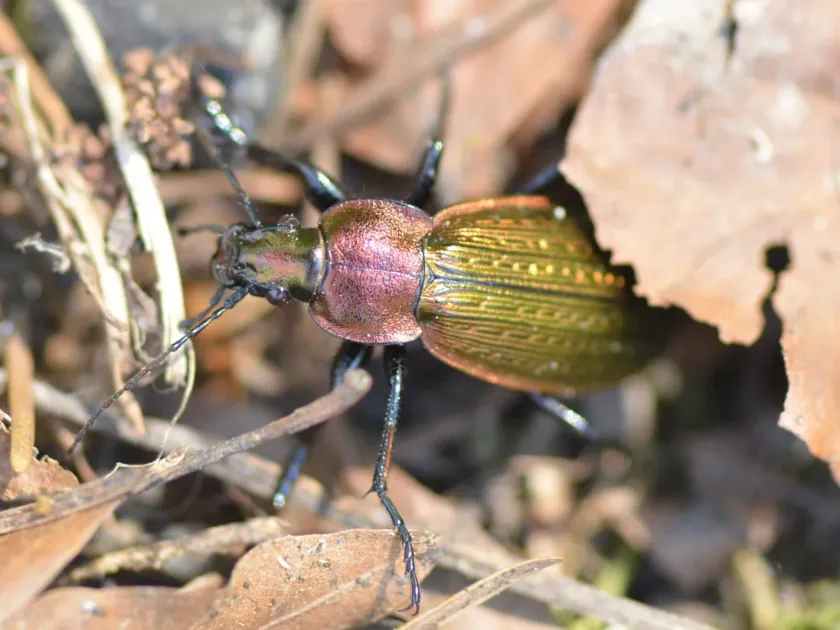
The necklace ground beetle (Latin Carabus monilis) is a prominent member of the Carabidae family within the order Coleoptera. Adult beetles measure between 20 and 30 mm in length and are recognized by their metallic sheen.
Their elytra exhibit a unique sculpted texture, consisting of longitudinal rows of punctures and raised tubercles that resemble beads on a necklace. This species is highly mobile and possesses strong mandibles typical of predatory beetles.
What it damages
Generally, these beetles are considered beneficial predators in agricultural ecosystems, feeding on slugs, caterpillars, and other agricultural pests. They play a significant role in natural pest suppression.
However, under specific conditions of food scarcity or high population density, they may shift towards feeding on young plant sprouts. This can cause visible damage to cereal crops, sugar beets, and seedlings, affecting the overall establishment of the stand.
When it appears
The lifecycle begins with adult beetles emerging from hibernation sites in the soil or under debris during early spring. The peak of adult activity is typically observed during May and June, which coincides with the mating and egg-laying period.
Larvae remain active throughout the summer, living primarily in the soil. They are highly efficient hunters, feeding on various small soil invertebrates as they progress through several larval stages before pupation.
Signs of infestation
Signs of feeding include irregular, chewed edges on young leaves and stems near the soil surface. Because the beetle feeds mainly at night, direct observation during the day is unlikely.
Growers should look for daytime hiding spots such as beneath stones, soil clods, or organic mulch. Their presence is often detected by monitoring traps or by physical inspection of the crop edges near field margins at dusk.
Control measures
Control measures should be balanced with the beneficial role of these insects as natural predators. Radical chemical intervention is usually discouraged unless the beetle population causes significant economic loss.
Cultural management, such as appropriate crop rotation and timely tillage, remains the most effective way to regulate their presence. Avoiding excessive use of broad-spectrum insecticides helps preserve this predator population in the field.
Taxonomy
- Latin name
- Carabus monilis
- Order
- Coleoptera (beetles)
- Family
- Carabidae
- EPPO code
- CARAMO
Discussion
No discussions yet — be the first.