
Carabus irregularis
Carabus irregularis
Description
How to identify
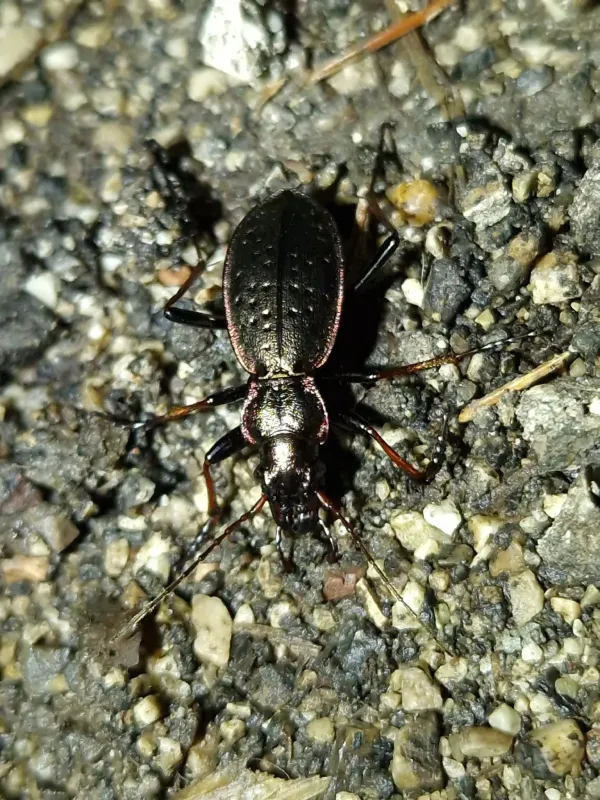
Carabus irregularis is a large ground beetle belonging to the Carabidae family, known for its elongated body and distinctively textured elytra. Adults typically measure between 20 and 30 mm in length.
The beetle possesses a dark, often metallic appearance, which serves as a natural camouflage within leaf litter and dense vegetation. Its head is relatively compact, featuring powerful, sickle-shaped mandibles.
These insects are equipped with long, robust legs designed for rapid running, allowing them to traverse both soil surfaces and plant stalks with great agility.
Larvae are campodeiform, characterized by their high mobility and well-developed jaws, enabling them to hunt effectively in the soil environment.
Typically found in moist forests or meadows, the species often ventures into agricultural fields, especially those located near wooded or wetland areas.
What it damages
While primarily predatory, Carabus irregularis can switch to a phytophagous diet when insect prey becomes scarce, leading to significant crop damage.
In young cereal crops, adults may chew through the base of stems and leaves, causing stand thinning and, in severe cases, the death of young seedlings.
Vegetable crops such as beets, carrots, and cabbage are particularly susceptible to damage at the seedling stage, as beetles frequently destroy growing points.
In orchard environments, the beetle may damage the flesh of fallen fruit or low-hanging berries, often creating entry points for secondary fungal infections.
Under favorable weather conditions, populations can increase, leading to noticeable yield losses and reduced quality of harvested produce.
When it appears
Adults emerge from hibernation in early spring as soon as soil temperatures reach 8-10 degrees Celsius, initiating the active feeding and mating season.
Activity peaks during May and June, when the insects are most visible and engaged in reproductive behavior throughout the fields.
During the peak of summer, beetles tend to reduce diurnal activity, becoming nocturnal and seeking shelter in cooler, shaded environments under dense foliage.
Autumn triggers a second period of activity as the beetles prepare for the winter, moving towards suitable underground locations for overwintering.
The species is long-lived, and adults are capable of surviving over multiple seasons, which contributes to the resilience of the local population.
Signs of infestation
Primary signs of infestation include irregular, jagged leaf edges, which differ significantly from the smooth cuts typically made by caterpillars or other chewing insects.
Stems of young plants that appear severed or heavily gnawed at the soil level are a hallmark of ground beetle feeding activity.
The presence of beetle burrows near the base of affected plants, combined with sightings of adult beetles during soil cultivation, confirms an active infestation.
Fruit damage manifesting as deep, irregular gouges or cavities, often accompanied by early signs of rot, is a clear indicator of beetle presence.
Empty exuviae or direct visual confirmation of the beetles under plant debris or soil clumps provide additional evidence of their presence in the crop ecosystem.
Control measures
Cultural control methods involve maintaining clean fields by removing weeds and plant debris, which serves to eliminate the beetles' natural daytime refuges.
Deep autumn plowing of the soil is effective in destroying overwintering sites, significantly reducing the survival rate of the population for the following season.
Installing physical barriers around sensitive plots can provide temporary relief by preventing beetle movement into vulnerable crop areas.
Biological control includes promoting a healthy ecosystem by encouraging the presence of natural predators, such as insectivorous birds and small mammals.
When necessary, targeted insecticide applications should be used only after confirming that the pest threshold has been exceeded, prioritizing environmentally friendly options.
Taxonomy
- Latin name
- Carabus irregularis
- Order
- Coleoptera (beetles)
- Family
- Carabidae
- EPPO code
- CARAIR
Discussion
No discussions yet — be the first.