
Spanish ground beetle
Carabus hispanus
Description
How to identify
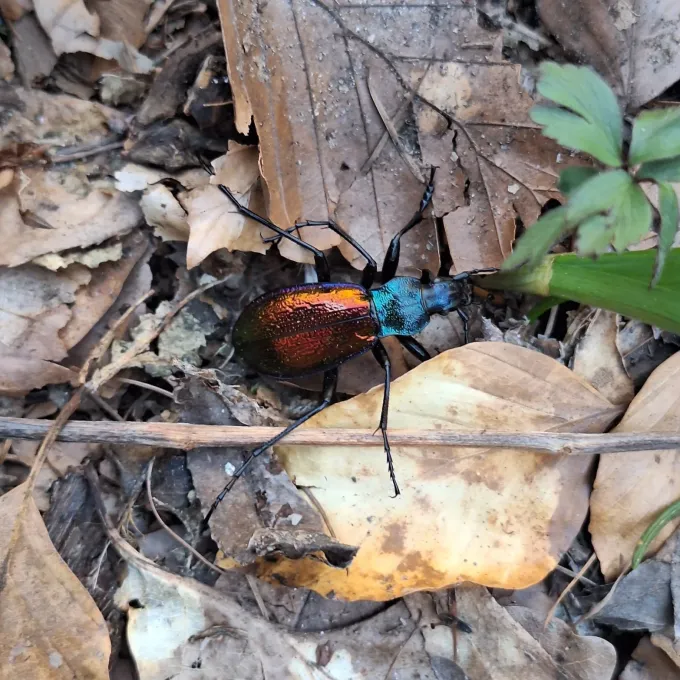
The Spanish ground beetle (Carabus hispanus) is a large, predatory insect belonging to the family Carabidae, native to parts of Western Europe.
Adult beetles are recognizable by their robust, metallic-colored elytra, often shimmering with blue, purple, or greenish hues, and their long, powerful legs.
They typically reach a body length of about 30–40 mm, possessing strong mandibles that are evolutionarily designed for predation on invertebrates.
The larvae are campodeiform, highly active, and primarily live within the soil layer or under dense leaf litter to escape predators and desiccation.
This species is predominantly nocturnal, which is a key behavioral trait for both researchers and farmers trying to locate their presence in the field.
What it damages
Although Carabus hispanus is primarily an insectivore, it may incidentally damage plants when the population of its natural prey declines.
Vegetable crops such as strawberries, potatoes, and tomatoes are particularly vulnerable if they are in close contact with the soil surface.
The beetles gnaw at the tender stems and fruit tissue, creating deep wounds that can stunt the plant's overall growth and productivity.
The damage is usually concentrated on the lower levels of the plants, often making the produce unsuitable for the fresh market due to physical lesions.
In addition to physical damage, open wounds on the plant stems often become entry points for secondary bacterial or fungal infections.
Signs of infestation
The most common sign of infestation is the presence of irregular, chewed-out cavities on leaves or fruits located near the base of the plant.
Small amounts of debris or frass found near the site of injury are typical indicators that a nocturnal beetle has been feeding in the area.
Wilted plants during the morning inspection, specifically showing damage at the soil line, often suggest nocturnal feeding activity.
Active specimens can be spotted under stones, wood piles, or thick layers of mulch during the daytime when they retreat from the sun.
Using pitfall traps buried flush with the soil surface is a reliable method to confirm the presence of this specific beetle in the agro-ecosystem.
Control measures
Sanitation is a primary control measure: keep the fields and garden plots free of weeds and crop debris to minimize nesting sites for the beetles.
Mechanical cultivation and frequent hoeing of the soil disturb the beetle's habitat and help reduce the survival rate of the larval stages.
Barrier methods, such as using protective netting or raised beds for sensitive berry crops, can effectively prevent the beetles from reaching the fruit.
If populations reach economic threshold levels, chemical intervention with selective insecticides can be employed, following local safety regulations.
Promoting the presence of natural predators, such as birds or predatory mammals like hedgehogs, can provide sustainable long-term control of beetle populations.
Taxonomy
- Latin name
- Carabus hispanus
- Order
- Coleoptera (beetles)
- Family
- Carabidae
- EPPO code
- CARAHI
Discussion
No discussions yet — be the first.