
Granulate ground beetle
Carabus granulatus
Description
How to identify
The granulate ground beetle (Carabus granulatus) is a member of the family Carabidae. While most ground beetles are beneficial predators, this specific species can occasionally become a pest in agricultural settings.
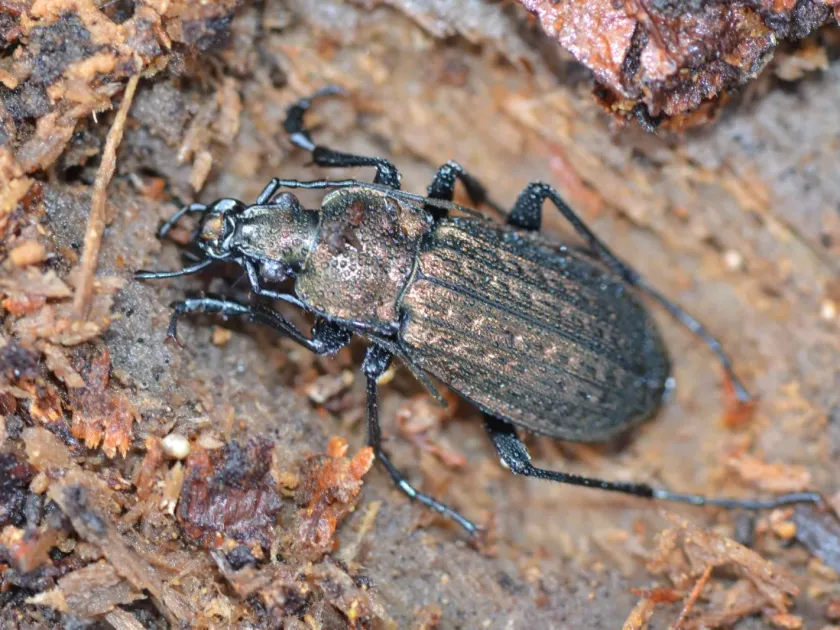
Adult beetles are relatively large, typically measuring 16–23 mm in length. Their bodies are characterized by a dark metallic sheen, ranging from bronzy-black to brown.
The elytra, or wing covers, display a distinct textured appearance with numerous granules and three prominent longitudinal ridges, which serve as their primary identification mark.
The larvae are mobile, elongated, and dark in color, possessing well-developed mandibles suitable for hunting or chewing through plant matter.
As flightless insects, these beetles rely on ground movement, making them residents of moist habitats such as fields, meadows, and shaded areas near water sources.
What it damages
In cases of high population density, Carabus granulatus can cause significant damage to young grain crops, particularly during the seedling stage.
Adults primarily feed by gnawing on the bases of stems and tender green leaves, which can lead to the wilting and death of young plant shoots.
Larval feeding is equally detrimental, as they frequently target roots and subterranean plant parts, causing uneven stand establishment in fields.
The resulting damage often leaves the affected crops susceptible to secondary pathogens, including bacteria and fungi, which thrive in the damaged plant tissues.
The economic impact is most severe in wet spring conditions when the beetle's activity overlaps with the early vegetative growth phase of cereal crops.
When it appears
The life cycle begins with the overwintering of adults and larvae in the soil or under surface debris, resuming activity as soon as soil temperatures rise in spring.
Spring serves as the period of peak adult activity, as beetles emerge to feed intensively and locate mates for the breeding season.
Larval development typically peaks in May and June, coinciding with periods of high soil moisture, which is essential for their growth and survival.
A second, less aggressive phase of activity often occurs in late summer as the new generation reaches maturity before entering hibernation.
Environmental conditions, specifically rainfall patterns, dictate the population pressure on crops, with wetter years correlating with higher infestation risks.
Signs of infestation
The primary symptom of an infestation is the patchiness of field stands, characterized by clipped stems and the appearance of thinning areas in the rows.
Direct observation of the beetles can be made during the twilight hours or early morning, when they are most active on the soil surface.
Field diagnostics include checking the plant base for signs of uneven gnawing, which differentiates this pest from root-boring larvae like wireworms.
Soil-dwelling larvae can be detected using standardized soil sampling techniques or simple pitfall traps placed throughout the field.
Early identification is crucial, as the damage is often irreversible once the seedling stem has been severed at the collar level.
Control measures
Effective management begins with mechanical soil disturbance, such as deep autumn plowing, which destroys overwintering sites and exposes larvae to predators.
Crop rotation remains the most sustainable method, as breaking the cycle of cereal production deprives the beetles of their primary food source.
Sanitation practices, including the removal of weeds and crop residues, significantly reduce the availability of refuge and food for the beetle population.
Seed treatment with systemic insecticides is a highly effective prophylactic measure, providing protection during the vulnerable seedling germination phase.
In cases of severe infestation, targeted insecticide applications applied during the evening are recommended to minimize crop loss and ensure chemical efficiency.
Taxonomy
- Latin name
- Carabus granulatus
- Order
- Coleoptera (beetles)
- Family
- Carabidae
- EPPO code
- CARAGR
Discussion
No discussions yet — be the first.