
Smooth ground beetle
Carabus glabratus
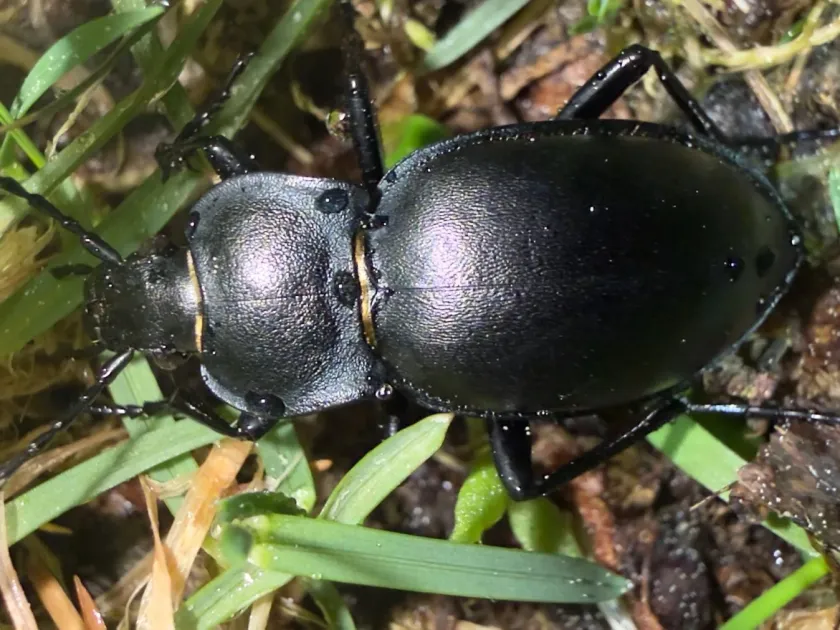
Description
How to identify
The smooth ground beetle (Carabus glabratus) belongs to the Carabidae family of the Coleoptera order. This large beetle measures between 20 and 35 mm in length and is distinguished by its smooth, shiny, dark blue or black elytra.
The insect features an elongated body and strong mandibles adapted for capturing and consuming prey. Its long, filiform antennae are composed of eleven segments, which is a key identification trait for this species.
Larvae of this beetle are campodeiform and highly mobile, typically residing in the soil or under organic debris, where they remain hidden from predators during the day.
Adult beetles are primarily nocturnal, preferring moist environments such as forest borders, woodlands, and humid fields, where they find shelter under stones or leaf litter.
Due to their preference for damp habitats, these beetles are often found encroaching on agricultural fields that border natural, moist vegetation areas.
What it damages
While ground beetles are generally considered predators, the smooth ground beetle can exhibit omnivorous behavior, causing damage to young crop seedlings when preferred food sources are scarce.
Damage is characterized by beetles or larvae consuming cotyledons, young leaves, and growing points, which can lead to plant wilting or total seedling loss in severe cases.
Cereals and certain row crops are particularly vulnerable during their early growth stages, especially when weather conditions favor higher beetle activity and mobility.
Signs of feeding include ragged leaf edges and missing segments of seedlings, which can significantly decrease crop density if not addressed during the initial stages of development.
Mechanically damaged plants become more susceptible to opportunistic fungal and bacterial pathogens, which can result in secondary damage and reduced overall crop health.
When it appears
Activity typically begins in the early spring as soil temperatures rise to 10-12 degrees Celsius, coinciding with the germination and emergence of young crops.
Population density often peaks during the summer months when adult beetles mate and larvae begin their development in the soil, spanning over several years in some environments.
As autumn approaches, adult beetles search for overwintering sites, often burrowing deep into the soil or hiding under dense vegetation to survive until the following season.
Environmental factors like soil moisture and humidity play a critical role in determining their activity levels, making outbreaks more frequent during wet years.
Migration onto fields usually occurs gradually, starting from the edges closest to their natural habitats, necessitating careful surveillance of these transition zones.
Signs of infestation
The primary sign of infestation is the discovery of feeding damage on the edges of fields that are adjacent to wooded areas, hedgerows, or uncultivated moist grounds.
Seedling loss without signs of slime trails (which distinguish them from slugs) is a strong indicator that the damage is being caused by beetles or other insects.
Active burrows near the base of damaged plants are a clear indication of insect presence, suggesting that pests are sheltering in the soil during the daytime.
Visual observation during night hours using flashlights can reveal adult beetles foraging directly on the seedlings, confirming the identification of the pest.
Systematic field scouting, particularly along the perimeters, is the most effective way to detect the early signs of movement before damage reaches an economic threshold.
Control measures
Effective management begins with proper tillage practices, such as deep plowing, which disrupts the beetles' overwintering sites and reduces their population density.
Implementing border-line insecticide treatments along the edges of fields can effectively stop the beetles from migrating into the crop, minimizing the need for whole-field spraying.
Maintaining clean fields by managing weeds and organic litter removes the favorable conditions that provide shelter and daytime protection for the beetles.
When infestation levels reach the economic threshold, the use of registered insecticides is recommended, provided they are applied according to the specific crop regulations.
Monitoring populations using pitfall traps or food-based attractants helps agronomists make informed decisions about when and where chemical control is truly necessary.
Taxonomy
- Latin name
- Carabus glabratus
- Order
- Coleoptera (beetles)
- Family
- Carabidae
- EPPO code
- CARAGL
Discussion
No discussions yet — be the first.