
Leather Ground Beetle
Carabus coriaceus
Description
How to identify
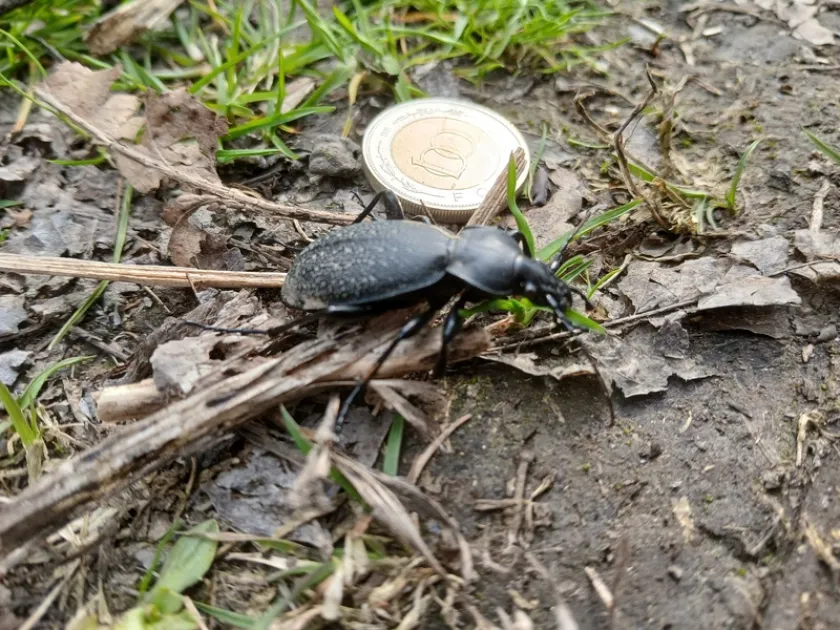
The Leather Ground Beetle (Carabus coriaceus) is the largest ground beetle species in Europe, typically measuring between 30 and 40 mm in length. Its body is matte black with a characteristic leather-like, rough surface on the elytra.
These beetles are flightless, as their elytra are fused together, forcing them to lead an exclusively ground-dwelling life. They are easily identified by their substantial size and powerful mandibles, which are evolved for a predatory diet.
The larvae are also quite large, dark-colored, and resemble the adults but lack wings. Their life cycle consists of the egg, larval, pupal, and adult stages, requiring approximately one year for completion.
These beetles thrive in moist deciduous forests, parklands, and gardens that provide rich leaf litter and humid conditions, which are essential for their survival and activity.
Although typically beneficial predators, they can sometimes exhibit herbivorous behavior, especially if their preferred food source, such as slugs or snails, is unavailable in the environment.
What it damages
From an agronomic perspective, the Leather Ground Beetle is generally considered beneficial rather than a major pest. However, in cases of high population density, they may damage specific crops.
They are known to feed on soft fruits such as strawberries and raspberries, leaving deep, jagged holes in the berries. This damage often ruins the yield and promotes the growth of secondary pathogens like gray mold.
Young vegetable seedlings can occasionally be damaged by larvae, which may gnaw at roots or stems near the soil surface, resulting in plant wilting or failure of the young crops.
Damage is usually sporadic and localized, occurring most frequently in damp areas where the beetle population finds ideal conditions for movement and feeding.
It is important to weigh the negative impact on crops against the beetle's positive role in controlling slug and snail populations, which are often far more destructive than the beetles themselves.
When it appears
Adult activity peaks during the spring and summer months, primarily from April through August, when beetles are actively hunting, mating, and foraging for food.
Overwintering occurs in the larval or adult stages, typically deep within the soil or under layers of decaying leaves and wood, providing protection from freezing temperatures.
Egg-laying takes place in the soil during the summer, after which the larvae undergo several molts, feeding on soil invertebrates and, occasionally, vegetative tissues of plants.
By autumn, the larvae pupate in earthen chambers, where they transform into adults that remain in the soil throughout the winter, completing the annual life cycle.
The beetles are predominantly nocturnal, showing the highest level of activity during the night or on overcast, humid days when they emerge from their hiding spots to move across the soil surface.
Signs of infestation
The most evident sign of their presence is the appearance of large, irregular bites on ripe berries, which differ significantly from the finer damage caused by typical insect pests.
Presence can be monitored using pitfall traps, such as containers buried flush with the soil surface, which catch these nocturnal insects as they wander in search of prey.
Evidence of larval activity may include the sudden wilting of young vegetable plants, suggesting damage to the root zone that cannot be explained by surface-level insect infestations.
Visual confirmation of adults hiding under stones, decaying logs, or organic debris in the garden is a strong indicator of a resident population.
Nighttime observation with a flashlight often reveals the beetles moving across garden paths or mulch, as they are actively patrolling the area for food sources.
Control measures
Chemical control is generally discouraged because the Leather Ground Beetle serves as a vital predator, helping to regulate populations of slugs and other harmful soil pests.
Good garden hygiene, including the removal of excess organic debris and weeds near sensitive crops, reduces the availability of daytime shelters and minimizes beetle presence.
Mulching crops with synthetic materials or landscape fabric can effectively protect berries from direct ground contact, limiting the beetles' ability to reach the fruit.
Manual collection of adults in the evening is a safe and effective way to reduce population numbers in small gardens or organic farms without using harmful pesticides.
Maintaining proper soil cultivation practices, such as light tilling of garden beds, disrupts the larval habitats and encourages the natural reduction of the beetle population.
Taxonomy
- Latin name
- Carabus coriaceus
- Order
- Coleoptera (beetles)
- Family
- Carabidae
- EPPO code
- CARACO
Discussion
No discussions yet — be the first.