
Convex ground beetle
Carabus convexus
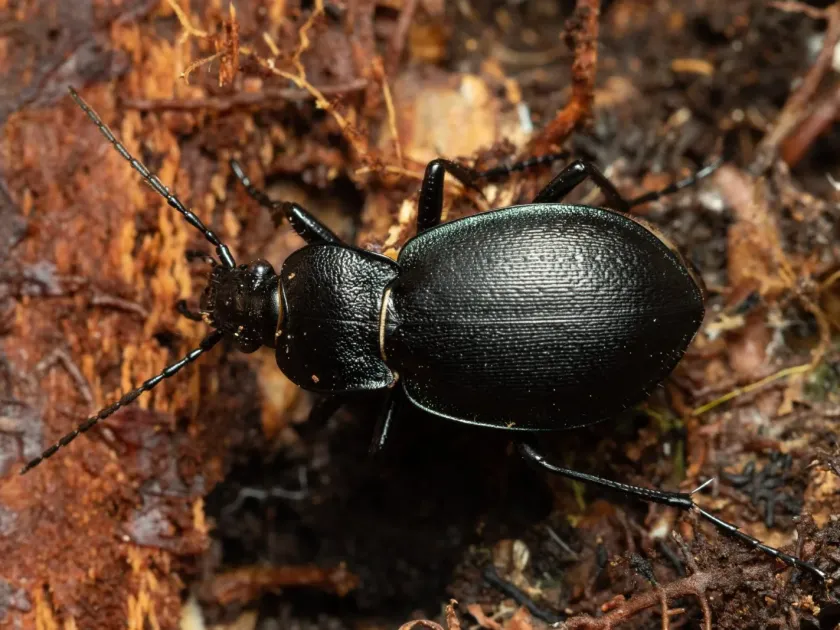
Description
How to identify
The convex ground beetle (Carabus convexus) is a species of beetle belonging to the Carabidae family. It is a moderately sized ground beetle, recognized by its specific physical features.
The adults are typically 18 to 25 mm long, with a distinct convex body shape. Their elytra often exhibit a metallic bronze or copper sheen, which is a key trait for identification.
This beetle is primarily nocturnal, spending daylight hours hiding under debris, leaf litter, or within the surface layer of the soil to maintain moisture and avoid predators.
The species undergoes complete metamorphosis. Adults are long-lived and hibernate in the soil during winter, emerging to become active as soon as temperatures rise in the spring.
As a member of the Carabidae, its behavior is complex; while some ground beetles are purely predaceous, Carabus convexus can exhibit opportunistic feeding habits that impact plant tissues.
What it damages
The damage caused by this species is often localized but can be severe in crops like wheat or barley, especially during the early germination and sprouting phases.
Adult beetles may feed on the tender shoots of young cereals. This consumption can damage the growing point of the plant, often leading to total loss of individual seedlings.
Larvae, which reside in the soil, feed on organic matter but may also gnaw on the roots or underground stems of young crops, causing wilting and poor development.
Extensive damage is usually associated with conditions where natural food sources for the beetle are limited, forcing them to turn to cultivated seedlings as a primary nutrient source.
Reduced crop density is the most common field sign of infestation, often appearing as patches of missing or stunted plants shortly after germination occurs.
Control measures
Deep plowing remains the most effective cultural practice for controlling this pest. It disturbs the soil, destroys overwintering sites, and exposes larvae and adults to birds.
Crop rotation is crucial; rotating away from susceptible crops prevents the buildup of beetle populations, as they prefer to remain in undisturbed, residue-rich environments.
Seed treatments with systemic insecticides provide an excellent protective layer for seedlings during the critical initial weeks of growth, preventing significant beetle damage.
Monitoring using pitfall traps is recommended to assess population density. If thresholds are exceeded, chemical application should be timed for the evening hours.
Integrated Pest Management (IPM) strategies, including encouraging natural predators and maintaining healthy soil structure, help keep population numbers below economic thresholds.
Taxonomy
- Latin name
- Carabus convexus
- Order
- Coleoptera (beetles)
- Family
- Carabidae
- EPPO code
- CARACV
Discussion
No discussions yet — be the first.