
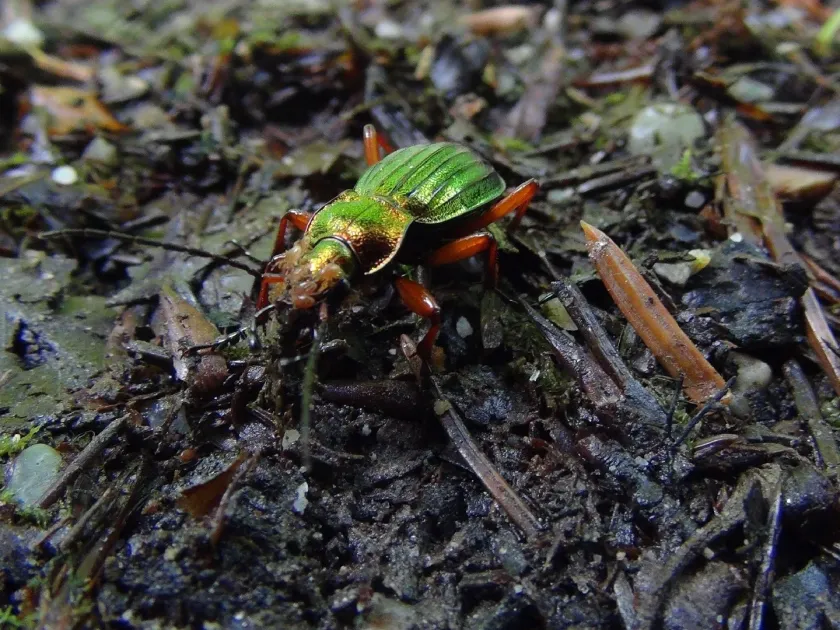
Gold-netted ground beetle
Carabus auronitens
Description
How to identify
The Gold-netted ground beetle (Carabus auronitens) is a member of the Coleoptera order and the Carabidae family, known for its distinctive metallic appearance.
Adult beetles typically measure 20–30 mm in length and feature elytra with a striking golden-green or copper sheen, often with visible longitudinal ridges.
These insects have flattened bodies and long, agile legs that allow them to move quickly across the soil surface and through dense vegetation cover.
Taxonomically, they are recognized as ground-dwelling predators that occupy an important niche in various ecosystems as natural controllers of smaller invertebrates.
The larvae are campodeiform, highly mobile, and possess strong mandibles adapted for hunting and consuming soft-bodied prey in topsoil layers.
What it damages
While primarily considered beneficial predators, the Gold-netted ground beetle can occasionally cause damage to crops when preferred prey sources are scarce.
The damage is usually inflicted on emerging seedlings of cereals and corn, where the beetles or larvae nibble on the tender tissues of germinating plants.
In orchards and berry patches, they may feed on fruits like strawberries that come into contact with the damp soil, resulting in cosmetic or structural damage.
Such incidents are sporadic and generally occur in environments with high organic debris where the beetle population is concentrated.
Despite these occurrences, their contribution to suppressing pests like slugs, snails, and caterpillars far outweighs the minor damage they cause to crops.
When it appears
The life cycle of the Gold-netted ground beetle begins in the spring, triggered by rising soil temperatures that facilitate the resumption of their metabolic activity.
Adult activity peaks during May and June, which marks the primary period for mating and the subsequent deposition of eggs into the soil.
Larval development proceeds throughout the summer months, during which time the larvae actively hunt for food in the upper soil horizons.
Pupation occurs in late summer or early autumn, resulting in the emergence of a new generation of beetles that prepare for the dormant winter period.
The species overwinters as adults, finding shelter beneath rocks, logs, or deep within dense leaf litter to protect themselves from winter frosts.
Signs of infestation
Signs of beetle activity include irregular nibbling marks on the foliage of young seedlings and minor injuries to the root collar of plants.
Monitoring the field during dusk or dawn may reveal the presence of adult beetles, which are naturally nocturnal and shy away from bright light.
Small holes or tunnels in the surface layer of the soil near affected plants are also indicative of their presence and hunting activities.
Damage to berries or low-hanging vegetables is usually characterized by shallow, concave excavations caused by the beetle's feeding habits.
- Irregular feeding holes on seedling leaves.
- Observation of adult beetles in pitfall traps.
- Surface damage on fruits lying on the ground.
Control measures
In most agricultural settings, active management against the Gold-netted ground beetle is unnecessary due to its role as a valuable biological control agent.
Maintaining clean farming practices, such as removing excess surface debris and weed management, reduces the concentration of these beetles in sensitive areas.
Implementing effective crop rotation cycles limits the stability of the local beetle habitat, preventing excessive buildup of their populations.
Chemical control should be avoided as it disrupts the beneficial insect community; insecticides should only be used as a last resort in extreme cases.
Prioritizing biodiversity and natural predator conservation is the most sustainable approach to keeping these beetles in balance within the farming landscape.
Taxonomy
- Latin name
- Carabus auronitens
- Order
- Coleoptera (beetles)
- Family
- Carabidae
- EPPO code
- CARAAN
Discussion
No discussions yet — be the first.