
Golden ground beetle
Carabus auratus
Description
How to identify
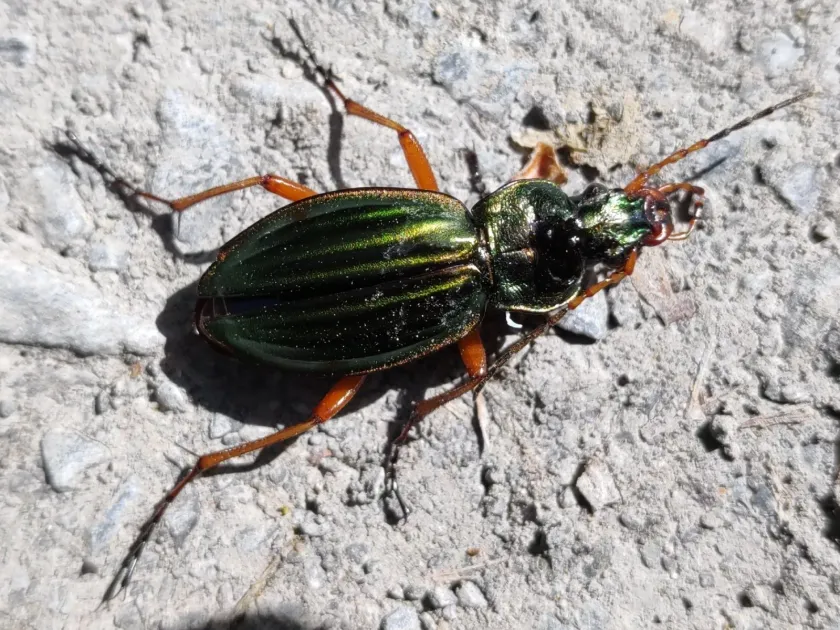
The golden ground beetle (Carabus auratus) belongs to the Carabidae family within the Coleoptera order. Adult beetles are recognizable by their distinct golden-green or copper-colored elytra with a granular texture.
These beetles typically grow to a length of 18 to 25 mm. They possess a robust body, strong mandibles for predatory hunting, and well-developed legs designed for rapid movement across the soil surface.
The larvae are campodeiform, dark in color, and lead a cryptic lifestyle, inhabiting the top layer of the soil or hiding beneath dense plant debris during their development stages.
While many Carabidae species are considered beneficial predators, *Carabus auratus* can occasionally shift to phytophagy, particularly under environmental stress or food scarcity, posing a threat to agricultural crops.
They are typical inhabitants of European landscapes, favoring fields, orchards, and open meadows that provide sufficient moisture and shelter throughout the growing season.
What it damages
The primary damage is caused by both adults and larvae feeding on young cereal sprouts. Their feeding activity can result in thinning stands and reduced crop density across the field.
Major susceptible crops include winter and spring cereals, as well as sugar beets. Under high population density conditions, the beetle can inflict significant economic losses.
Larvae often feed on the roots and the base of the stems. This subterranean feeding weakens the plant, leading to stunted growth or total plant death during the early vegetative phases.
The severity of the damage increases during drought periods, as the insects seek hydration by consuming the succulent tissues of young crop plants, which are easily accessible.
Damage is typically patchy rather than uniform, appearing in specific foci. Regular monitoring is crucial for early detection of these hotspots before the infestation spreads further.
When it appears
The beetles overwinter as adults, usually deep within the soil or protected under thick layers of organic debris. They emerge in early spring once soil temperatures begin to rise.
The peak reproductive period occurs during the spring and early summer. Eggs are laid in the soil, where larvae hatch and undergo several stages of development while feeding voraciously.
Pupation takes place in soil chambers during the second half of the summer. Newly emerged adults then prepare for their first wintering cycle, marking the end of the annual life cycle.
These beetles are primarily nocturnal, remaining hidden in burrows or under cover during the day and emerging to search for food under the cover of darkness.
The population dynamics are heavily influenced by temperature and soil moisture. Extremes in weather, particularly severe drought or prolonged rainfall, significantly impact survival rates.
Signs of infestation
The first visual sign of infestation includes ragged edges on leaves of young seedlings and noticeable bite marks at the base of the stems near the soil surface.
During night inspections, one can often spot the adult beetles wandering on the soil surface in areas where crop seedlings show signs of recent feeding damage.
Soil excavations in the root zone may reveal the presence of larvae, which serve as a definitive indicator of potential root damage before it becomes visible on the plant surface.
Patches of wilting or thinning plants that cannot be explained by typical fungal diseases or environmental factors are strong indicators of ground beetle activity.
Stems that appear weakened or partially gnawed at the base are classic indicators of larval feeding, which can cause the plants to topple or fail to thrive.
Control measures
Proper crop rotation is the primary agronomic tool for managing populations of the golden ground beetle, as it disrupts their life cycle and food supply.
Deep autumn plowing is highly effective, as it mechanically destroys overwintering sites and exposes larvae and adults to adverse conditions and natural predators.
Chemical control via insecticides should be applied only when population thresholds are exceeded, ensuring minimal impact on non-target species in the field ecosystem.
Seed treatment with systemic insecticides provides a vital protective shield for young seedlings during the most vulnerable stage of their initial growth.
- Maintaining field hygiene by controlling weeds that act as refuges.
- Adjusting sowing dates to avoid synchronization with peak beetle emergence.
- Encouraging natural biological controls, such as avian or small mammalian predators.
Taxonomy
- Latin name
- Carabus auratus
- Order
- Coleoptera (beetles)
- Family
- Carabidae
- EPPO code
- CARAAU
Discussion
No discussions yet — be the first.