
Capsus
Capsus
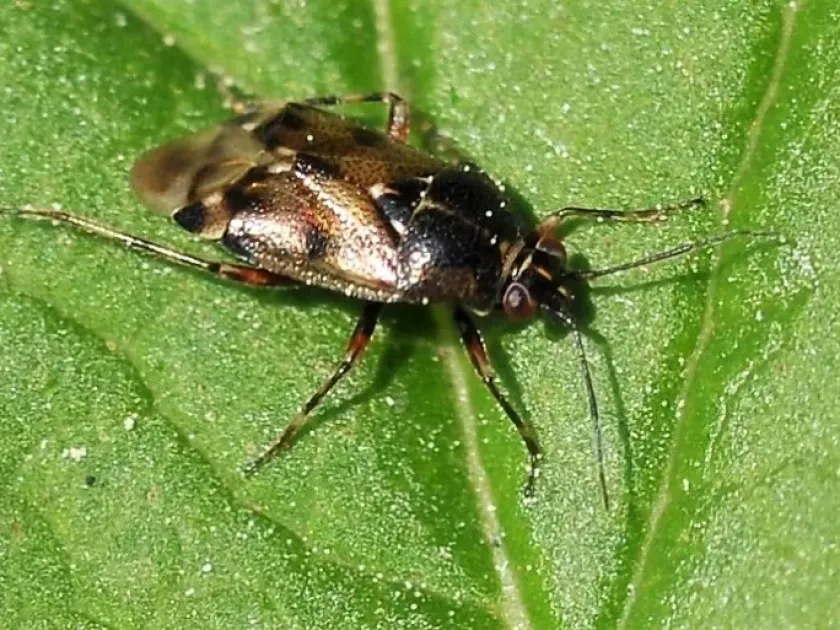
Description
How to identify
Capsus is a genus of insects belonging to the family Miridae, commonly known as plant bugs. These insects are characterized by their agility and ability to quickly colonize various plant hosts.
Adult bugs typically have an elongated body, ranging from 5 to 10 mm in length. Their coloration can vary significantly, often appearing yellow-brown, reddish, or almost black, sometimes with a metallic sheen.
They possess a specialized piercing-sucking mouthpart, known as a rostrum, which is essential for feeding on plant sap. Well-developed wings allow adults to disperse effectively across fields in search of food.
Nymphs resemble smaller, wingless versions of adults. They progress through five instars, gradually increasing in size while developing more defined coloration and body structures.
Accurate identification usually requires close examination of antennal structure and wing venation, which serve as key taxonomic characteristics for the Miridae family.
What it damages
Members of the genus Capsus are polyphagous, meaning they feed on a wide range of host plants. They are particularly recognized as significant pests of various cereal, legume, and industrial crops.
Wheat, barley, rye, and oats are the most common targets. The bugs feed by sucking fluids from developing leaves, stems, and immature grain heads during the milk stage of development.
These pests also thrive on various wild grasses, which act as reservoirs and allow populations to build up before migrating to commercial crop fields in large numbers.
Both adults and nymphs contribute to the damage by concentrating on the generative organs of the plants. Continuous feeding leads to nutrient depletion and disruption of physiological processes.
High infestations can result in yield losses ranging from 10% to 20%, with a noticeable decrease in grain quality, including reduced thousand-kernel weight and lower seed viability.
When it appears
The life cycle of Capsus bugs is closely regulated by environmental temperature. They typically overwinter as eggs, which are deposited within the tissues of plant stems or stalks.
Nymph emergence usually occurs in the spring, coinciding with the beginning of the crop growing season. This marks the start of the primary feeding period for the population.
Depending on regional climatic conditions and seasonal temperatures, these bugs may complete one or two generations per year, significantly impacting the duration of the threat.
Peak activity is generally observed during late spring and early summer, which aligns with the critical growth phases of cereal crops, making monitoring during this window vital.
As the season progresses, adults lay eggs to prepare for the overwintering phase. Mild, humid springs tend to create favorable conditions for rapid population growth and expansion.
Signs of infestation
The first signs of Capsus infestation are usually small, light-colored spots or points on leaves, which represent the feeding punctures made by the insects.
Damaged grain heads often show signs of partial sterility or "whitehead" symptoms. Affected grains become shriveled, malformed, and lose their standard color and nutritional value.
In cases of severe feeding, localized necrosis may occur, leading to the yellowing or premature drying of plant tissues. Overall plant growth may appear stunted or weakened.
For effective detection, scouting should be performed during the early morning or evening hours when the bugs are most active and visible on the upper parts of the plants.
Using a sweep net is a recommended method for assessing population density per unit area, providing the necessary data to determine if economic thresholds for treatment have been reached.
Control measures
Effective management of Capsus requires an integrated approach that combines cultural practices with chemical interventions to suppress pest populations.
- Managing field margins and removing surrounding weeds to eliminate early-season breeding sites and reservoirs.
- Implementing crop rotation and maintaining spatial separation between cereal fields and perennial forage grasses.
- Harvesting crops at optimal times to limit the window of opportunity for late-season damage.
- Applying systemic or contact insecticides when monitoring indicates that population levels exceed economic thresholds.
- Selecting vigorous crop varieties that show greater resilience to early-season insect feeding and environmental stress.
Taxonomy
- Latin name
- Capsus
- Order
- Hemiptera (bugs, aphids, leafhoppers)
- Family
- Miridae
- EPPO code
- CPSSSP
Discussion
No discussions yet — be the first.