
Campylomma unicolor
Campylomma unicolor
Description
How to identify
Campylomma unicolor belongs to the Miridae family, commonly known as plant bugs, within the order Hemiptera.
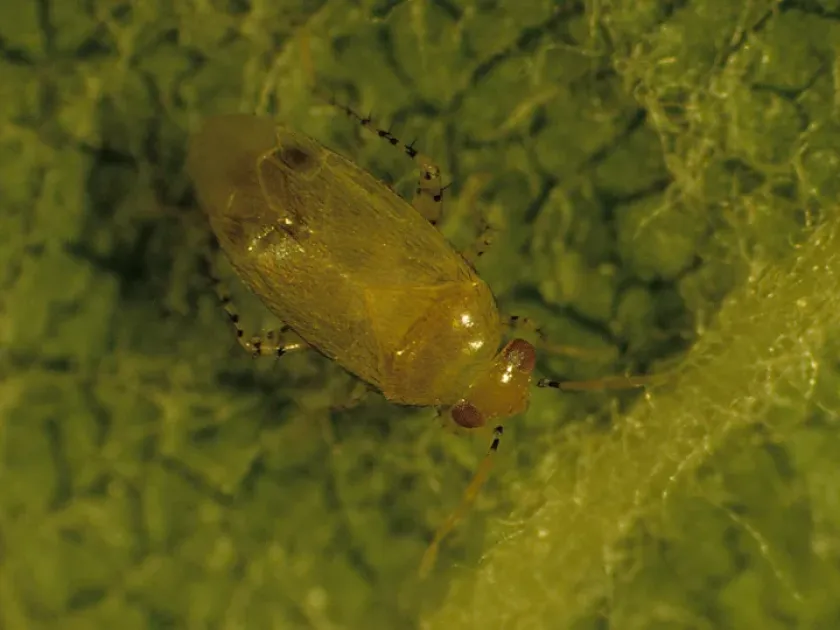
These insects are small, typically measuring between 3 and 4 millimeters in length as adults.
Their body color is generally pale yellow or greenish, which provides effective camouflage against the foliage of host trees.
Nymphs resemble the adults in appearance but lack fully developed wings and are noticeably smaller in size.
They possess a piercing-sucking mouthpart designed to extract fluids efficiently from plant tissues and occasionally prey on other small insects.
What it damages
The primary hosts of this pest include pome fruits such as apples, pears, and occasionally quince trees.
The bug is polyphagous, meaning it can feed on a wide variety of deciduous trees and shrubs within an orchard environment.
While they do consume other small insects like aphids, their feeding on developing fruit is considered harmful to commercial yields.
The damage caused to young fruitlets often results in deep scarring and the development of corky, deformed surfaces.
In cases of severe infestation, the cosmetic damage significantly reduces the marketability and quality of the harvested produce.
When it appears
Campylomma unicolor typically overwinters in the egg stage, with eggs laid within the bark of young shoots.
Hatching occurs in the spring, coinciding with bud break and the initial stages of plant growth in pome fruit orchards.
The population can complete multiple generations during a single growing season, leading to persistent pressure on the trees.
Activity levels are highest during the warmer summer months when the insects move frequently between different plant hosts.
As the season draws to a close, the adults prepare for wintering, laying eggs that will remain dormant until the following spring.
Signs of infestation
Early signs of infestation include tiny light-colored spots on leaves where the bugs have pierced the tissue to feed.
On young fruit, the damage presents as small, sunken lesions that may turn into rough or necrotic patches as the fruit matures.
Irregular growth and distortion of the fruit surface are major indicators that the orchard is affected by these plant bugs.
Visual inspection of the underside of leaves or shoots often reveals the agile bugs moving quickly across the plant surface.
- Deformed fruit development;
- Small necrotic spots on leaves;
- Reduced fruit quality at harvest time.
Control measures
Orchard monitoring involves the use of white or yellow sticky traps placed in the tree canopy to track population density.
Chemical intervention is recommended only when economic thresholds are reached, typically during the early bud development stages.
It is critical to utilize insecticides that offer low toxicity to beneficial insects, preserving the natural balance of the ecosystem.
Weed management is a vital cultural control method, as many common orchard weeds serve as alternative hosts for the bug.
Maintaining healthy orchard hygiene, including the removal of dead bark or excessive growth, helps reduce favorable overwintering sites.
Taxonomy
- Latin name
- Campylomma unicolor
- Order
- Hemiptera (bugs, aphids, leafhoppers)
- Family
- Miridae
- EPPO code
- CAMYUN
Discussion
No discussions yet — be the first.