
Campylomma nicolasi
Campylomma nicolasi
Description
How to identify
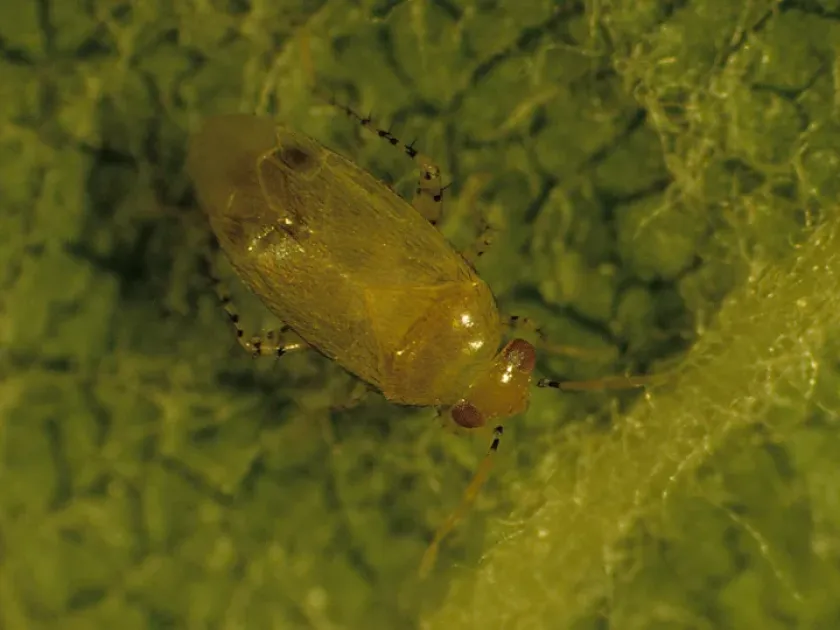
Campylomma nicolasi is a small plant bug belonging to the Miridae family. These insects typically measure about 3 mm in length and possess a pale greenish-yellow body, often marked with small dark spots on their femora.
Adults are highly mobile and capable of quick flight, which makes them difficult to spot during routine orchard inspections. Nymphs, while wingless, are equally active and progress through several stages of development before reaching maturity.
Agronomists identify this pest primarily through the limb-tapping method, where branches are shaken over a white tray. This procedure allows for an accurate population assessment, which is vital for deciding if intervention is necessary.
As a member of the Hemiptera order, this insect feeds on plant sap. Its life cycle is tightly coupled with the phenology of fruit trees, making it a specialized and recurring problem in many commercial orchard systems.
Field identification requires keen attention, as the nymphs' coloration often camouflages them against the background of fresh young leaves and developing fruitlets in the early spring.
What it damages
This bug primarily targets pome and stone fruit trees, with apples, pears, and peaches being the most susceptible crops. The economic impact is linked to both direct fruit injury and general tree vigor decline.
Feeding occurs on young leaves, buds, and particularly fruitlets. As the bug pierces the plant tissue, its saliva introduces enzymes that cause necrotic lesions, leading to deformation and stunted growth of the affected parts.
Injured fruit develops characteristic corky spots, depressions, and misshapen textures, significantly reducing marketability and storage quality. In severe cases, the damage leads to premature fruit drop.
Vegetative damage is also notable. When feeding occurs on buds, it can inhibit their development, leading to reduced canopy growth and lower yield potential for the following growing season.
The severity of damage is directly proportional to the population density during the bloom and fruit-set stages. High infestation rates can lead to substantial losses in export-grade fruit.
When it appears
The insect overwinters in the egg stage, with eggs deposited under the bark of young shoots or within bud tissues. Nymph emergence typically begins in early spring, coinciding with bud burst.
Peak activity occurs during the pink bud stage and the duration of the tree's bloom. This period is critical, as nymphs begin their feeding activities, which directly affects the developing fruitlets.
Depending on local climate conditions, multiple generations may occur within a single growing season. Summer generations often migrate to succulent leaves or nearby weeds, sustaining the population throughout the year.
Warm and dry weather conditions tend to accelerate the development cycle, potentially leading to rapid population growth. Monitoring should continue through the summer months to track subsequent generations.
The final generation of the season is responsible for laying the overwintering eggs. Successful pest management requires understanding these seasonal transitions to ensure treatments are applied at the most vulnerable stages.
Signs of infestation
The most prominent sign of infestation is the presence of small necrotic spots on the surface of developing fruitlets. These spots later develop into corky, woody patches or deep pits as the fruit grows.
Leaf deformation is another indicator; infested leaves may appear curled or stunted. Careful inspection of buds may reveal tiny entry points or dark staining where the bug has fed on the interior tissues.
A sudden increase in fruit drop in early summer may also signal a high presence of these bugs. By examining the fallen fruitlets, one can often find signs of localized tissue death caused by the feeding.
Overall canopy health can provide clues as well. Stunted shoot tips and reduced terminal growth are often seen when high densities of Campylomma bugs remain untreated throughout the season.
- Tiny black necrotic dots on fruitlets.
- Deep pitting and corky skin textures on mature fruit.
- Distorted or curled foliage.
- Premature fruit shedding during development.
Control measures
Integrated Pest Management (IPM) is the gold standard for controlling Campylomma nicolasi. Regular monitoring using pheromone traps or sticky boards helps track population spikes and adult activity.
Chemical control is highly effective when timed correctly. Applications of insecticides should target the nymph stages, specifically just before or after the bloom, to minimize the risk of damage to the set fruit.
Cultural practices play a supportive role. Removing rootstock suckers, which serve as preferred egg-laying sites, and maintaining clean orchard floors help reduce the overall population pressure within the orchard.
Biological control agents, such as predatory bugs and spiders, can keep pest populations in check if toxic pesticide use is minimized. Conserving these natural enemies is crucial for sustainable orchard health.
Pruning and fertilization practices that promote balanced tree growth can improve the host plant's tolerance to infestation. Healthy trees show higher resilience and faster recovery from the feeding stress caused by these insects.
Taxonomy
- Latin name
- Campylomma nicolasi
- Order
- Hemiptera (bugs, aphids, leafhoppers)
- Family
- Miridae
- EPPO code
- CAMYNI
Discussion
No discussions yet — be the first.