
Campylomma liebknechti
Campylomma liebknechti
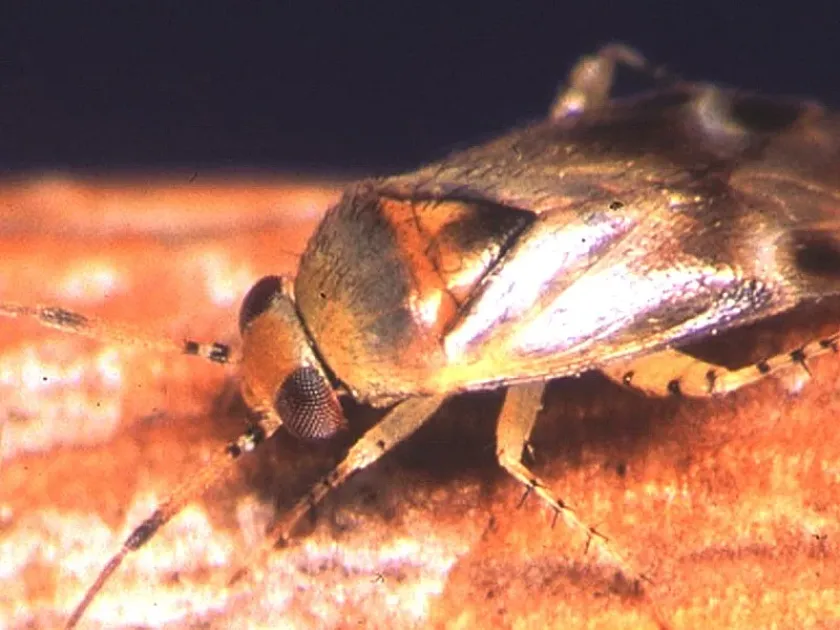
Description
How to identify
Campylomma liebknechti belongs to the Miridae family, commonly known as plant bugs or mirid bugs, within the order Hemiptera. These are small insects that often blend in with the foliage of the plants they infest.
Adults possess functional wings and are highly mobile, moving efficiently throughout the tree canopy. Nymphs, or immature stages, are similar in shape but lack wings and fully developed reproductive systems, remaining near their feeding sites.
The coloration of these insects typically ranges from pale yellow to light green, providing them with excellent camouflage against host plant leaves. Due to their small size and cryptic behavior, they are often overlooked until significant damage occurs.
Agronomists and researchers identify the species by examining morphological features of the body and genitalia under magnification. Distinguishing this pest from beneficial predatory mirid bugs is essential for effective orchard management.
The life cycle encompasses the egg stage, several nymphal instars, and the adult stage. The species typically overwinters in the egg stage, with eggs embedded in the bark or twigs of host trees, ensuring survival during colder months.
What it damages
Campylomma liebknechti poses a threat to various fruit trees, including apples, pears, and stone fruits. Both adults and nymphs feed by piercing the plant tissues and extracting sap with their specialized mouthparts.
Feeding on buds in early spring can lead to severe developmental issues, causing buds to deform or wither. This reduces the tree's vigor and significantly lowers the potential yield for the season.
Damage to young fruitlets is particularly devastating. Feeding punctures leave small necrotic spots that develop into corky scabs and deep dimples as the fruit grows, rendering the produce commercially unacceptable.
Micro-wounds caused by these bugs serve as entry points for various fungal and bacterial pathogens. This secondary infection further compromises the tree health and complicates the management of the orchard.
In years of high infestation, these bugs can cause substantial economic losses by destroying a high percentage of the developing fruit crop. Early intervention is therefore critical in commercial fruit production.
When it appears
The activity of the pest begins in early spring, synchronized with the bud burst of host trees. Overwintering eggs hatch, and nymphs begin feeding almost immediately on succulent plant tissues.
Peak damage generally occurs during the blossom period and the early stages of fruit set. This timeframe is the most critical window for applying control measures to minimize crop loss.
The number of generations per year can vary depending on regional climate conditions. Warmer springs and summers typically support faster development, leading to increased population density and more aggressive feeding.
As summer progresses, adult bugs remain active, feeding on foliage and younger shoots. While the damage to fruit is less prominent than in spring, their continued presence can maintain high population levels for subsequent generations.
In autumn, adults prepare for the overwintering phase by laying eggs in protected areas, such as bark crevices. These eggs enter diapause, ensuring the species survives until the following growing season.
Signs of infestation
One of the earliest signs of infestation is the appearance of small, yellow, or chlorotic spots on the leaves. These spots are the direct result of cells being drained of their contents.
Deformed fruitlets displaying dents, dimples, or corky lesions are clear indicators of bug activity. These deformities grow larger as the fruit matures, creating obvious defects at harvest time.
Observing the canopy carefully during spring may reveal the presence of tiny, rapidly moving nymphs. Using branch beating onto a white surface is a reliable way to detect these small insects.
Unexplained dropping of flower buds or small fruits can be a secondary sign of heavy pest pressure. Such incidents suggest that the infestation levels have reached a point requiring urgent action.
The presence of cast-off skins (exuviae) left behind by nymphs on the undersides of leaves is a definitive sign that the insects have been actively developing and feeding within that part of the tree.
Control measures
Effective management relies on targeted insecticide applications, typically scheduled before or immediately after flowering. Rotating pesticide modes of action is vital to prevent the development of resistance.
Cultural practices, including proper pruning and maintaining clean orchard floors free of alternative weed hosts, can significantly reduce the overwintering potential and overall population of the pests.
Biological control plays a key role in an integrated approach. Encouraging the presence of natural enemies, such as lacewings and ladybirds, helps keep populations of these bugs at manageable levels.
Regular monitoring using traps or visual inspection is necessary to make data-driven decisions. Treatments should only be applied when threshold levels are met to avoid unnecessary chemical usage.
An Integrated Pest Management (IPM) strategy, combining chemical, biological, and cultural methods, is the most sustainable approach to protecting orchards while minimizing environmental impact.
Taxonomy
- Latin name
- Campylomma liebknechti
- Order
- Hemiptera (bugs, aphids, leafhoppers)
- Family
- Miridae
- EPPO code
- CAMYLB
Discussion
No discussions yet — be the first.