
Campylomma
Campylomma
Description
How to identify
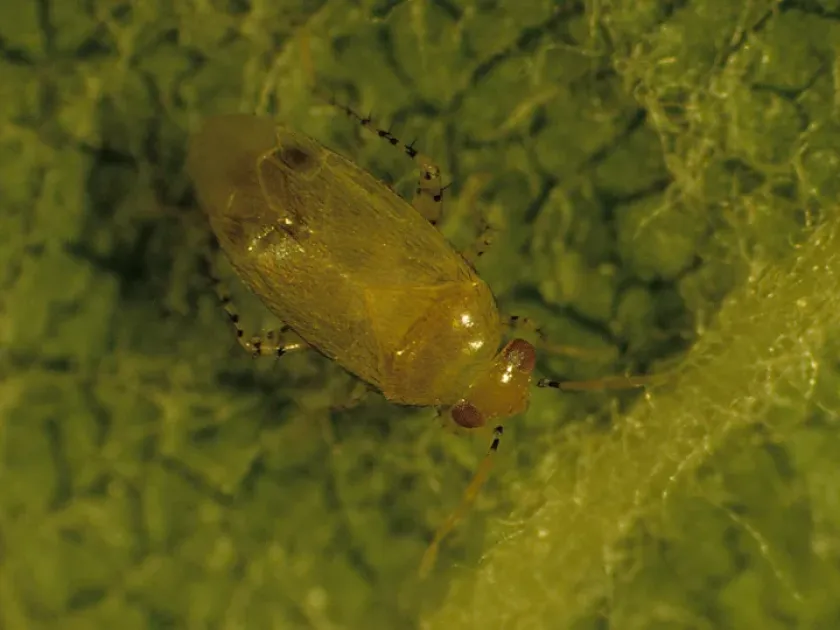
Campylomma spp. is a genus of plant bugs belonging to the family Miridae. These small insects typically measure between 3 and 4 mm in length and exhibit a pale yellow to greenish-gray body coloration.
A key diagnostic feature of this genus is the presence of small black spots on the tibiae of their legs, along with a fine covering of hairs on the body. These features are often observable with a standard magnifying lens.
The nymphs of Campylomma closely resemble the adults in body shape but are smaller and lack fully developed wings. They are highly active and move quickly across the foliage when disturbed.
These pests overwinter primarily in the egg stage. Eggs are inserted by females under the bark of young twigs of various host trees, typically fruit-bearing ones.
The lifecycle depends on regional temperatures. As the season progresses, multiple generations can occur, leading to a cumulative increase in the pest population within the orchard.
What it damages
Campylomma are significant pests of pome fruits, particularly apples and pears. Both adults and nymphs cause damage by piercing plant tissues with their stylets and extracting cell sap.
The most susceptible parts of the plant are blossoms, buds, and young developing fruitlets. Damage at this early stage often leads to the deformation of the fruit as it grows, resulting in stunted or oddly shaped produce.
Feeding spots appear as small, corky depressions or sunken areas on the skin of the fruit. This significantly diminishes the aesthetic quality and marketability of the harvest.
In addition to direct feeding damage, the punctures made by the bugs can provide entry points for secondary fungal and bacterial pathogens, leading to localized rotting or fruit drop.
High population densities can cause severe economic losses, making it essential for orchardists to monitor the insect levels regularly during the growing season.
Signs of infestation
The earliest signs of infestation are small necrotic spots or yellowing on young leaves caused by the feeding activity of the nymphs. Careful inspection of the undersides of leaves is recommended.
Deformed fruit is a classic symptom of past infestations. Any irregular dimples or pitting on the surface of developing apples or pears indicate that the fruit was punctured early in its development.
Blossom damage is another indicator. If buds fail to open or appear desiccated, it may be due to the bug feeding on the developing floral parts within the cluster.
Monitoring using a tapping tray or beating sheet is the most reliable diagnostic method. By striking the branches over a white surface, the presence and quantity of nymphs can be accurately assessed.
Late-season signs include fruit surface blemishes that persist even as the crop matures, indicating that the population was present during the early vegetative stages.
Control measures
Integrated pest management (IPM) for Campylomma relies on early detection. Monitoring programs should be initiated before bloom to determine if population levels exceed the economic threshold.
Orchard sanitation and proper pruning practices contribute to natural control by improving canopy penetration for biological enemies and chemical sprays.
Chemical control, when necessary, involves the application of selective insecticides during the early nymphal stages. It is crucial to rotate chemical classes to prevent the development of pesticide resistance.
Encouraging natural predators, such as lacewings and other predatory bug species, is highly recommended to keep the Campylomma population in check naturally.
When selecting treatment options, orchardists should prioritize products that are safe for pollinators, as many critical applications occur during or shortly after the bloom period.
Taxonomy
- Latin name
- Campylomma
- Order
- Hemiptera (bugs, aphids, leafhoppers)
- Family
- Miridae
- EPPO code
- CAMYSP
Discussion
No discussions yet — be the first.