
Campalita
Campalita
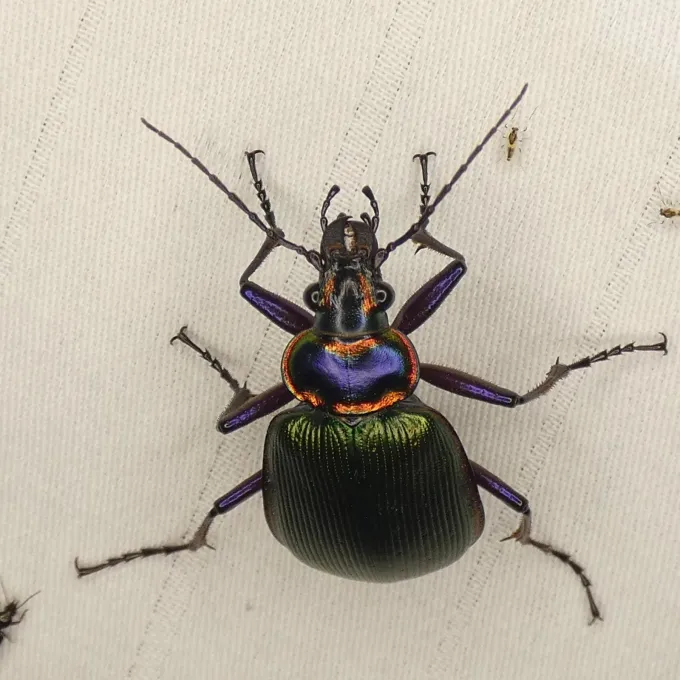
Description
How to identify
The genus Campalita is a group of ground beetles belonging to the family Carabidae, known for their predatory behavior in agricultural landscapes.
Adult beetles are typically large, with a flattened body structure that allows them to navigate through dense vegetation and soil crevices efficiently.
The larvae are specialized predators with strong mandibles and a robust body, adapted for hunting various ground-dwelling insects and larvae.
Distinguishing features include the metallic or dark coloration of the elytra and the specific shape of the pronotum, which is crucial for species identification.
These insects are highly active and rely on their speed and acute sensory organs to track prey throughout the vegetation season.
What it damages
While primarily considered beneficial predators, under specific environmental stresses or high density, Campalita beetles can cause incidental damage to crops.
They may feed on the stems, young shoots, or seeds of grain and vegetable crops when their preferred prey population is insufficient to sustain them.
Damage usually occurs during the early growth stages of plants, leading to wilting, stunted growth, or even the death of seedlings in extreme cases.
In forest nurseries, they may cause harm by damaging the bark or roots of young saplings, creating entry points for pathogens and fungi.
Despite these occasional negative impacts, the overall benefit of their presence in controlling other primary pests often outweighs the damage caused.
When it appears
The life cycle of Campalita is synchronized with the growing season, with adults emerging from hibernation in early spring.
Peak activity generally occurs in late spring and early summer, corresponding with the reproductive phase and the emergence of larval prey.
These beetles are predominantly nocturnal, which is their primary survival strategy to avoid diurnal predators and high daytime temperatures.
Most species produce one generation per year, with adults surviving the winter by burying themselves deep in the soil or protected leaf litter.
The duration of the larval stage depends on moisture availability and temperature, which determine how quickly they reach the pupation phase.
Signs of infestation
Signs of their presence include irregular chewing marks on the leaves and stems of young plants, typically observed at the base of the plant.
The presence of adult beetles can be confirmed by using pitfall traps placed in the field, which capture them during their nightly wanderings.
Disturbed soil surfaces and small holes near the roots often indicate the activity of larvae foraging underground for various soil invertebrates.
Wilting plants without evidence of other primary pests or diseases often suggest the involvement of subterranean predators or pests.
Visual observation at night using a light source can reveal the beetles patrolling the field for prey or occasionally feeding on plant material.
Control measures
Management should focus on maintaining a balance where these beetles serve as effective biological control agents rather than causing crop damage.
Cultural practices, such as deep autumn plowing, are highly effective in disrupting their life cycle and reducing the number of overwintering individuals.
Minimizing the use of non-selective broad-spectrum insecticides helps preserve populations of these beneficial predators within the agricultural ecosystem.
- Use of pitfall traps for population density monitoring.
- Maintaining soil moisture to reduce the beetles' need for succulent plant tissues.
- Physical exclusion or manual removal in small-scale greenhouses or plots.
If economic thresholds are exceeded, the use of targeted biological pesticides or low-toxicity baits can be employed to manage population surges.
Taxonomy
- Latin name
- Campalita
- Order
- Coleoptera (beetles)
- Family
- Carabidae
- EPPO code
- CMLASP
Discussion
No discussions yet — be the first.