
Fourteen-spotted lady beetle
Calvia quatuordecimguttata
Description
How to identify
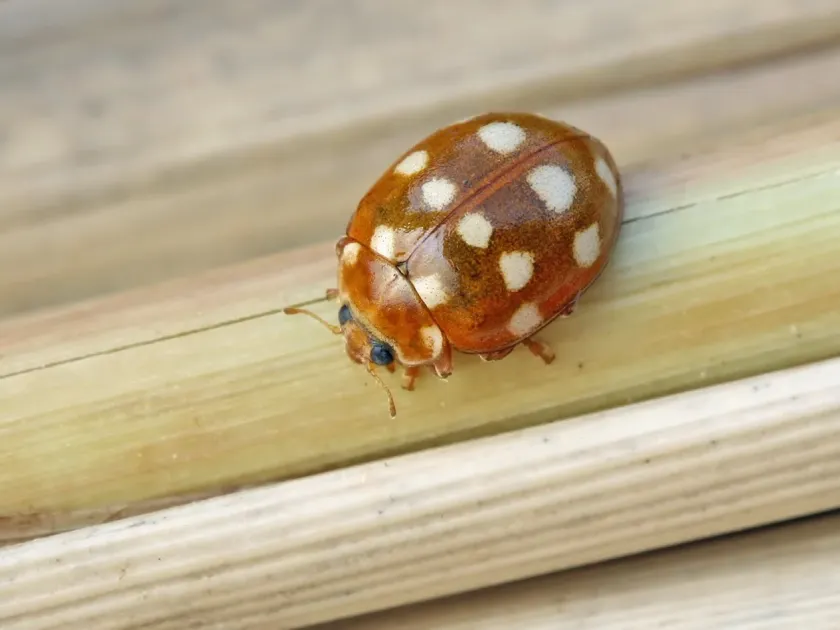
The fourteen-spotted lady beetle (Latin name: Calvia quatuordecimguttata) belongs to the Coccinellidae family within the order Coleoptera. Adult beetles reach 4–6 mm in length and feature distinct elytra ranging from light brown to reddish-brown with 14 white spots.
The body of the beetle is oval and slightly convex, which is typical for the Coccinellinae subfamily. The head and pronotum are light, sometimes displaying a specific pattern. Larvae of this species are usually greyish-black with small spines, undergoing several developmental stages (instars) before pupation.
It is important to note that this species is primarily predatory; however, in the event of a food shortage, it may exhibit facultative phytophagy, damaging the tender tissues of ornamental and cultivated plants.
The insect's life cycle involves complete metamorphosis: egg, larva, pupa, and adult (imago). In temperate climates, one or two generations typically develop per season, depending on temperature conditions and food availability.
Identification of the adult is possible by the characteristic number of light spots on the elytra, which helps distinguish this species from other related lady beetles commonly found in gardens and parklands.
What it damages
The primary damage caused by this insect occurs when aphids—their typical prey—are scarce. In such cases, the beetles may begin to graze on the leaf epidermis, causing damage to the young shoots of decorative and fruit-bearing plants.
Damage is most often observed on deciduous trees and shrubs, including fruit crops such as apples, plums, and pears. Following such attacks, leaves may become deformed and develop necrotic spots.
In nurseries, this pest can reduce the photosynthetic efficiency of young saplings, leading to stunted growth and impaired development during the spring and summer periods.
Although the species rarely causes massive outbreaks, its presence in fields and orchards warrants monitoring, especially during periods of prolonged drought when the beetle's natural food supply is significantly reduced.
- Damage to leaf blades of ornamental trees.
- Reduced growth rates of young fruit tree saplings.
- Deformation of apical shoots during active vegetation.
When it appears
Adult activity begins in early spring, immediately after the snow melts and stable ambient temperatures are established (above +10...+12°C).
The peak activity period for the beetles occurs in late May and June, when mating takes place and eggs are laid on host plants infested with aphids.
The larval stage is observed throughout June and July, as the young insects feed intensively in preparation for pupation, which occurs on leaves or within bark crevices.
A second generation, if conditions allow, remains active until the end of August. In autumn, as average temperatures drop, adults seek shelter for hibernation in fallen leaves, under bark, or inside outbuildings.
During the winter, the insects remain in a state of diapause, emerging only when stable, warm weather returns in the following spring season.
Control measures
The main strategy for protection is maintaining high biological diversity in the garden, which ensures a sufficient supply of natural prey (aphids) for the beetles, thereby reducing the risk of them switching to plant tissues.
If insecticides are necessary, preference should be given to selective biological agents to minimize harm to other beneficial entomophages in the environment.
Timely removal of weeds and fallen leaves in the autumn is recommended, as these plant residues provide the primary overwintering sites for the adults.
In commercial orchards, monitoring populations using sticky traps plays a vital role in determining whether intervention is required, avoiding the need for radical chemical treatments.
Creating hedge rows with repellent plants is an effective agrotechnical practice that helps deter various pests while preserving the ecological balance of the site.
Taxonomy
- Latin name
- Calvia quatuordecimguttata
- Order
- Coleoptera (beetles)
- Family
- Coccinellidae
- EPPO code
- CLVAQU
Discussion
No discussions yet — be the first.