
Calosoma semilaeve
Calosoma semilaeve
Description
How to identify
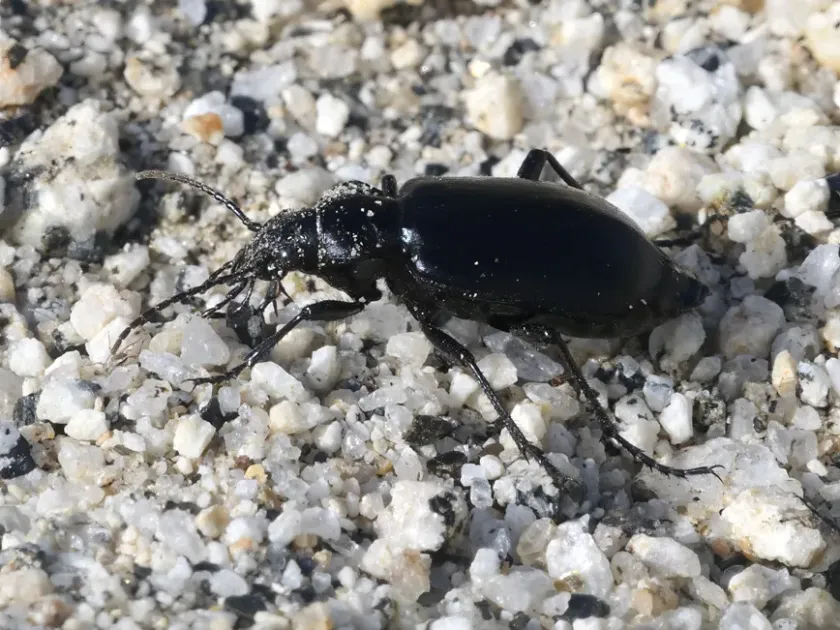
Calosoma semilaeve is a large predatory ground beetle belonging to the Carabidae family. The adult beetle reaches a length of 20–28 mm and features a metallic sheen on its elytra, which often exhibit bronze or green hues.
The beetle possesses powerful mandibles designed for capturing prey. Its smooth elytra surface is a primary diagnostic characteristic that distinguishes this species from other members of the Calosoma genus.
This species is predominantly nocturnal, seeking shelter under leaf litter, stones, or soil crevices during daylight hours. Equipped with functional wings, they are capable of flight, facilitating rapid colonization of new areas in search of prey.
Larvae are also voracious predators. They have a campodeiform body structure, which is typical for ground beetles, providing them with the agility needed to pursue their prey effectively across various surfaces.
The life cycle consists of the egg, three larval instars, pupa, and adult stages. Overwintering occurs in the adult stage within the soil or ground cover, where they emerge once spring temperatures become favorable.
What it damages
In agronomy, Calosoma semilaeve is widely recognized as a beneficial entomophagous insect rather than a typical pest. These beetles contribute significantly to the biological control of leaf-eating caterpillars and other agricultural pests.
Occasionally, if natural prey populations are critically low, these beetles may display opportunistic feeding behaviors on tender plant tissues. However, such instances are infrequent and rarely result in significant economic damage to crop yields.
The primary concern regarding this beetle is the risk of misidentification. Farmers often utilize broad-spectrum insecticides to eliminate them, unintentionally removing valuable natural regulators and triggering outbreaks of true agricultural pests.
The beetle is commonly found in gardens, cereal fields, and orchard ecosystems. Their presence acts as a bio-indicator of a balanced ecosystem where natural predators keep potential pest populations in check.
Consequently, the agricultural impact of this beetle is overwhelmingly positive. By suppressing the population of harmful insects, they reduce the need for intensive chemical applications in field management.
Control measures
Specific control measures aimed at eradicating Calosoma semilaeve are not recommended, as they serve as vital natural enemies of crop-damaging insects. The management goal should be the preservation of their natural habitats.
Integrating biological pest control into farming operations is the best approach. Maintaining biodiversity in and around fields, such as preserving hedge rows and natural corridors, supports healthy populations of these ground beetles.
When chemical intervention is required to manage other specific pests, selecting insecticides with high selectivity and low toxicity to non-target predatory insects is essential to maintain ecological integrity.
Implementing regenerative agricultural practices, such as minimal tillage, can help preserve the soil structures necessary for the beetle's overwintering and life cycle development.
- Minimize broad-spectrum insecticide use to protect beneficial predatory beetle populations.
- Preserve natural field margins to provide habitats for overwintering beetles.
- Prioritize integrated pest management (IPM) to maintain existing biological control agents.
Taxonomy
- Latin name
- Calosoma semilaeve
- Order
- Coleoptera (beetles)
- Family
- Carabidae
- EPPO code
- CAOOSE
Discussion
No discussions yet — be the first.