
Calosoma scrutator
Calosoma scrutator
Description
How to identify
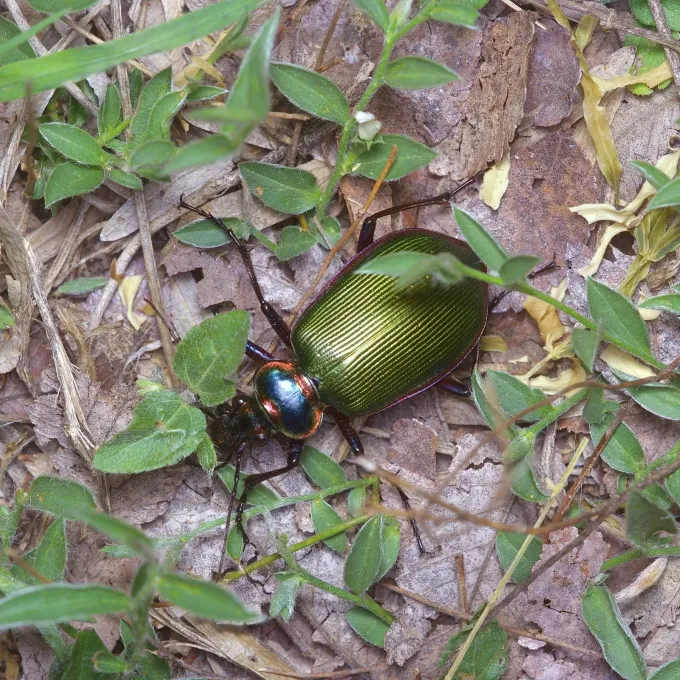
Calosoma scrutator, commonly known as the fiery searcher, is a large and striking ground beetle belonging to the family Carabidae. Adults typically reach lengths between 25 and 35 mm, showcasing brilliant metallic green elytra with reddish-copper margins.
The pronotum of this beetle is dark blue or black, often with a metallic sheen. Its physical structure is adapted for high-speed locomotion, allowing it to patrol both the forest floor and tree trunks in search of food.
The larvae are heavily armored and possess powerful mandibles, which they use to capture and consume prey. Like the adults, they are predatory and are highly effective at controlling populations of caterpillars and other soft-bodied insects.
When disturbed, the fiery searcher can release a foul-smelling chemical secretion from its abdomen. This defensive behavior is highly effective against many potential predators, including birds and small rodents.
While often feared by gardeners due to its size and speed, this beetle is a classic example of a beneficial insect. It plays a significant role in maintaining the health of trees by preying on defoliating larvae.
When it appears
The life cycle of Calosoma scrutator begins in the spring, as adults emerge from the soil after overwintering. They are most active during the late spring and early summer, correlating with the peak emergence of various garden pests.
Females lay their eggs in moist soil, where they are protected from environmental fluctuations. The female chooses locations that provide immediate access to food sources for the newly hatched larvae.
The larval stage consists of three instars, during which the insects are voracious predators. As they grow, they consume substantial amounts of prey, contributing to the biological suppression of moth populations.
Pupation occurs in the soil, typically mid-to-late summer. The beetles that emerge from these pupae are the ones that will hibernate throughout the winter to repeat the cycle the following spring.
Fiery searchers are relatively long-lived for beetles, with some individuals surviving for multiple years. This longevity allows them to establish stable populations in balanced ecological systems.
Control measures
As a beneficial predator, no direct control or eradication measures are necessary for Calosoma scrutator. Their presence is a sign of a healthy, functioning ecosystem in your garden or orchard.
The primary way to protect and encourage this species is to avoid the widespread application of broad-spectrum insecticides. These chemicals kill the very predators that keep pest populations in check.
Maintaining a layer of organic mulch and avoiding unnecessary soil tilling provides essential shelter for these beetles, particularly during their dormant periods and throughout their hibernation.
If you find them indoors, the best practice is to gently move them back into the garden. They do not pose a threat to human health, livestock, or the structural integrity of a house.
By promoting the presence of fiery searchers, gardeners can significantly reduce the need for chemical interventions. These beetles serve as a self-sustaining line of defense against many common tree-damaging insects.
Taxonomy
- Latin name
- Calosoma scrutator
- Order
- Coleoptera (beetles)
- Family
- Carabidae
- EPPO code
- CAOOSC
Discussion
No discussions yet — be the first.