
Granulated ground beetle
Calosoma granulatum
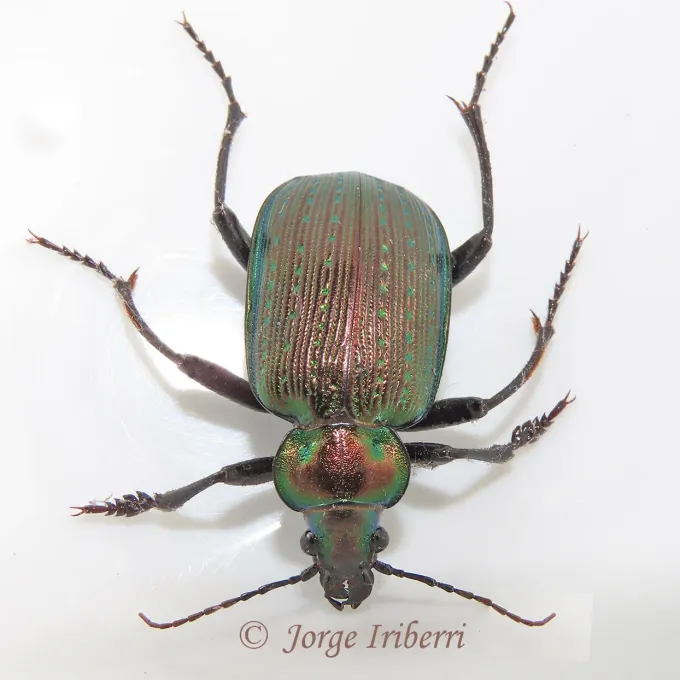
Description
How to identify
The granulated ground beetle (Calosoma granulatum) is a member of the Carabidae family, measuring approximately 20–25 mm in length.
Adult beetles are characterized by a dark, metallic-toned exoskeleton and elytra with a distinct granulated texture, which serves as a primary identification mark.
These insects are primarily nocturnal, spending daylight hours hidden under soil debris, crop residues, or within the top layer of the soil profile.
Larvae of this species are elongated and highly mobile, possessing strong mouthparts adapted for both carnivorous and, in some cases, herbivorous feeding.
Though many ground beetles are beneficial predators, Calosoma granulatum can shift its feeding habits depending on environmental stressors and food availability.
What it damages
The primary crop impacted by this pest is soybean, especially during the early stages of plant development and grain filling.
Adults and larvae consume seedling tissue, often damaging cotyledons and terminal buds, which can lead to stunted growth or total plant loss.
During the reproductive stages, beetles may feed on developing pods, creating wounds that significantly reduce yield and quality.
High infestation levels can result in reduced plant stands, requiring farmers to take immediate action to protect the crop's economic potential.
Under drought conditions, when traditional prey populations (other insects) are low, the granulated ground beetle is more likely to cause significant crop damage.
When it appears
The life cycle of the granulated ground beetle is closely tied to soil temperature, with adults emerging from dormancy in the late spring.
Peak feeding activity usually aligns with the germination and early vegetative stages of soybeans, posing the greatest threat during this period.
The insect completes one generation per year, with adult beetles surviving the winter months by burying themselves deep within the soil profile.
Temperature and soil moisture levels directly influence the developmental rate of larvae, making spring weather a key factor in population dynamics.
Monitoring should be most intensive from the initial seedling emergence through the early flowering stages to detect any sudden rise in population.
Signs of infestation
The presence of this pest is often signaled by jagged or uneven leaf edges on young seedlings, indicating nocturnal feeding activity.
Finding beetles under soil clods or near the base of damaged plants during morning inspections is a reliable indicator of an active infestation.
Feeding marks on soybean pods are distinct, often appearing as small pits or holes that may subsequently become entry points for pathogens.
Patches of reduced plant density or missing seedlings in the field are common consequences of severe infestations by these beetles.
- Damaged seedlings with missing cotyledons.
- Holes in developing soybean pods.
- Visible larvae or adults during night-time scouting.
Control measures
Crop rotation remains one of the most effective cultural practices to disrupt the life cycle of the granulated ground beetle.
Deep autumn tillage is recommended to destroy overwintering sites and expose dormant beetles and larvae to harsh weather conditions.
When the economic injury level is reached, the application of registered insecticides becomes necessary to prevent further crop losses.
Managing weed populations surrounding fields is essential, as these areas often serve as refugia and primary habitats for the beetles.
Regular field scouting and the use of soil traps allow for the timely implementation of control measures before significant damage occurs.
Taxonomy
- Latin name
- Calosoma granulatum
- Order
- Coleoptera (beetles)
- Family
- Carabidae
- EPPO code
- CAOOAG
Discussion
No discussions yet — be the first.