
Calosoma frigidum
Calosoma frigidum
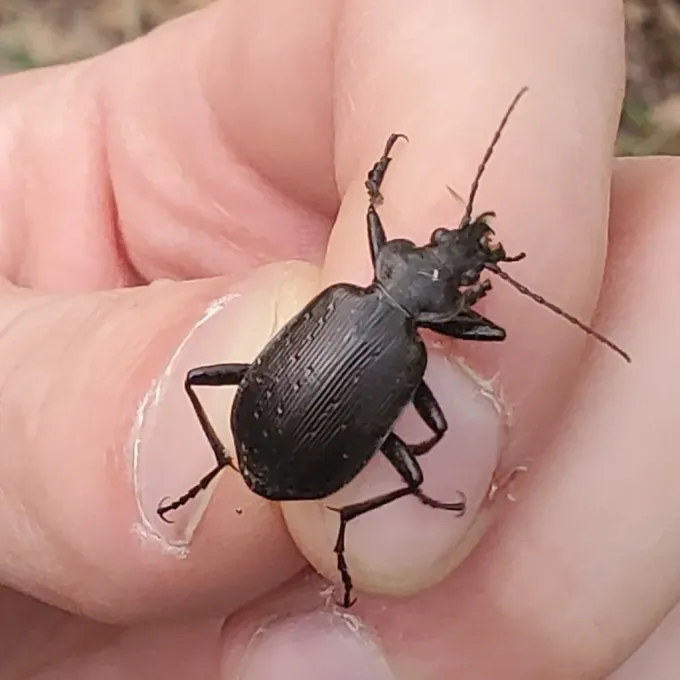
Description
How to identify
Calosoma frigidum, commonly known as a type of caterpillar hunter beetle, belongs to the Carabidae family. While primarily predatory, this species can occasionally exhibit opportunistic feeding behavior on plant tissues.
The adult beetle is characterized by a robust, oval-shaped body with a dark, often metallic or iridescent sheen. The elytra feature distinct striae, which are useful for diagnostic identification.
Their life cycle includes larval stages that are typically found in soil or leaf litter. The larvae possess specialized mandibles adapted for efficient hunting but can also feed on organic matter.
Adults are strong flyers, allowing them to disperse over significant distances to find habitats with high prey density or favorable environmental conditions.
Distinguishing Calosoma frigidum from beneficial ground beetles is essential, as the species has variable feeding habits depending on the availability of its preferred insect prey.
What it damages
Damage to plants usually occurs when the preferred prey populations are scarce, leading the beetles to consume succulent tissues of young crops or nursery stock.
Signs of damage include irregular notches on the leaves and buds of young seedlings. This behavior is more prevalent in the early stages of plant growth during spring.
The impact is most significant in forestry nurseries and gardens adjacent to woodland, where large populations can emerge and concentrate on cultivated plants.
Although the damage is often cosmetic or limited to minor growth retardation, severe infestations in young plantations can lead to significant biomass loss.
Economic damage is generally low, yet it necessitates careful monitoring when managing high-value saplings or sensitive horticultural varieties.
When it appears
The seasonal activity of Calosoma frigidum begins in early spring, synchronized with rising soil temperatures following the winter dormancy period.
The adult population is most active during May and June, which coincides with their mating and egg-laying phase in the soil or protected surface layers.
Larval development occurs throughout the summer months, requiring stable moisture levels for successful growth and transition to the pupal stage.
Pupation takes place within the soil, and the newly emerged adults often remain in the ground for overwintering, ensuring survival through cold weather.
Environmental factors such as rainfall and soil structure play a major role in the population dynamics, influencing the success of each generation.
Signs of infestation
Evidence of infestation is usually found through nocturnal inspection, as these beetles are primarily active at night and hide in the soil or mulch during the day.
Pitfall traps are the most effective method for monitoring local populations of Calosoma frigidum in areas bordering wooded habitats.
Specific leaf injury patterns—characterized by jagged edges—can be observed on young seedlings early in the growing season, indicating active feeding.
Visible presence of adult beetles near the stem bases of plants or under debris is a strong indicator of an established local population.
Monitoring the edge of cultivated fields near forest margins is crucial, as this is where initial incursions of the beetles usually occur.
Control measures
Integrated pest management strategies focusing on soil cultivation are effective at disrupting the life cycle of Calosoma frigidum during their overwintering phase.
If chemical intervention is necessary, the use of targeted insecticides applied to the perimeter of fields can prevent the migration of beetles into crop areas.
Maintaining clear field margins and reducing leaf litter near nurseries can limit the availability of daytime shelters for the adults.
Biological control through the preservation of diverse soil habitats supports natural predators that help maintain the balance of the insect population.
Regular scouting throughout the spring and early summer allows for timely decisions on whether to apply protective treatments to sensitive crops.
Taxonomy
- Latin name
- Calosoma frigidum
- Order
- Coleoptera (beetles)
- Family
- Carabidae
- EPPO code
- CAOOFR
Discussion
No discussions yet — be the first.