
Silver Ground Beetle
Calosoma argentatus
Description
How to identify
The Silver ground beetle Calosoma argentatus belongs to the order Coleoptera and the family Carabidae. While many carabids are predatory, this specific species can cause significant damage to vegetation under certain environmental conditions.
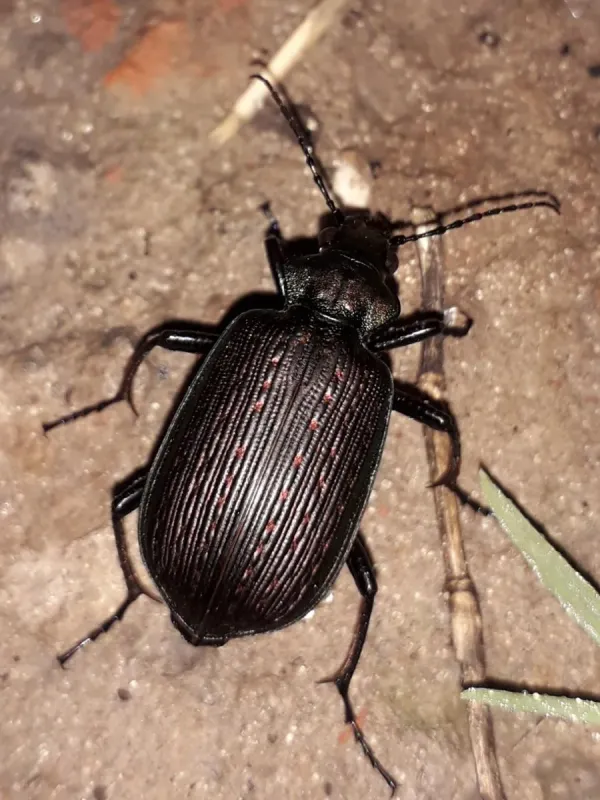
Adult beetles are identified by their metallic sheen with a distinctive silvery reflection on their elytra. Their body is dorsoventrally flattened, allowing them to navigate efficiently through dense vegetation and soil cracks.
Larvae develop primarily within the soil layer and possess strong mandibles adapted for chewing plant tissues. They have a dark appearance and are typically found near the root zones of their host plants during development.
The life cycle undergoes complete metamorphosis, including egg, larva, pupa, and adult stages. Adults typically overwinter in the soil or under debris, emerging in early spring as temperatures begin to rise.
Reproduction is timed with the availability of favorable moisture levels in the soil. Females deposit eggs in clusters, ensuring that emerging larvae have immediate access to food sources required for their rapid development.
What it damages
This pest causes direct damage by feeding on the leaves, stems, and young shoots of various agricultural crops. This feeding activity reduces the photosynthetic capacity of the plants, leading to stunted growth.
Cereals and technical crops are particularly susceptible during their early vegetative stages. Damage to the primary leaf area can lead to a substantial loss in total biomass and eventual yield decline.
Larvae living in the soil may gnaw at the roots and the base of the plant stem, which often results in wilting or the death of young seedlings. This is particularly destructive during dry spells when root regeneration is limited.
The wounds created by the beetle's feeding act as entry points for various soil-borne pathogens. Consequently, secondary fungal or bacterial infections often aggravate the initial physical damage caused by the insect.
The infestation pattern is usually patchy at the onset but can expand rapidly if conditions are favorable. Mobile adults can migrate to adjacent plots, extending the damage across larger areas of farmland.
Control measures
Effective management begins with deep autumn plowing to disrupt the soil structure and destroy overwintering larvae and pupae. This mechanical intervention is one of the most reliable methods for population suppression.
Implementing a rigorous crop rotation strategy helps to break the life cycle of the pest. Planting non-host crops in consecutive years prevents the buildup of beetle populations in specific fields.
Chemical control involving contact insecticides should be applied only when population thresholds are exceeded. Targeting the adults during their active period on the foliage provides the best results for crop protection.
Biological control, including the encouragement of natural predators like birds and larger predatory insects, can help maintain balance. Minimizing broad-spectrum pesticide use helps preserve these beneficial natural enemies.
Regular field scouting and monitoring are essential for early detection of potential outbreaks. By tracking beetle activity, farmers can make informed decisions and apply targeted treatments rather than broad-field applications.
Taxonomy
- Latin name
- Calosoma argentatus
- Order
- Coleoptera (beetles)
- Family
- Carabidae
- EPPO code
- CAOOAR
Discussion
No discussions yet — be the first.