
Calodromius
Calodromius
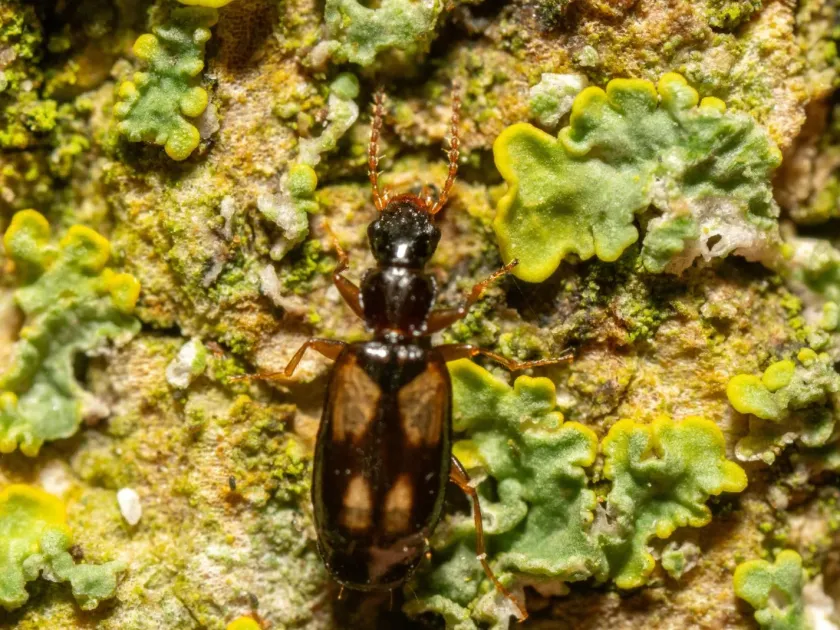
Description
How to identify
Calodromius is a genus of ground beetles (Carabidae) within the order Coleoptera. These beetles are characterized by a flattened, slender body, which is an evolutionary adaptation for hunting and hiding in narrow crevices.
They possess sharp, well-developed mandibles suitable for a predatory lifestyle. Their coloration is typically dark or metallic, helping them blend into their natural habitats, such as tree bark.
Unlike herbivorous insects, these beetles occupy a higher trophic level, meaning they consume other small arthropods found on plants or in the leaf litter.
Identifying specific species within the Calodromius genus requires morphological examination of the pronotum and elytra under magnification.
They are generally found in forests, orchards, and hedgerows, making them common inhabitants of agroforestry environments.
What it damages
Calodromius beetles are not considered pests of agricultural crops. They do not cause damage to leaves, stems, roots, or fruit of cultivated plants.
In fact, these insects serve as valuable predators that contribute to the natural biological control of various pests, such as aphids and mites.
Their presence in an orchard or field margin indicates a healthy environment capable of supporting diverse predatory insect populations.
There is no economic threshold for these beetles, as their impact on crop yields is strictly positive or neutral.
Farmers are encouraged to view these beetles as allies rather than threats, as they help maintain the balance of the ecosystem.
When it appears
The activity cycle of Calodromius begins in early spring as temperatures rise, signaling the end of the hibernation phase.
Adults are most active during the peak of the growing season when their prey populations are at their highest density.
As winter approaches, these beetles seek shelter under loose tree bark, which serves as a natural protection against frost and extreme weather.
The life cycle is typically univoltine, meaning they produce one generation per year, ensuring a consistent but regulated population.
Moist and shaded areas provide the ideal microclimate for their survival throughout the warm months of the year.
Control measures
No control measures are necessary, as these beetles are beneficial organisms that do not threaten crop production.
The best management practice is to minimize the use of non-selective broad-spectrum insecticides that could inadvertently harm these predators.
Maintaining natural vegetation and hedgerows around agricultural plots provides a sanctuary for Calodromius and other beneficial insects.
Implementing Integrated Pest Management (IPM) strategies helps preserve these natural enemies, reducing the need for chemical interventions.
- Reduce broad-spectrum chemical sprays.
- Preserve native tree habitats and hedges.
- Promote biological diversity in agroecosystems.
Taxonomy
- Latin name
- Calodromius
- Order
- Coleoptera (beetles)
- Family
- Carabidae
- EPPO code
- CDMSSP
Discussion
No discussions yet — be the first.