
Six-spotted mirid bug
Calocoris sexguttatus
Description
How to identify
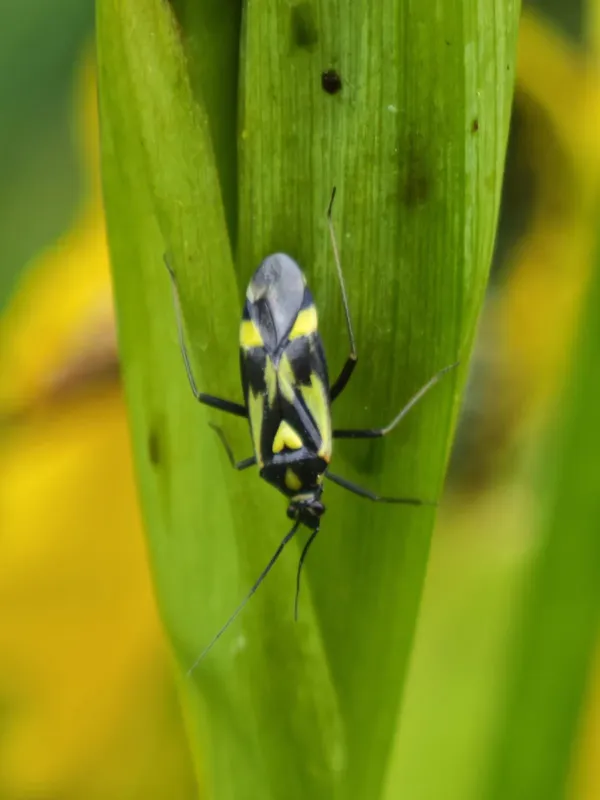
The six-spotted mirid bug (Calocoris sexguttatus) is a member of the Miridae family, order Hemiptera. These insects are characterized by their oval body shape and moderate size, usually ranging from 7 to 9 mm in length.
Their coloration is typically bright green or yellowish-green. A defining feature of this species is the presence of six distinct dark spots on the elytra (wing covers), arranged in two rows of three spots each.
The head and pronotum often feature darker patterns. The antennae are long and thread-like, which is a common trait for the Miridae family, allowing them to navigate efficiently through foliage.
Nymphs resemble the adults but are smaller and lack fully developed wings. They are often found on the underside of leaves, which makes early detection somewhat challenging for growers.
This species is widely distributed in gardens, orchards, and woodland edges, from where it can migrate to cultivated crops during the spring and early summer seasons.
What it damages
This bug is a polyphagous pest, meaning it feeds on a wide range of plants. It is particularly known for causing damage to the Rosaceae family, including apple and pear trees.
Berry crops, such as currants and gooseberries, are also common hosts. Both adults and nymphs feed by piercing plant tissues and sucking out the sap.
The feeding activity primarily affects young, tender leaves and growing shoot tips. This often results in stunted growth and the deformation of new plant structures.
Bugs may also feed on flower buds, which can lead to reduced fruit set or the complete loss of individual flowers and developing fruitlets.
In addition to direct feeding damage, the wounds created by the bugs can serve as entry points for various fungal and bacterial plant diseases.
When it appears
The species overwinters in the egg stage. Eggs are laid inside the tissues of young plant shoots, providing protection during the cold winter months.
Nymphs emerge in the spring, coinciding with the bud burst phase and the beginning of active leaf growth. This is the most critical time for monitoring.
There is typically one generation per year. Adult activity is at its peak during late spring and the first half of June, when temperatures are optimal for their development.
Warm and dry conditions during late spring can accelerate their life cycle, potentially leading to a higher population density in the garden or orchard.
By mid-summer, the number of active bugs gradually declines as they complete their reproductive phase and prepare to lay eggs for the following year.
Signs of infestation
The first noticeable signs of infestation are small, light-colored spots on leaves. Over time, these spots can turn into holes as the damaged tissue dies and dries out.
Infested leaves often become distorted, curled, or crinkled. This deformation is a result of the toxins injected during the feeding process, which disrupt normal leaf development.
- Chlorotic spots and pinpricks on leaf surfaces.
- Twisted, curled, and stunted young leaves.
- Distortion and drying out of shoot tips.
- Premature dropping of flower buds or young fruits.
- Presence of bugs on the underside of foliage.
In cases of severe infestation, the plant may appear wilted or yellowed, and the overall growth rate of the tree or shrub can be significantly reduced.
Regular inspection of the foliage, especially in spring, is crucial for identifying early signs of the six-spotted mirid bug before damage becomes widespread.
Control measures
Cultural control involves the pruning of infested shoots during winter or early spring to destroy the overwintering eggs hidden within the plant tissue.
Managing weeds in and around the orchard is essential, as these plants often serve as early-season reservoirs for the bugs before they spread to crops.
If population levels exceed economic thresholds, appropriate insecticides should be applied during the period of nymph emergence, before they become winged adults.
Biological control, such as protecting populations of natural predators like spiders, lacewings, and other predatory bugs, can help keep the population in check.
Using sticky traps or manual inspections allows for effective monitoring, ensuring that any necessary control measures are timed correctly for maximum impact.
Taxonomy
- Latin name
- Calocoris sexguttatus
- Order
- Hemiptera (bugs, aphids, leafhoppers)
- Family
- Miridae
- EPPO code
- CLCRSE
Discussion
No discussions yet — be the first.