
Calocoris fulvomaculatus
Calocoris fulvomaculatus
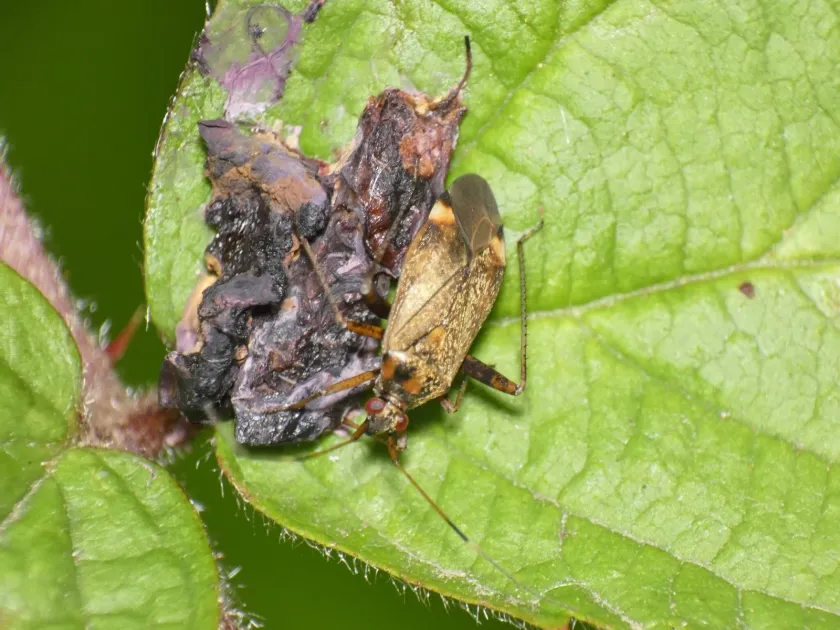
Description
How to identify
Calocoris fulvomaculatus is a species of plant bug belonging to the Miridae family, commonly known as mirids or capsid bugs. These insects are widely distributed in temperate regions and are known for their varied diet.
Adult bugs typically measure between 6 and 8 mm in length. Their coloration ranges from yellowish-brown to reddish-brown, often featuring darker spots or patches on the pronotum and hemelytra, which helps them camouflage against leaves.
The body is elongated and oval-shaped, typical for the Miridae family. They possess long, filiform antennae, which are highly sensitive and used for detecting host plants and mates.
As true bugs, they possess piercing-sucking mouthparts. These specialized mouthparts allow them to penetrate plant tissues and extract cellular sap efficiently, which is the primary source of their nutrition.
The nymphal stages resemble the adults in body structure but are smaller and lack fully developed wings. They undergo incomplete metamorphosis, passing through several instars before reaching maturity.
What it damages
This species is recognized as a polyphagous pest, although it is particularly notorious for damaging hops (Humulus lupulus). It also feeds on various shrubs, orchard trees, and herbaceous plants.
Feeding activity involves the injection of salivary enzymes into the plant tissue, which causes local necrosis and cell death. This leads to the characteristic spots and discolorations observed on the foliage.
Young, rapidly growing tissues such as shoot tips and young leaves are the most susceptible to attack. Damage to these areas often results in stunted growth and morphological deformation of the plant.
In hops, heavy infestations can lead to reduced vine vigor and poor flower formation, directly impacting the quality and quantity of the harvest. This makes the insect a significant concern for commercial producers.
Beyond physical damage, the punctures made by the bugs can create entry points for secondary infections by pathogens, further compromising the health of the plant.
When it appears
The life cycle of Calocoris fulvomaculatus begins in spring when adults emerge from overwintering sites as temperatures rise above a certain threshold (usually 10–12 degrees Celsius).
The activity period is closely linked to the phenology of their host plants. As the vegetation develops in late spring, the bugs increase their feeding and mating activities to ensure the survival of their offspring.
Summer months represent the peak of their activity. During this time, they reproduce actively, and multiple generations may overlap, leading to a consistent presence in susceptible crops.
As the season draws to a close, adult bugs seek sheltered locations to enter diapause. They are adapted to survive cold winters by hiding in protected areas or within the plant structures.
The overwintering strategy ensures that the population persists even after harsh winter conditions, allowing for rapid colonization of crops as soon as the next growing season commences.
Signs of infestation
The initial signs of infestation are small, light-colored spots on the leaves, often referred to as chlorotic flecks. These marks appear as a direct result of the bug feeding on the inner cell contents.
Over time, these spots can enlarge, turn brown, and become necrotic. In severe cases, the affected leaf area may shrivel, turn brittle, and fall off prematurely.
Deformation of the shoot tips is a major indicator of damage. Since the bugs prefer tender, nutrient-rich tissues, the growing points often exhibit twisted or stunted development.
Direct observation of the pest can be difficult as they are agile and tend to move to the underside of leaves when disturbed. Sweeping the foliage with a net is a common method for detection.
- Chlorotic spots and flecking on leaves.
- Twisting and curling of young shoot tips.
- Necrotic patches on stem and leaf tissue.
- Reduced vigor and delayed plant growth.
- Presence of shed exoskeletons on the leaves after molting.
Control measures
Integrated pest management starts with cultural control, primarily the removal of weeds from and around the field. Weeds act as alternative hosts and reservoirs for the bug population.
When populations exceed economic thresholds, chemical control using systemic or contact insecticides is employed. It is crucial to choose products that minimize impact on beneficial predatory insects.
Healthy plants are more resilient. Proper irrigation and fertilization help crops withstand the feeding pressure and recover faster from any damage caused by the mirids.
Encouraging the presence of natural enemies, such as lacewings and predatory bugs (e.g., Anthocoridae), is an effective long-term strategy for managing bug populations.
Monitoring using yellow sticky traps is a recommended practice to detect the arrival of the pest early and to time intervention strategies effectively, preventing widespread damage to the crop.
Taxonomy
- Latin name
- Calocoris fulvomaculatus
- Order
- Hemiptera (bugs, aphids, leafhoppers)
- Family
- Miridae
- EPPO code
- CLCRFU
Discussion
No discussions yet — be the first.