
Callistus lunatus
Callistus lunatus
Description
How to identify
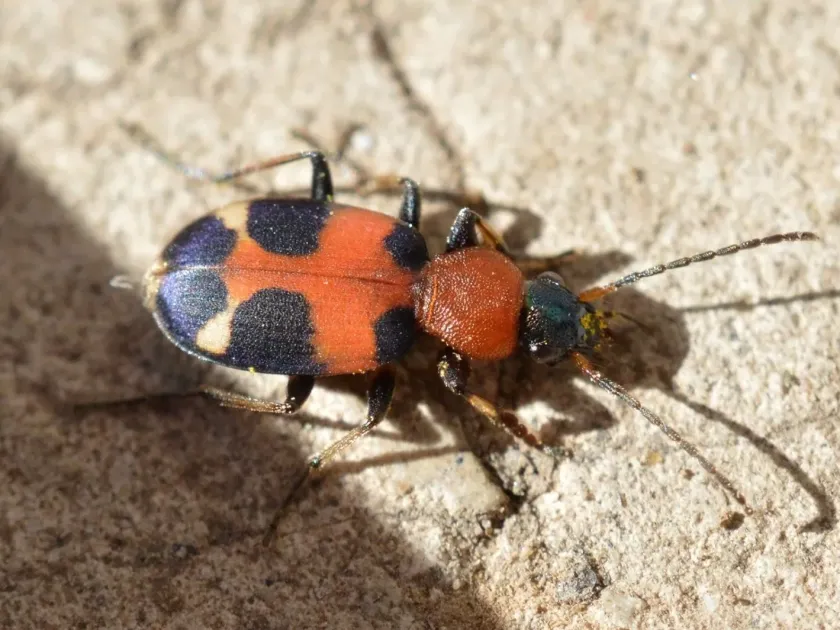
Callistus lunatus is a species of ground beetle belonging to the family Carabidae. It is relatively small, measuring approximately 6–8 mm in length, with a distinct appearance characterized by a reddish-yellow pronotum and black elytra featuring cream-colored spots that resemble crescent moons.
The head of the beetle is black, and its body surface is finely punctured. This species prefers hidden lifestyles, inhabiting moist environments such as damp meadows, field edges, or dense vegetation where they are shielded from direct sunlight.
The larvae are campodeiform, equipped with well-developed mandibles suitable for hunting small soil-dwelling invertebrates. Due to their secretive nature, both larvae and adults remain largely unnoticed in typical field surveys.
Adult beetles are predominantly nocturnal, remaining inactive during the day under debris, stones, or soil clods. Their coloration acts as camouflage in the leaf litter, making them difficult to spot without dedicated searching.
As a representative of the Carabidae family, this beetle is an essential part of the soil-dwelling predator community, contributing to the biological regulation of the agroecosystem.
What it damages
It is important to clarify that Callistus lunatus is not considered a significant agricultural pest. Instead, it functions primarily as a beneficial predator, feeding on various small invertebrates and harmful insects residing in the soil.
In rare instances of food scarcity, adults may occasionally feed on young plant tissues. However, these incidents are sporadic and do not lead to economic losses or reduced crop yields in standard farming scenarios.
The potential damage is usually restricted to the early seedling stage when young plants are particularly vulnerable. Nevertheless, this behavior is considered facultative rather than a regular dietary pattern.
In modern agricultural practices, Callistus lunatus is recognized as an ally to the farmer. Its presence helps manage pest populations naturally, reducing the need for intensive synthetic pesticide applications.
Therefore, managing this species involves protecting its habitat rather than attempting to eradicate it, as it supports a balanced and resilient ecosystem within the field.
When it appears
The seasonal cycle of Callistus lunatus begins in early spring as soil temperatures rise. Adult beetles emerge from their overwintering sites to commence feeding and reproductive activities across the field area.
Reproduction occurs throughout late spring, with the larval stages developing during the warmer summer months. The population dynamics are heavily dependent on soil moisture and the availability of prey items in the soil profile.
Pupation typically takes place mid-summer, leading to the emergence of the next generation of adults. These beetles remain active through the late summer and early autumn, preparing for the dormant winter period.
Overwintering is conducted in the adult stage within protected niches such as crop residues, hedgerows, or deep soil crevices. Proper autumn field management is crucial for their successful overwintering survival.
Climatic factors, specifically rainfall, directly influence the abundance of this species, as carabids are sensitive to the humidity levels of their surrounding microhabitat.
Control measures
Since Callistus lunatus provides ecosystem services by preying on agricultural pests, no control measures are required. Efforts should be focused on conservation biological control to maintain their presence.
Reducing the frequency and intensity of synthetic insecticide applications is vital. By using selective pesticides only when necessary, farmers can preserve these valuable predatory beetle populations.
Integrated Pest Management (IPM) strategies emphasize the preservation of hedgerows and non-crop areas, which serve as reservoirs for ground beetles and other beneficial insects throughout the growing season.
Maintaining soil health and leaving a portion of crop residues on the surface provides the necessary shelter and hunting grounds for this species, ensuring a stable population that aids in natural pest suppression.
Ultimately, the management approach for Callistus lunatus is centered on habitat enhancement and the avoidance of broad-spectrum chemical inputs, ensuring a balanced agricultural landscape.
Taxonomy
- Latin name
- Callistus lunatus
- Order
- Coleoptera (beetles)
- Family
- Carabidae
- EPPO code
- CLLULU
Discussion
No discussions yet — be the first.