
Black-headed ground beetle
Calathus melanocephalus
Description
How to identify
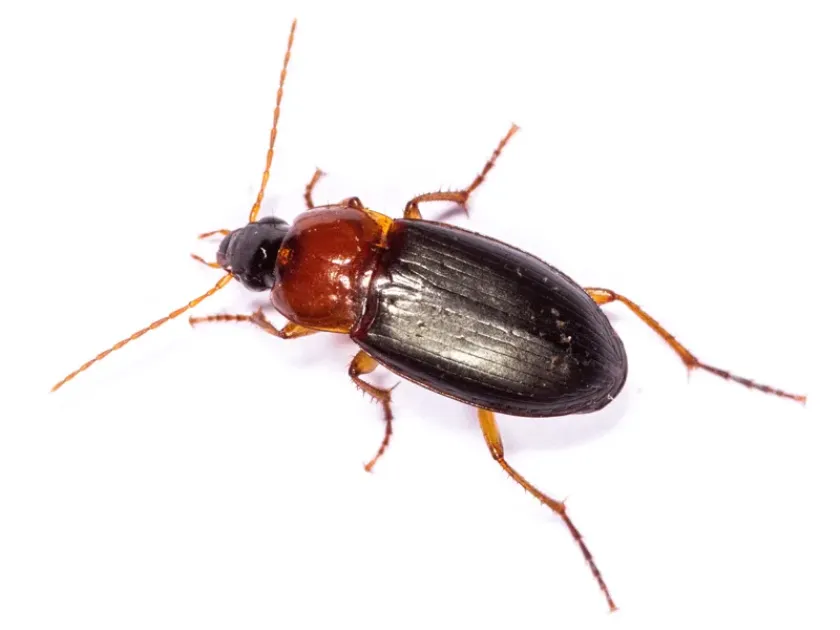
The black-headed ground beetle (Calathus melanocephalus) belongs to the Carabidae family. It is a small insect, measuring 6–8 mm in length, characterized by a black head, a dark pronotum, and yellowish-brown or reddish elytra.
The beetle’s body is flattened and oval, perfectly adapted for life in the soil surface layer and amongst crop debris. Adults possess functional wings and are capable of flight, which facilitates rapid colonization of agricultural fields.
The larvae are typically dark-colored with elongated, robust bodies. They undergo several developmental stages, primarily residing within the topsoil or under organic matter, making them difficult to detect during standard field inspections.
The life cycle is closely linked to soil moisture levels and the availability of organic material. They primarily overwinter as adults or late-stage larvae, resuming activity as soon as soil temperatures increase in early spring.
While many carabid species are considered beneficial predators, the genus Calathus is known for exhibiting mixophagy, allowing them to shift to plant-based diets when their primary insect prey is scarce.
What it damages
The black-headed ground beetle primarily affects young cereal seedlings, including wheat, barley, and rye. In some cases, it can also cause damage to sugar beet crops and various forage grasses during the early vegetative stages.
Larvae are the most damaging stage; they inhabit the soil and feed on germinating seeds, often consuming the embryo and endosperm. This damage frequently leads to poor crop emergence and thin stands that may require reseeding.
Adult beetles contribute to damage by feeding on young leaves, often causing jagged edges or gnawing holes in the cotyledons of seedlings. This is particularly devastating during the emergence phase when the plant's growth energy is limited.
Damage intensity tends to spike during dry years when the beetles' natural prey base is reduced, forcing them to feed on crop tissues to survive and maintain their moisture requirements.
Physical injuries caused by feeding create entry points for soil-borne pathogens, leading to secondary infections such as root rot and seedling blight, which further compromise plant vigor.
Signs of infestation
The most noticeable sign of a black-headed ground beetle infestation is the appearance of gaps or thin patches in the crop rows shortly after emergence. These patches are often localized around active feeding sites.
Upon closer inspection, damaged seedlings exhibit irregular, chewed leaf margins. If the damage occurs below the soil surface, one might find hollowed-out seeds or chewed seedling stems near the crown area.
Adult beetles can be spotted on the soil surface during the early morning or evening. Their movement is often more visible following rain events or in fields with significant plant residues.
Soil excavations in affected areas, typically at a depth of 0–5 cm, usually reveal the presence of larvae. Checking these areas during the early spring is essential for timely detection of the pest population.
High levels of surface residue, such as straw or stubble, correlate with higher infestation rates, as this provides the beetles with essential cover and a stable microclimate for reproduction.
Control measures
Crop rotation is the foundation of managing this pest. Avoiding consecutive plantings of cereals significantly disrupts the beetle's life cycle and reduces the overall population density in the soil.
Proper soil management, specifically deep plowing with moldboard turnover, helps destroy larval overwintering sites by bringing them to the surface, where they are exposed to adverse weather and natural predators.
Strategic timing of sowing is critical; planting during optimal windows ensures that crops establish quickly and move past the most vulnerable seedling stage before the pest population reaches peak activity.
Seed treatments using systemic insecticides, particularly neonicotinoids, provide effective protection for germinating seeds and young seedlings against initial soil-borne pest attacks.
In-season foliar applications of insecticides are generally less effective due to the beetle's cryptic, soil-dwelling nature; therefore, management should prioritize preventive agronomic practices and seed protection.
Taxonomy
- Latin name
- Calathus melanocephalus
- Order
- Coleoptera (beetles)
- Family
- Carabidae
- EPPO code
- CTHUME
Discussion
No discussions yet — be the first.