
Calathus fuscipes
Calathus fuscipes
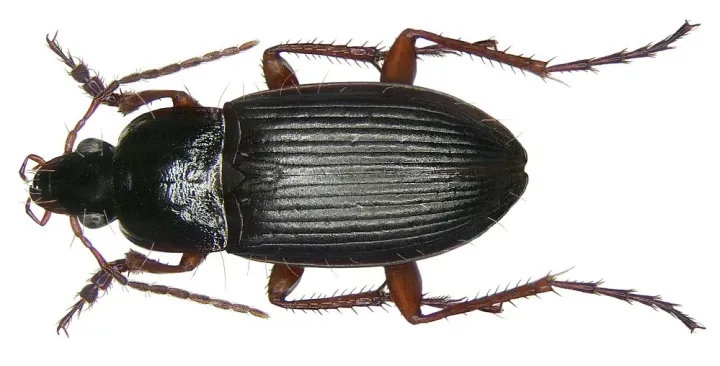
Description
How to identify
Calathus fuscipes is a member of the ground beetle family (Carabidae) within the order Coleoptera. Adult beetles are typically 10–14 mm long, displaying a distinct dark brown or metallic sheen.
The body is flattened and oval, equipped with strong legs that allow the insect to move rapidly across the soil surface. The legs are generally lighter in color compared to the rest of the body.
The larvae are elongated, protected by hardened plates, and possess a robust chewing mouthpart. They primarily inhabit the upper layers of the soil profile, where they spend most of their developmental life.
These beetles are nocturnal, spending their days hidden under soil clods or debris. This cryptic behavior makes it difficult for farmers to detect infestations during standard daylight field inspections.
Systematically, they are common inhabitants of cultivated lands, and their ability to thrive in agricultural environments can lead to significant population surges under favorable conditions.
What it damages
Damage is caused by both adults and larvae feeding on the underground parts of cereal crops such as wheat, barley, and maize, particularly during the early stages of growth.
Larvae are the most destructive stage for seedlings; they gnaw through seeds and young roots, causing stand thinning and preventing proper crop establishment.
Adult beetles can also cause damage by consuming leaf tissues or stems of young vegetables, sugar beets, and sunflower seedlings near the soil surface.
The economic impact of this pest is significantly exacerbated during drought periods, when plants are already under stress and have a decreased ability to recover from root system destruction.
Chronic infestations are frequently associated with fields that have poor crop rotation practices or inadequate soil tillage management, which allows pest populations to accumulate over years.
When it appears
The life cycle of Calathus fuscipes is synchronized with soil temperature and moisture fluctuations. Typically, late-stage larvae or adults overwinter within the soil or beneath organic cover.
Spring activity begins as soon as soil temperatures reach approximately 8–10 degrees Celsius, coinciding with the sowing window for most spring-planted crops.
Reproduction occurs during the summer months. Females lay eggs directly into the soil, and the development of a single generation generally spans about one full year.
Peak adult activity occurs in mid-summer, when the beetles migrate across fields in search of moisture and food sources, potentially leading to widespread but sporadic damage.
As temperatures decline in autumn, adults seek shelter for hibernation, moving to deeper soil layers or dense vegetation mats to survive the winter months.
Signs of infestation
The primary symptom of infestation is the emergence of uneven plant stands or "bare patches" in the field where seedlings fail to thrive or wilt shortly after emergence.
Excavating the soil around stunted plants often reveals gnawed roots or the presence of ground beetle larvae, confirming their role in the damage process.
Trapping adults at night using pitfall traps is an effective way to detect their presence in the field and assess the size of the population before making control decisions.
Poor germination or lack of emergence can sometimes be traced back to larvae feeding on the seeds themselves before the plants even break through the surface.
Accumulated surface debris and weeds act as indicators of favorable habitats for these beetles, increasing the likelihood of localized infestations during the following growing season.
Control measures
Crop rotation is the fundamental component of control, as it breaks the pest's cycle and reduces the buildup of populations in specific fields over time.
Deep autumn plowing is a highly effective mechanical control measure, as it disturbs the soil structure, exposes larvae to natural predators, and disrupts their overwintering sites.
Seed treatment with systemic insecticides provides a necessary barrier, protecting the vulnerable early root system and the seed itself from larval feeding during the germination phase.
In cases of severe infestation, the application of granular soil insecticides during planting can significantly lower pest density and safeguard the crop stand.
Maintaining clean field edges and reducing overall weed pressure helps remove secondary habitats and food sources that allow these beetles to persist in the landscape.
Taxonomy
- Latin name
- Calathus fuscipes
- Order
- Coleoptera (beetles)
- Family
- Carabidae
- EPPO code
- CTHUFU
Discussion
No discussions yet — be the first.