
Green garden katydid
Caedicia simplex
Description
How to identify
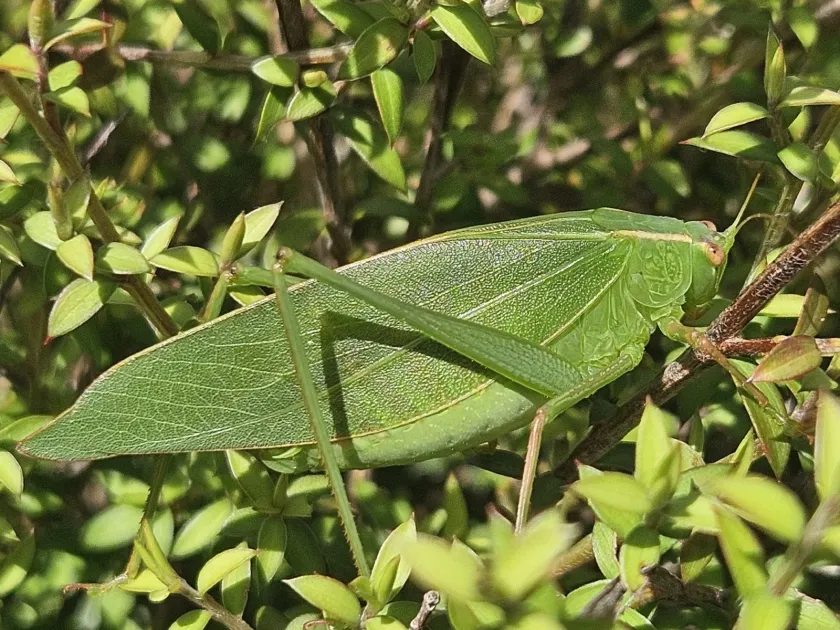
The green garden katydid (Caedicia simplex) belongs to the family Tettigoniidae, known for their bright green color which serves as perfect camouflage among foliage. They are widely recognized by their long, thread-like antennae.
Adult katydids typically reach lengths of 30 to 45 millimeters. Their bodies are streamlined, and their hind legs are heavily muscled, adapted for powerful jumping when they feel threatened or need to move between host plants.
Both males and females possess wings, though the males are often more active at night. Their ability to fly allows them to colonize new areas, making them highly mobile pests within an agricultural setting.
The life cycle involves incomplete metamorphosis. Females lay eggs in plant tissues or soil, and the resulting nymphs resemble small, wingless versions of the adults, becoming increasingly destructive as they molt.
Due to their nocturnal habits and excellent camouflage, identifying these insects during the day requires careful inspection of the foliage and observation of feeding damage patterns.
What it damages
As a generalist herbivore, the green garden katydid attacks a wide range of plants, including fruit trees, vegetables, and ornamental shrubs. They are particularly fond of soft, tender tissues like new leaves.
In orchards, they feed on the leaves of citrus, stone fruits, and pomes. This reduces the photosynthetic capacity of the trees, leading to stunted growth and reduced fruit quality or quantity.
Vegetable crops such as tomatoes, beans, and various leafy greens can be devastated by localized outbreaks. The katydids consume the leaf blades, often leaving behind only the central veins.
Fruits themselves are not spared; katydids often bite into the skin of developing fruits, causing scarring and surface wounds that attract secondary fungal infections and promote rot.
Seedlings are especially vulnerable to katydid damage, as even moderate feeding can result in the complete destruction of the young plant, leading to significant economic losses for growers.
Signs of infestation
The most distinctive sign of a katydid infestation is irregular, ragged feeding patterns on leaves. Unlike caterpillars, which may skeletonize leaves, katydids often leave wide, jagged gaps in the leaf margin.
Surface scarring on fruit is a telltale sign of their activity. These shallow, irregular pits often appear on the fruit skin while it is still developing, resulting in unsightly blemishes.
The presence of dark, granular frass (droppings) on the ground underneath plants or on the leaf surfaces provides a clear indication that katydids are actively feeding in the vicinity.
During the warmer months, the persistent, rhythmic chirping or stridulation of males at night is a reliable acoustic signal that a population of katydids is present in the garden.
Visible physical damage to the plant, combined with the presence of the insects during the night (using a flashlight), confirms the identification and the extent of the infestation.
Control measures
Maintaining a clean garden by removing weeds and tall grass reduces the habitats where katydids hide and reproduce. Keeping the area tidy is the first step in effective pest management.
Light traps can be quite effective at night, as these insects are strongly attracted to artificial lights. Placing these traps strategically can help reduce the adult population significantly.
When populations reach economic damage thresholds, chemical control using approved insecticides may be necessary. It is crucial to apply treatments during the evening when the insects are most active.
Biological control methods, such as encouraging natural predators like spiders, birds, and predatory beetles, can help keep katydid populations in balance within an ecosystem.
Cultural practices such as soil cultivation in the off-season help disturb the eggs deposited in the soil or plant debris, thereby reducing the number of nymphs that emerge in the spring.
Taxonomy
- Latin name
- Caedicia simplex
- Order
- Orthoptera (locusts)
- Family
- Tettigoniidae
- EPPO code
- CAEDSI
Discussion
No discussions yet — be the first.