

Apple fruit weevil
Neocoenorrhinus pauxillus
Description
How to identify
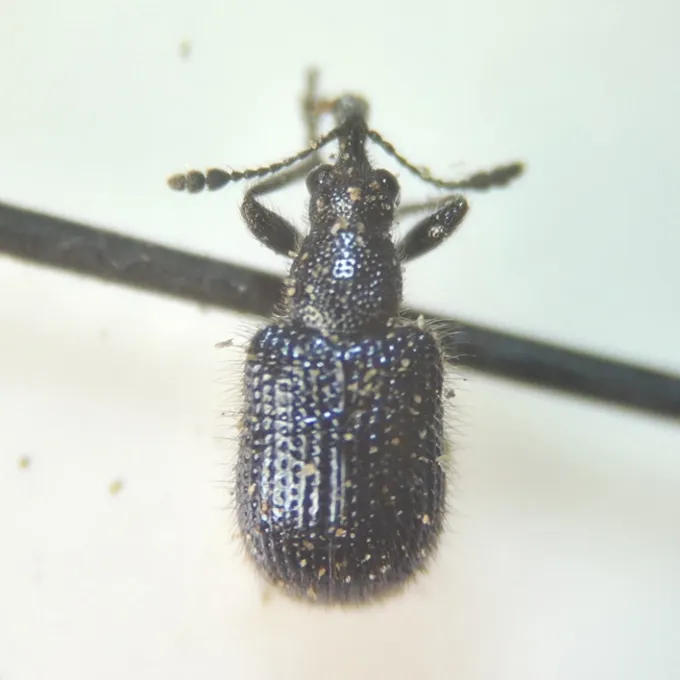
The apple fruit weevil (Neocoenorrhinus pauxillus) is a small beetle belonging to the Attelabidae family. It measures approximately 2.5–3 mm in length and is characterized by a distinct metallic green or blue sheen.
The insect possesses a short, broad snout and a body covered with fine hairs. The larvae are legless, white with a yellowish-brown head, and are typically found feeding inside plant tissues.
These weevils overwinter in the soil at depths of up to 15 cm, emerging in early spring as temperatures rise, which marks the beginning of their life cycle for the season.
The life cycle is generally completed in one year, with pupation occurring in the soil during the summer months after the larvae have finished their development.
Adult beetles are highly mobile and capable of flight, allowing them to rapidly colonize fruit trees and neighboring vegetable crops once they emerge from hibernation.
What it damages
The primary host for this pest is the apple tree (Malus domestica). Adults feed on buds, young leaves, and developing fruit, causing significant stress to the host plant.
Although specializing in fruit trees, the apple fruit weevil can also attack various vegetable crops including fodder beet, cabbage, pepper, tomato, eggplant, potato, and peas, particularly when gardens are adjacent to orchards.
Early season damage includes the destruction of developing buds, which significantly reduces the potential yield by preventing flowers from ever opening.
Females create incisions in leaf petioles or young shoots to deposit their eggs, which leads to the wilting and eventual shedding of these parts of the plant.
In cases of severe infestation, the cumulative damage to foliage and fruit stems can lead to a drastic reduction in overall orchard productivity for the current season.
When it appears
Adult weevils emerge from the soil in early spring, typically when air temperatures reach 10-12°C, aligning with the bud-burst phase of apple trees.
The peak period of activity occurs during the blossoming and fruit-set stages, as the insects require nutrient-dense plant tissues for feeding and reproduction.
By early summer, after the egg-laying phase is complete, the adult population on the trees declines as they return to the soil to pupate or enter diapause.
There is usually only one generation per year, though unusual climatic conditions can influence the timing of larval development and adult emergence.
As autumn approaches, the newly emerged adults bury themselves deep into the soil to seek refuge from winter temperatures.
Signs of infestation
The first signs of infestation are small punctures in the buds, from which sap may exude, leaving dark, sticky marks on the outer scales of the bud.
Prematurely yellowing, curling, or dropping leaves are clear indicators that a female weevil has laid eggs within the leaf petiole.
Look for withered shoots or branches that show mechanical damage, such as constriction rings where the female has practiced her egg-laying behavior.
Massive dropping of fruitlets is a common sign of a significant infestation, often showing distinct signs of larval feeding or structural damage to the stems.
- Visible holes and sap leakage on spring buds.
- Curled leaves with necrotic spots.
- Wilting of terminal shoots and fruit stems.
Control measures
Effective management includes regular cultivation of the soil under the tree canopy to disrupt the life cycle of the pupating larvae and reduce overwintering populations.
Sanitation is critical; gathering and destroying fallen leaves and infested fruit prevents the larvae from completing their development and emerging as adults.
Chemical control should be applied during the early stages of bud development if population thresholds are exceeded, utilizing insecticides that target the adults before they lay eggs.
Biological controls, such as encouraging natural predators or using entomopathogenic fungi, can help keep weevil populations at a manageable level.
Manual monitoring and removing beetles by shaking branches over a drop cloth during the early morning hours can be an effective technique for small-scale gardens.
In brief
9
Damages crops
Content graph
Damages crops · 9
Content graph
Connections · Apple fruit weevil
Most often together:
Marketplace
Products · 7


Actara 25 WG granules, Insecticide (thiamethoxam 250 g
Kemark
Insecticides
0
0
·
54
4 offers
2.22 €per 1 l
Buy

Biology
Taxonomy
- Latin name
- Neocoenorrhinus pauxillus
- Order
- Coleoptera (beetles)
- Family
- Attelabidae
- EPPO code
- COENPA
Community
Discussion
No discussions yet — be the first.