
Bucrates capitatus
Bucrates capitatus
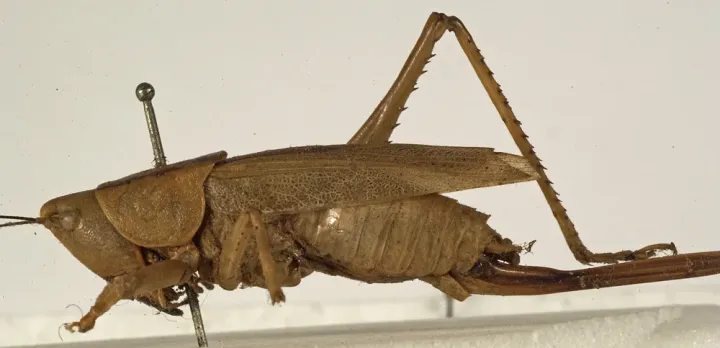
Description
How to identify
Bucrates capitatus is a species of katydid belonging to the family Tettigoniidae within the order Orthoptera. These insects are characterized by their robust bodies and long hind legs adapted for jumping.
The adult stage is marked by a large, prominent head and powerful mandibles, which are evolved for feeding on various plant tissues including stems and leaves.
The life cycle involves incomplete metamorphosis, progressing through egg, nymph, and adult stages, with each nymphal instar gradually increasing in size and development.
Adults possess functional wings and are capable of movement over significant distances, allowing them to invade fields from nearby grasslands or non-cultivated areas.
Their green or brownish camouflage enables them to blend into the foliage, making detection difficult during early-season infestations when their numbers are still relatively low.
What it damages
As phytophagous insects, both nymphs and adults consume significant amounts of plant matter, specifically targeting the vegetative organs of agricultural crops.
Primary hosts include various cereal crops, corn, and certain technical crops where the insects chew leaf margins, eventually reducing the overall photosynthetic capacity.
Heavy infestations can lead to significant yield loss, as the damage to leaves, and occasionally reproductive parts, weakens the plant and limits its resource accumulation.
The feeding intensity increases with the age of the insect, meaning that later instar nymphs and adults pose the highest risk of acute damage during the peak growing season.
Secondary damage occurs as the mechanical wounds inflicted by the insects create entry points for pathogens, potentially leading to fungal or bacterial secondary infections.
Signs of infestation
The most reliable sign of an infestation is the presence of irregularly chewed leaf margins with rough, jagged edges, characteristic of katydid feeding patterns.
Observing the fields in early mornings or late evenings often reveals the pests perched on the upper canopy, as they are most active during these cooler periods of the day.
Frass (insect excrement) found on the leaves or on the soil at the base of the plants provides strong evidence of a high population density in the area.
Patches of defoliated or thinned crops indicate localized feeding hotspots that require immediate attention to prevent the spread of the damage to larger areas.
- Ragged and uneven leaf margins
- Presence of adults in the crop canopy
- Visible insect excrement on leaves
- Reduced vigor and stunted plant growth
- Localized areas of defoliation
Control measures
Effective control strategies start with regular field scouting and monitoring to assess pest pressure and determine if economic thresholds are exceeded.
Cultural practices such as removing weed reservoirs along field margins are essential, as these areas often serve as primary breeding and development sites for the pests.
Chemical intervention involves the use of approved insecticides when scouting indicates a high risk of significant crop loss, ensuring application timing matches the most vulnerable life stages.
Biological control relies on preserving natural predators such as birds and beneficial insects, which play a crucial role in maintaining population levels below the damage threshold.
Deep autumn tillage is recommended in areas with heavy historical infestations, as this practice destroys egg clusters deposited in the soil, effectively reducing the next generation's population.
Taxonomy
- Latin name
- Bucrates capitatus
- Order
- Orthoptera (locusts)
- Family
- Tettigoniidae
- EPPO code
- BUCRCA
Discussion
No discussions yet — be the first.