
Bryocoris
Bryocoris
Description
How to identify
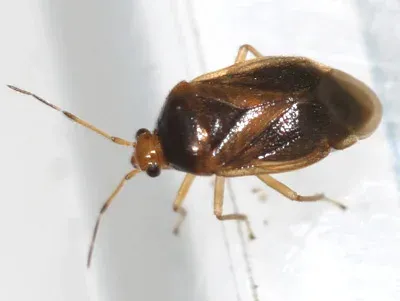
Bryocoris is a genus of small insects belonging to the family Miridae (plant bugs), classified within the order Hemiptera. Adult specimens typically measure between 3 and 5 millimeters in length.
The body of the insect is oval-shaped and often features a specific coloration that helps them camouflage against the vegetation. A diagnostic feature of this family is the presence of a cuneus (a triangular section) on the forewings.
The head of the pest is equipped with a piercing-sucking mouthpart, adapted for penetrating the leaf epidermis and extracting plant sap. The antennae are long and thread-like, which is typical for many members of this group.
Adult coloration often ranges from yellowish-green to brown, allowing them to remain inconspicuous on the underside of leaves. Their visual organs are well-developed, ensuring a quick reaction to movement.
Nymphs resemble the adults morphologically but are smaller and lack fully developed wings. Through several molting stages, they gradually acquire the characteristic features of the mature insect.
What it damages
The primary food source for the most studied species, Bryocoris pteridis, is ferns, although members of the genus can be found on a wide range of herbaceous plants.
These pests damage leaf blades by sucking cellular sap from plant tissues. This disrupts normal photosynthesis and general metabolism in the affected plant parts.
Most frequently, ornamental crops and forest fern species suffer from the activity of Bryocoris. Damage is caused by both adults and nymphs at all developmental stages.
Under conditions of high population density, these insects can significantly reduce the ornamental value of plants, causing premature wilting and aesthetic decline of plantings.
Beyond direct damage from sap extraction, the puncture wounds can serve as entry points for secondary infections, including fungal and bacterial leaf diseases.
When it appears
The life cycle of Bryocoris is closely linked to the phenology of their host plants. Insect activity begins in the spring, following soil warming and the emergence of fresh greenery.
The summer period marks the peak of their activity, characterized by intensive feeding, mating, and egg-laying. Females deposit eggs directly into the tissues of leaves or stems of the host plant.
Depending on regional climatic conditions and the duration of the warm season, there may be one or several generations produced annually.
In autumn, adults prepare for overwintering by seeking shelter in plant debris, under fallen leaves, or in the upper layers of the soil, where they survive low winter temperatures.
Early detection of the pest in the spring is critical to prevent mass reproduction and subsequent damage to crops during the summer months.
Signs of infestation
The first sign of a Bryocoris infestation is the appearance of tiny light-colored spots on the leaves, representing the puncture sites made by the insect's mouthparts.
Over time, affected leaf areas may turn yellowish or develop necrotic spots, becoming more brittle and deformed.
On the underside of the leaf, one can often observe the insects themselves or their nymphs, which typically attempt to hide when threatened or disturbed.
In cases of significant infestation, yellowing and premature drying of individual fern frond segments occur, visually resembling general bush degradation.
- Presence of excrement on the underside of the leaf blade.
- Appearance of small holes in leaf tissues after damaged areas dry out and fall away.
- Curling or twisting of young shoots during heavy infestations.
Control measures
To combat Bryocoris, priority is given to agrotechnical methods aimed at limiting the pest's reproduction in the garden environment.
Regular removal of plant debris and fallen leaves in autumn eliminates the pest's overwintering sites, significantly reducing the population in the following season.
If the infestation is localized, regular plant inspections followed by manual collection or washing the insects off with a water spray from the underside of the leaves is sufficient.
During mass outbreaks, the use of biological agents based on entomopathogenic fungi or systemic insecticides permitted for ornamental plants is justified.
It is important to remember that treatments are best performed in the early morning or evening hours when pests are most active and located on the leaf surface, which enhances the efficacy of chemical control agents.
Taxonomy
- Latin name
- Bryocoris
- Order
- Hemiptera (bugs, aphids, leafhoppers)
- Family
- Miridae
- EPPO code
- BRYCSP
Discussion
No discussions yet — be the first.