
Brumoides suturalis
Brumoides suturalis
Description
How to identify
Brumoides suturalis is a species of ladybird beetle (Coccinellidae) within the order Coleoptera. While many ladybirds are beneficial predators, some species, including this one, can display phytophagous tendencies, causing them to behave as plant pests.
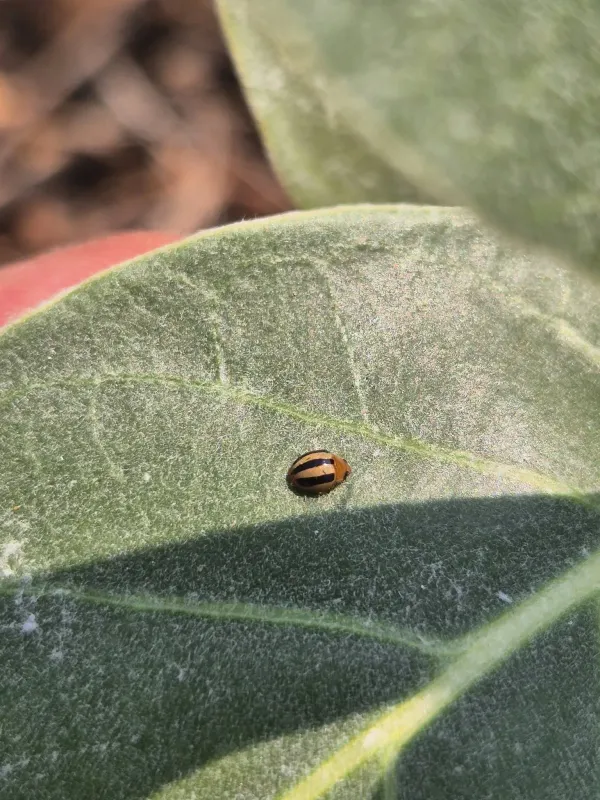
The adult beetle is typically small, oval, or rounded in shape, which is a hallmark of the Coccinellidae family. Its elytra (wing covers) often feature a distinct dark stripe along the suture, providing the basis for its scientific name.
The life cycle involves complete metamorphosis, consisting of egg, larva, pupa, and adult stages. The larvae are often elongated and covered in small, bristle-like hairs, which assist in locomotion on plant foliage.
Adults are known for their high mobility, allowing them to quickly disperse across crops when food sources become scarce or environmental conditions change.
Accurate field identification can be difficult due to the similarity between B. suturalis and other related ladybird species, often requiring expert examination of morphological features.
What it damages
The primary damage caused by Brumoides suturalis occurs when larvae and adults feed on plant tissues. They chew leaves and may also target floral parts, leading to reduced photosynthetic capacity.
This pest is known to affect various crops, particularly within the Solanaceae and Fabaceae families. The extent of the damage depends on the density of the infestation and the stage of crop development.
Larval feeding typically results in skeletonized leaves, as they consume the softer tissues between the veins, leaving behind a fragile, net-like structure.
Beyond direct feeding damage, the wounds left on leaves and stems can serve as entry points for secondary pathogens, such as fungi or bacteria, which further degrade plant health.
Severe infestations can lead to flower abortion and fruit loss, significantly lowering both the yield quality and the overall commercial value of the affected crop.
When it appears
Brumoides suturalis activity usually begins in spring when ambient temperatures rise above the threshold for beetle emergence from overwintering sites.
The peak activity period typically occurs during the warmer summer months, which provide optimal conditions for rapid development and reproduction of successive generations.
As autumn approaches and temperatures drop, adults seek protected microhabitats, such as under plant debris, in soil crevices, or under tree bark, to enter diapause for the winter.
The number of generations per year is closely linked to the local climate and temperature; in warmer regions, the species can complete multiple lifecycles in a single season.
Agronomic monitoring should focus on early growth stages of the crops, using visual scouting and yellow sticky traps to detect initial colonization and prevent outbreaks.
Signs of infestation
The first noticeable signs of Brumoides suturalis are irregular holes and ragged edges on leaves caused by adult and larval feeding activities.
Small, bright, often yellow egg clusters found on the underside of leaves are a critical sign of a developing infestation and indicate the need for proactive intervention.
The presence of larvae on the leaves, especially near the veins or in the leaf axils, is a definitive indicator of the pest's establishment in the field.
Stunted growth, yellowing foliage, and premature wilting are signs that the pest population has reached levels that negatively impact the plant's nutrient uptake and water transport systems.
Signs of frass (insect excrement) on the leaves or stems can also help confirm the presence of this pest, even if the beetles themselves are not immediately visible.
Control measures
Managing Brumoides suturalis requires an Integrated Pest Management (IPM) approach that combines cultural, biological, and chemical control strategies.
Cultural practices, such as clearing crop residues and implementing strict crop rotation, are essential for disrupting the life cycle and destroying overwintering habitats.
Maintaining clean field borders by controlling weeds reduces the availability of secondary host plants, thereby limiting the potential for pest migration into the main crop.
- Applying entomopathogenic fungi to suppress larval populations.
- Using systemic insecticides only when economic injury thresholds are met.
- Encouraging natural predators such as parasitic wasps and predatory bugs.
Effective control requires consistent monitoring and precise application of insecticides to protect beneficial insects and minimize the development of pest resistance.
Taxonomy
- Latin name
- Brumoides suturalis
- Order
- Coleoptera (beetles)
- Family
- Coccinellidae
- EPPO code
- BRUMSU
Discussion
No discussions yet — be the first.