
Broscus cephalotes
Broscus cephalotes
Description
How to identify
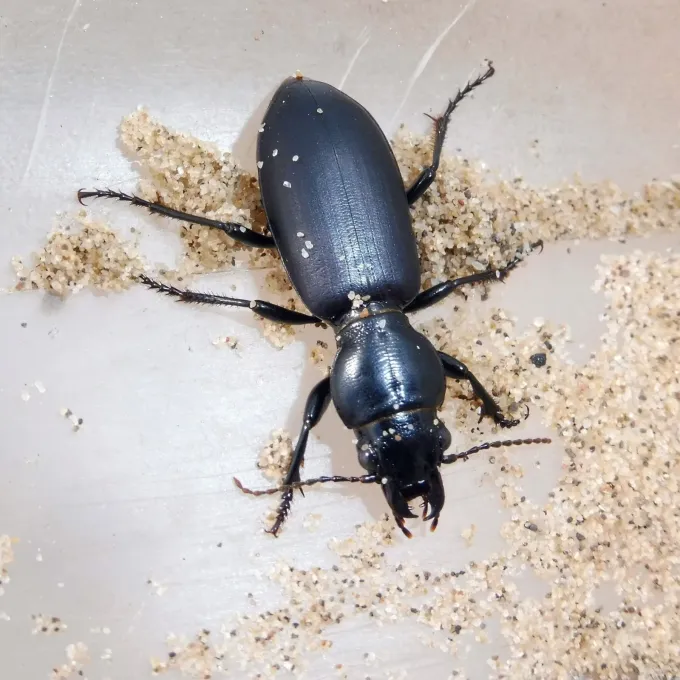
Broscus cephalotes is a large predatory ground beetle belonging to the Carabidae family, within the order Coleoptera. Adult beetles are characterized by a massive head and powerful mandibles, reaching a length of 20–23 mm.
The body of the beetle is deep black with a distinctive metallic sheen. The wing covers (elytra) display pronounced longitudinal ridges, which serves as a key identifying feature during field inspections.
Larvae are elongated and highly mobile, which is typical for many carabid species. They spend their entire developmental cycle in the soil, leading a cryptic, subterranean lifestyle.
This species prefers sandy and loamy soils and is frequently found in fields near woodlands or areas with a light mechanical soil composition.
While often considered beneficial due to their predatory nature, they can exhibit phytophagous behavior under certain conditions, making them a potential threat to agroecosystems.
What it damages
Broscus cephalotes primarily damages seedlings of cereal crops, including winter wheat, rye, and barley. Both adults and larvae contribute to the damage by feeding on the subterranean parts of the plants.
The greatest risk occurs during seed germination and the development of the first true leaves. Beetles may consume young shoots, leading to thinning of the crop stands.
Beyond cereals, this pest can damage root vegetables and other crops if they are planted in areas with high populations of the ground beetle.
During drought years, when natural prey such as smaller invertebrates is scarce, beetles may switch to feeding on plant tissues more aggressively.
Damage to the root system reduces plant vigor, delays development, and can lead to significant yield losses or the complete destruction of individual plants in affected patches.
When it appears
Adult activity of Broscus cephalotes begins in early spring as soil temperatures rise, allowing beetles to emerge from their overwintering sites.
The breeding period typically occurs throughout the spring and summer. During this time, the insects are most active in searching for food and suitable locations to deposit eggs into the soil.
Larvae develop throughout the summer and autumn, passing through several instars, which allows the species to adapt effectively to varying environmental conditions.
Overwintering of both adults and larvae takes place deep within the soil profile, where they remain dormant until the following growing season.
The peak threat to crops corresponds with the mass emergence of adults after winter, which often coincides with the sowing period for spring crops.
Signs of infestation
Signs of infestation include patchy crop failures where young plants appear stunted, yellowed, or are completely severed at the root collar.
Soil inspections in damaged areas often reveal tunnels created by larvae or adults, indicating their activity within the root zone.
Visual observation at night or during overcast weather can reveal the beetles themselves, as they are primarily nocturnal and emerge onto the soil surface to forage.
Characteristic feeding marks on the leaves and base of young stems provide direct evidence of beetle activity in the field.
Recurring damage patterns on the same field sections over successive years confirm the presence of established breeding sites for the pest.
Control measures
Effective control measures include thorough primary and pre-sowing soil cultivation, which destroys the beetle's burrows and reduces the population of larvae.
Implementing crop rotation that avoids cereal monoculture helps prevent the buildup of pest populations in the soil and reduces the risk of major outbreaks.
The use of insecticidal seed treatments is one of the most reliable methods for protecting emerging seedlings from soil-dwelling pests.
When infestation levels exceed the economic threshold, the application of soil insecticides or nocturnal spraying with broad-spectrum insecticides is recommended.
- Regular field monitoring using soil sampling techniques
- Management of weeds along field margins
- Ensuring optimal sowing dates to facilitate rapid plant development through vulnerable growth stages
Taxonomy
- Latin name
- Broscus cephalotes
- Order
- Coleoptera (beetles)
- Family
- Carabidae
- EPPO code
- BRSCCE
Discussion
No discussions yet — be the first.