
Broscus
Broscus
Description
How to identify
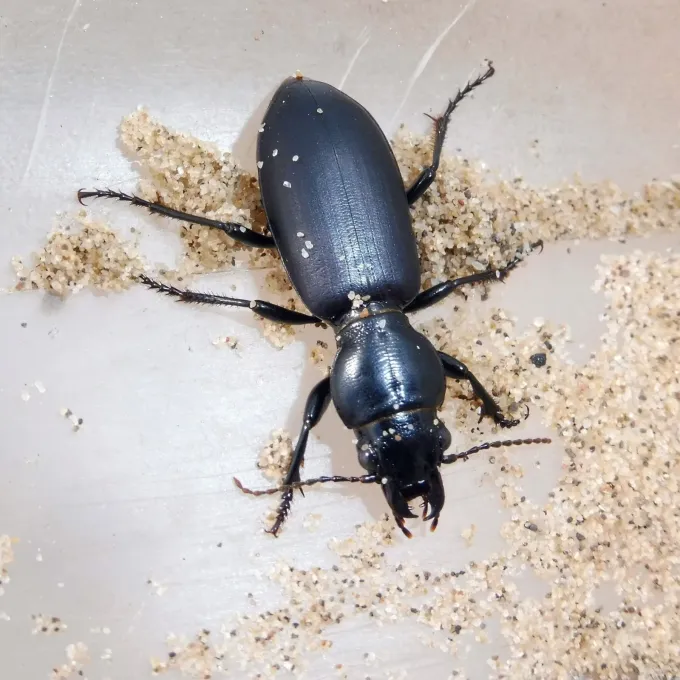
Broscus is a genus of ground beetles (Carabidae) within the order Coleoptera, known for their robust build and specialized soil-dwelling behavior.
Adult beetles are typically black, characterized by a distinct "waist" between the thorax and the elytra, which aids in navigating through soil crevices.
Equipped with powerful mandibles, these insects are primarily predatory but can occasionally exhibit phytophagous behavior, impacting agricultural crops.
The larvae live in the upper soil layers and possess a segmented, pale body with well-developed legs, facilitating their movement in search of food sources.
Precise identification at the species level is challenging due to the morphological similarities shared with other members of the Carabidae family.
What it damages
Broscus primarily affects cereal crops, including winter wheat, barley, and rye, occasionally causing damage to seedling stages of row crops.
The main damage is caused by both adults and larvae feeding on germinating seeds in the soil, often consuming the embryo and leading to poor field emergence.
In early growth stages, beetles can sever seedlings, causing plant death before or immediately after they emerge from the soil surface.
Economic damage is most severe in arid regions or during dry springs, where insects consume vegetative plant parts to compensate for the lack of moisture.
Because the damage occurs below the soil surface, the presence of the pest is often overlooked until significant crop loss is already visible.
When it appears
The activity of Broscus is highly dependent on soil moisture and temperature levels, with peak activity occurring during the spring and autumn months.
The insects overwinter as adult beetles, burying themselves in deep soil layers or protected cavities until environmental conditions become favorable.
Adult emergence typically coincides with the sowing season of cereals, placing the most vulnerable crop stages at risk of immediate infestation.
During the hot summer months, the beetles often enter a state of dormancy or reduced activity within deep soil tunnels to avoid heat stress.
A second cycle of damage is frequently observed in the autumn, as adult beetles feed intensely to build up energy reserves before entering winter dormancy.
Signs of infestation
The primary symptom of infestation is the appearance of bare patches in the field where seeds have failed to germinate due to pest feeding.
Inspection of the soil surface may reveal characteristic holes or tunnel entrances, which indicate the presence of beetle colonies nearby.
Surviving plants might exhibit mechanical damage on their stems or base, often seen as bitten-off parts or shredded tissue near the crown.
When digging up soil in damaged areas, growers can typically find empty seed coats with clear evidence of mandible marks left by the pest.
Large numbers of ground beetles sighted on the soil surface following rain events are a strong indicator of a high local population density.
Control measures
Effective management begins with robust crop rotation, which disrupts the pest's life cycle and prevents the buildup of local populations.
Deep autumn tillage is a crucial cultural control method, as it disrupts overwintering sites and tunnels, exposing larvae to surface predators.
Treating seeds with appropriate systemic insecticides is highly effective in creating a protective zone around the seed during the critical germination phase.
Adjusting planting dates to ensure that crops germinate rapidly under favorable conditions can help plants bypass the most susceptible developmental stages.
- Implementing regular soil sampling to monitor pest density before sowing.
- Applying authorized insecticides if pest populations exceed economic thresholds.
- Maintaining soil fertility to ensure vigorous early crop establishment and growth.
Taxonomy
- Latin name
- Broscus
- Order
- Coleoptera (beetles)
- Family
- Carabidae
- EPPO code
- BRSCSP
Discussion
No discussions yet — be the first.