
Pear flat mite
Brevipalpus pyri
Description
How to identify
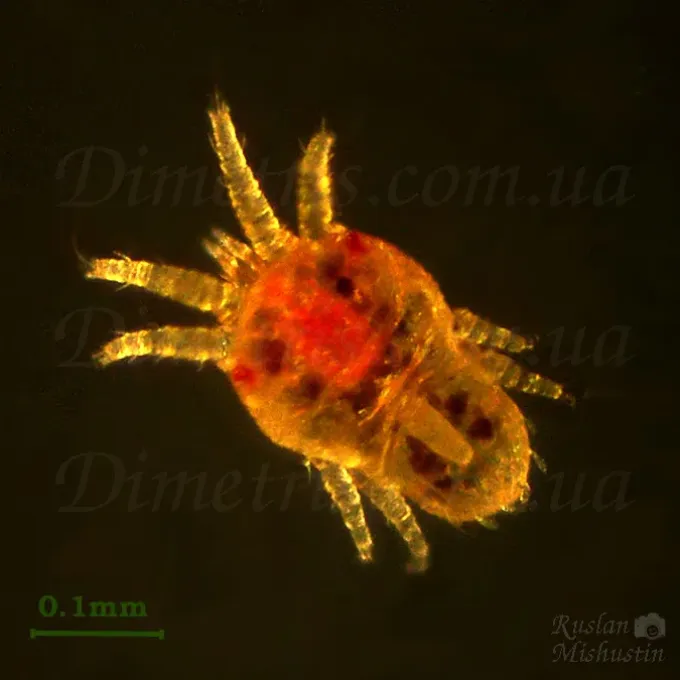
The pear flat mite (Brevipalpus pyri) is a member of the Tenuipalpidae family, order Trombidiformes. These mites are characterized by an extremely flat body structure, which helps them hide in small cracks of bark.
These pests are microscopic, making them almost impossible to detect with the naked eye; they require specialized magnifying equipment for proper field identification.
The coloration of these mites generally ranges from light yellow to reddish-brown, providing excellent camouflage against the woody surfaces of the host tree.
Unlike common spider mites, this species does not spin webs, which often causes gardeners to overlook their presence until significant damage has already occurred.
The life cycle encompasses stages from egg to larva and nymph, with all phases predominantly taking place on the host plant throughout the growing season.
What it damages
The pear flat mite primarily affects pear trees, but it is also known to infest apple and other stone fruit trees within the Rosaceae family.
Feeding occurs when the mites pierce the plant tissue and extract cell sap, which disrupts the photosynthetic process and weakens the plant's overall vitality.
Continuous feeding causes the leaves to lose their healthy green color, leading to premature yellowing, curling, and eventual shedding of the foliage.
Severe infestations can lead to reduced fruit set, malformed fruits, and stunted growth of shoots, negatively impacting the total orchard yield.
By weakening the host tree, the mite infestation also makes the trees more susceptible to environmental stressors and other secondary diseases.
When it appears
Adult females overwinter in protected areas, primarily under loose bark scales or in the crevices of trunks and branches of the host trees.
Activity begins in early spring, typically triggered by rising temperatures as soon as the weather warms sufficiently for the mites to emerge from hibernation.
The most intense reproductive period occurs throughout the spring and early summer, coinciding with the rapid growth phase of the pear tree's leaves.
The mite typically produces several generations per growing season, with the pace of development largely dictated by environmental temperature and relative humidity.
Hot and arid summer conditions are particularly favorable for rapid population growth, potentially leading to outbreaks if natural predators are insufficient.
Signs of infestation
Symptoms often appear as chlorotic spots or a mottled appearance on the leaves, which can gradually merge into larger necrotic patches over time.
Young leaves may exhibit severe deformation or curling, which is a classic indicator of high-density mite activity hindering the leaf's normal development.
A general lack of vigor in the canopy, characterized by a dull or pale appearance of the foliage, suggests that the tree is under heavy feeding pressure.
Upon close inspection, the underside of leaves may show fine stippling, which is the direct result of the mites extracting the liquid content of individual leaf cells.
- Pale yellow spots on the leaf surface.
- Leaf curling and deformation.
- Premature leaf drop and canopy thinning.
Control measures
Management of the pear flat mite relies heavily on the timely application of targeted acaricides designed to eliminate the mites at various life stages.
Preventative measures include thorough bark cleaning and sanitation during the dormant season to remove the hiding places of overwintering females.
Maintaining optimal tree health through balanced irrigation and nutrient management helps the trees better withstand the stress caused by mite feeding.
The use of dormant oil sprays in early spring is a proven method to reduce the initial population size before the growing season fully commences.
It is crucial to rotate between different chemical classes of pesticides to minimize the risk of the mite population developing resistance to treatments.
Taxonomy
- Latin name
- Brevipalpus pyri
- Order
- Mites
- Family
- Tenuipalpidae
- EPPO code
- BRVPPY
Discussion
No discussions yet — be the first.