
False spider mite
Brevipalpus pseudocuneatus
Description
How to identify
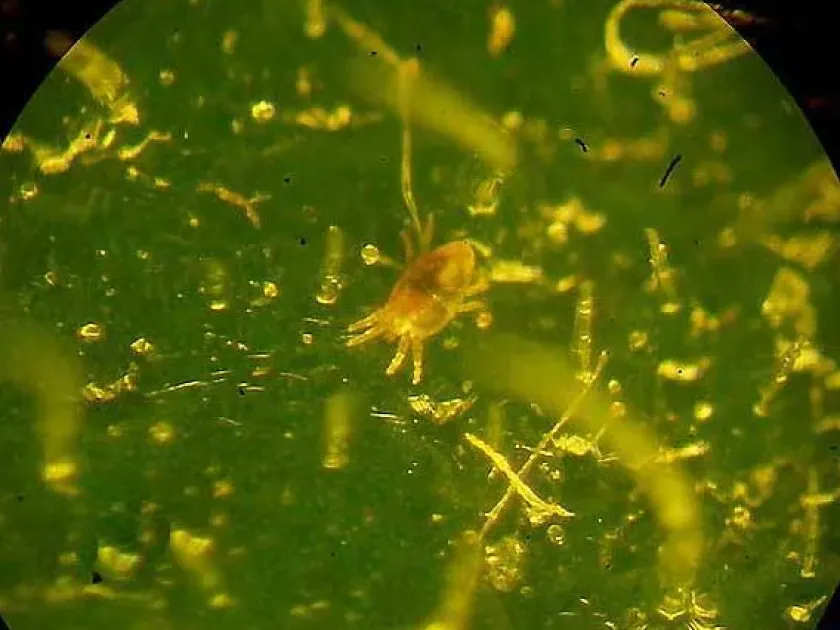
The false spider mite belongs to the Tenuipalpidae family within the order Trombidiformes. These mites are microscopically small and possess a flattened body shape, which allows them to hide effectively in tight crevices of bark or plant tissue.
Adult mites typically exhibit a reddish or brownish color, making them difficult to spot against the backdrop of leaves or stems without the aid of magnification tools.
Their life cycle includes egg, larva, nymph (protonymph and deutonymph), and adult stages. Unlike common spider mites, they do not produce silk webs, which is a key diagnostic characteristic.
These mites prefer environments with moderate temperatures and low humidity, making them particularly problematic in greenhouses or during dry summer periods.
Females lay eggs individually in the small depressions of host plant tissues, providing a natural layer of protection against both predators and certain topical chemical applications.
What it damages
False spider mites feed on a wide variety of ornamental and fruit-bearing crops. They use their specialized mouthparts to pierce plant cells and suck out the sap, leading to significant nutrient loss.
The feeding activity results in the formation of chlorotic spots on leaves, which may eventually coalesce, leading to tissue necrosis and premature leaf drop.
Damaged tissue loses its turgor, causing deformations in new shoots and stunted plant growth, which reduces the overall physiological vigor of the host plant.
These pests are of particular concern as potential vectors for various plant viruses, which can pose a catastrophic threat to nurseries and commercial plantations.
Severe infestations drastically reduce the commercial value and aesthetic appeal of ornamental plants, rendering them unsuitable for sale or landscape design purposes.
When it appears
The active season typically begins in the spring as temperatures rise, signaling the mites to emerge from their overwintering sites in bark or plant debris.
During the summer, high temperatures and low rainfall create ideal conditions for rapid population growth, allowing multiple generations to develop in a single season.
As autumn progresses and temperatures begin to fall, adult mites seek refuge in protected locations, such as cracks in wood or under leaf litter, to survive the winter.
In indoor environments like greenhouses, where stable conditions are maintained, these mites can breed continuously throughout the entire year without a dormant phase.
Monitoring efforts should be intensified during the early stages of bud break to intercept the initial population and prevent an exponential increase in pest numbers.
Signs of infestation
The first indication of infestation is the appearance of tiny, light-colored stippling or patches on leaves, created by the mites' feeding punctures.
With careful inspection using a hand lens, one can observe the small, slow-moving mites and their tiny, oval-shaped red eggs on the underside of leaves.
Stunted development of terminal shoots and the curling of leaf margins are common symptoms that indicate the mite population has reached a high density.
Over time, the affected foliage becomes brittle and discolored, often leading to browning or necrotic areas that are easily mistaken for fungal disease infections.
- Light-colored spot patterns on the foliage.
- Deformed or distorted leaf growth.
- Premature leaf drop unrelated to moisture stress.
- Presence of tiny red eggs on the undersides of leaves.
Control measures
Effective control requires the use of specialized acaricides, preferably those targeting both the adult stages and the immobile egg stage of the mite.
Applications must be performed consistently with a specific interval to disrupt the life cycle, ensuring thorough coverage of the underside of leaves where mites reside.
Cultural practices, including the removal of dead wood and the sanitation of infested plant material, are essential to reduce overwintering sites and population reservoirs.
Maintaining adequate humidity levels in greenhouse environments can help suppress the rapid reproduction rate of these pests while supporting integrated pest management strategies.
Strict inspection of new plant materials before introducing them into a collection is the most effective preventative measure against the spread of false spider mites.
Taxonomy
- Latin name
- Brevipalpus pseudocuneatus
- Order
- Mites
- Family
- Tenuipalpidae
- EPPO code
- BRVPPS
Discussion
No discussions yet — be the first.