
Papaya flat mite
Brevipalpus papayensis
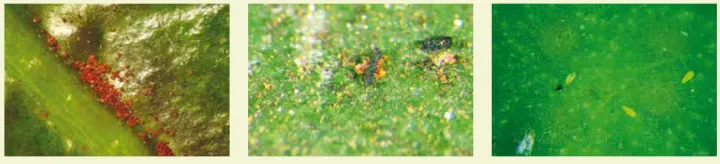
Description
How to identify
The papaya flat mite, Brevipalpus papayensis, is a member of the Tenuipalpidae family. These mites are microscopic and are characterized by their flattened, elongated bodies, which allow them to inhabit tight crevices on plant surfaces.
Adult mites are roughly 0.2 to 0.3 mm in length. Their coloration ranges from pale to reddish, but their size makes them virtually invisible to the naked eye without the assistance of a magnifying lens.
The life cycle progresses through egg, larva, protonymph, deutonymph, and adult stages. Under optimal tropical conditions, this lifecycle can be completed in a very short time, facilitating rapid population growth.
They often reproduce parthenogenetically, which contributes to their high survival rate and the ability to colonize new host plants quickly, especially in environments with limited natural predators.
To identify them correctly, agronomists conduct field scouting using 10x to 20x magnification to examine the underside of leaves and the surface of fruits, where these mites prefer to feed.
What it damages
The primary host for this pest is the papaya plant. Mites feed by piercing the epidermis of leaves, stems, and developing fruits, withdrawing sap and causing cellular collapse.
Beyond papaya, this species can affect various other tropical and ornamental crops, making it a significant challenge for nurseries and greenhouses maintaining high plant diversity.
Damage to the fruit is of particular economic concern. Feeding results in the formation of unsightly corky patches, cracks, and surface blemishes that disqualify fruit for premium export markets.
Infested plants exhibit reduced vigor, stunted growth, and distorted leaf development. In severe cases, the plant may experience significant leaf drop, which diminishes the photosynthetic capacity and overall yield.
The feeding wounds serve as entry points for secondary pathogens, such as fungi and bacteria, which can further aggravate the decline of the plant’s health and fruit quality.
Signs of infestation
The first signs of infestation include the appearance of localized chlorotic spots on leaves. Over time, these spots expand, darken, and the affected leaf tissue becomes brittle and dry.
Corky, rough patches on the fruit surface are the most recognizable sign. These patches develop as the fruit grows, causing deformities and an uneven, unappealing appearance on the rind.
Distortion of apical buds and young shoots is common. Infested plants show signs of stunted development, with leaves becoming smaller than normal and exhibiting curling along the margins.
Visual inspection often reveals a dusty or gritty appearance on the underside of leaves, caused by the accumulation of mite exuviae (cast skins) and fecal matter within the dense mite colonies.
Yield reduction is accompanied by a decline in the quality of the harvest, including lower sugar content in fruits and a reduced shelf life, which directly impacts the commercial value of the crop.
Control measures
Integrated Pest Management (IPM) is essential. Regular scouting and monitoring of plant surfaces are critical to detect early populations before they reach economic injury levels.
Chemical control involves the application of specific acaricides. It is vital to rotate different chemical classes to prevent the mites from developing resistance to commonly used active ingredients.
Sanitation practices are highly effective. Removing and destroying infested plant material helps curb the spread, while maintaining proper irrigation ensures that plants remain resilient against mite stress.
Biological control methods, including the introduction of predatory phytoseiid mites, can provide sustainable population suppression by feeding on all stages of the flat mite development.
Strict quarantine measures for incoming plant material and the disinfection of pruning tools are necessary to prevent the accidental introduction of Brevipalpus papayensis to clean fields or greenhouses.
Taxonomy
- Latin name
- Brevipalpus papayensis
- Order
- Mites
- Family
- Tenuipalpidae
- EPPO code
- BRVPPA
Discussion
No discussions yet — be the first.