
Oncidium flat mite
Brevipalpus oncidii
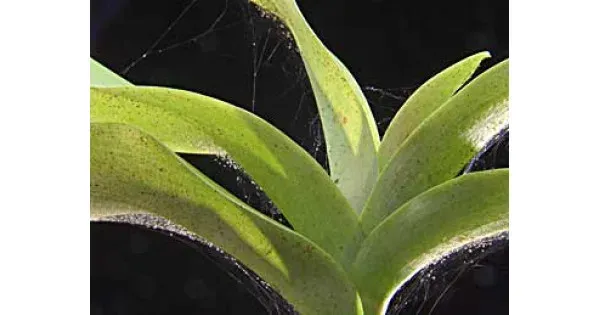
Description
How to identify
The Oncidium flat mite (Brevipalpus oncidii) belongs to the Tenuipalpidae family. These are minute, microscopic pests, typically measuring about 0.3 mm in length, making them extremely difficult to spot with the naked eye.
These mites have a flattened, reddish-brown body, which allows them to hide effectively in the crevices of orchid leaves, sheaths, and pseudobulbs, staying protected from predators and chemical sprays.
The life cycle consists of egg, larva, protonymph, deutonymph, and adult stages. Development speed is highly dependent on ambient temperature, significantly accelerating in warm environments.
Reproduction is primarily parthenogenetic, meaning females can lay fertile eggs without mating, allowing a single individual to start a major infestation quickly.
Unlike spider mites, they do not produce webs, which makes early detection challenging for hobbyists who rely on spotting webbing to diagnose mite issues.
What it damages
The mite primarily infests epiphytic orchids, particularly species like Oncidium, Odontoglossum, and Cattleya. It damages the plant by piercing the epidermal cells and extracting the chlorophyll-rich sap.
Feeding sites show up as silvery, whitish, or bronze patches, which often lead to premature tissue death and leaf fall if the infestation is not managed properly.
Damage to the meristem and new shoots is particularly devastating, often resulting in deformed leaf growth or the complete cessation of new shoot development.
Feeding wounds provide entry points for opportunistic pathogens, including bacteria and fungi, which can lead to rot and systemic plant disease.
Chronic infestation drains the plant of essential resources, leading to weak blooms, stunted growth, and a significantly reduced lifespan for the affected orchid.
Signs of infestation
Early symptoms include pale, stippled, or silver-looking spots on the underside of leaves, which eventually turn dull or bronze as the tissue dies.
You may notice the surface of the leaves becoming rough and corky, especially around the base of the plant or where the leaves attach to the pseudobulbs.
Stunted growth or leaves that emerge curled and distorted are clear indicators that the mite colony is actively damaging the apical meristem.
In mature cases, the pseudobulbs may develop brownish, scaly patches that do not heal, indicating prolonged exposure to mite feeding.
Using a 10x or 20x magnification lens, you can inspect the leaf underside along the midrib to see the slow-moving, flat, reddish mites themselves.
Control measures
Controlling the Oncidium flat mite requires specialized miticides rather than general insecticides. Look for products containing abamectin, spirodiclofen, or pyridaben.
Multiple applications are mandatory, spaced 7 to 10 days apart, to ensure that newly hatched mites are eliminated before they reach maturity and reproduce.
Good cultural practices, such as maintaining moderate humidity and keeping foliage clean, help create an environment that is less favorable for mite outbreaks.
Always isolate new orchids for at least one month. A preventative miticide application during the quarantine period is highly recommended for sensitive species.
Since these pests thrive in dry conditions, avoid over-drying your orchids and maintain proper airflow to discourage the colonization of these pests.
Taxonomy
- Latin name
- Brevipalpus oncidii
- Order
- Mites
- Family
- Tenuipalpidae
- EPPO code
- BRVPON
Discussion
No discussions yet — be the first.