
Flat lily mite
Brevipalpus lilium
Description
How to identify
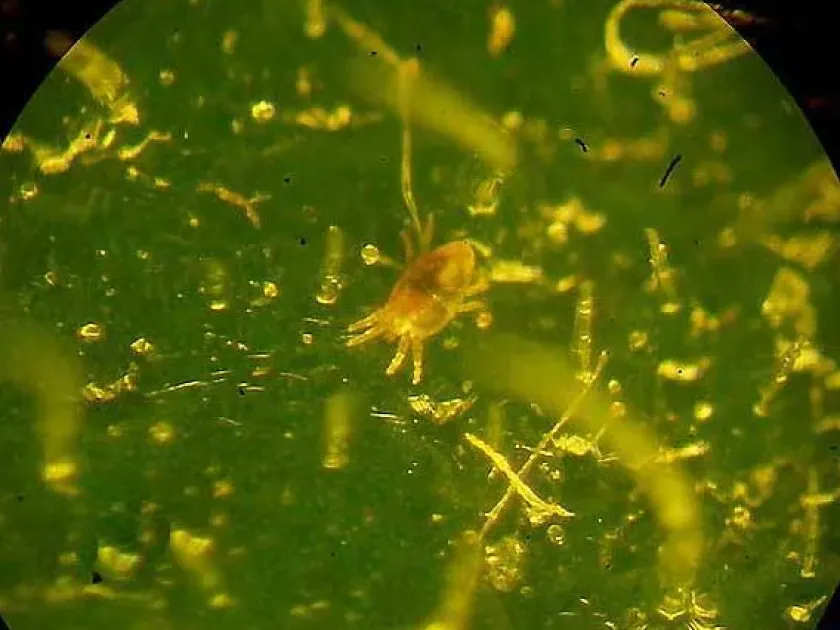
The flat lily mite, scientifically known as Brevipalpus lilium, is a member of the Tenuipalpidae family. These mites are extremely small, typically measuring around 0.3 mm in length, which makes them almost invisible to the naked eye.
The mite possesses a flattened, oval body shape, which enables it to thrive in the tight spaces between bulb scales. Their color ranges from reddish-brown to orange, blending seamlessly with the dry skins of lily bulbs.
Unlike members of the spider mite family, these mites do not spin webbing. This lack of visible signs often leads gardeners to misidentify the cause of plant decline, confusing the symptoms with fungal diseases or nutrient deficiencies.
The life cycle consists of the egg, larva, two nymphal stages, and the adult. Under warm and dry conditions, the development from egg to adult can be completed in less than three weeks, leading to explosive population growth.
These pests are particularly adapted to stable indoor environments such as greenhouses and storage facilities, where they can reproduce continuously throughout the year if temperatures remain moderate.
What it damages
The primary host for this pest is the lily. However, the mite is also known to infest other bulbous plants including tulips, narcissi, and various ornamental species commonly stored in cool, dark environments.
The mite feeds by piercing the plant cells and extracting the sap. This feeding process causes localized necrosis and significantly weakens the bulb's structural integrity, making it susceptible to secondary infections.
Feeding damage at the bulb's basal plate or the growing point can lead to stunted vegetative growth, deformed leaves, and the total failure of flower production. In severe cases, the entire bulb may dry out completely.
Damage is especially critical in storage, where mites can move between bulbs that are in contact with each other, effectively spreading the infestation across an entire collection or inventory within a few weeks.
Economically, this pest is a major threat to commercial lily production. It reduces the quality of the bulbs, lowers the propagation coefficient, and requires costly chemical interventions to save infested stocks.
Signs of infestation
Early symptoms of an infestation include the yellowing of foliage and a general lack of vigor. Plants may appear to be suffering from drought stress despite receiving consistent watering and fertilization.
A closer inspection of the bulbs reveals necrotic spots, often appearing as brown or sunken patches. These areas indicate where the mites have concentrated their feeding, breaking the surface of the bulb scales.
Malformed stems and underdeveloped buds are common indicators. In many cases, the flower buds fail to open properly or abort entirely, as the mites have damaged the internal tissues responsible for stem development.
The presence of fine, dusty debris, which consists of mite excrement and cast-off skins, can be found in the crevices of the scales. This is a clear sign that a significant colony is present and actively feeding.
Bulb deterioration is often accompanied by the colonization of secondary fungi. If a bulb feels light, crumbly, or has a dry and brittle texture, it is a strong indicator of a long-term mite infestation.
Control measures
Hot water treatment is one of the most effective non-chemical methods for controlling these mites. Soaking bulbs in water at approximately 45 degrees Celsius for 30 minutes can eliminate mites without damaging the bulb tissues.
Chemical control involves the application of specific acaricides, preferably those containing abamectin or similar compounds. Treatments should be applied as a preventive measure during the growing season and before storage.
Maintaining proper hygiene in the garden and storage area is vital. This includes destroying heavily infested bulbs and disinfecting containers to prevent the spread of the pest to healthy plant stocks.
Monitoring is key. Regularly using a 10x or 20x magnification lens to inspect the base and scales of bulbs during the dormant season allows for early intervention before the infestation becomes unmanageable.
- Implement strict sanitation of bulb storage areas.
- Use systemic acaricides for treatment of stored bulbs.
- Avoid over-crowding bulbs in storage to prevent mite migration.
- Promote healthy plant growth through proper soil management.
Taxonomy
- Latin name
- Brevipalpus lilium
- Order
- Mites
- Family
- Tenuipalpidae
- EPPO code
- BRVPLI
Discussion
No discussions yet — be the first.