
Flat mite Brevipalpus juncus
Brevipalpus juncus
Description
How to identify
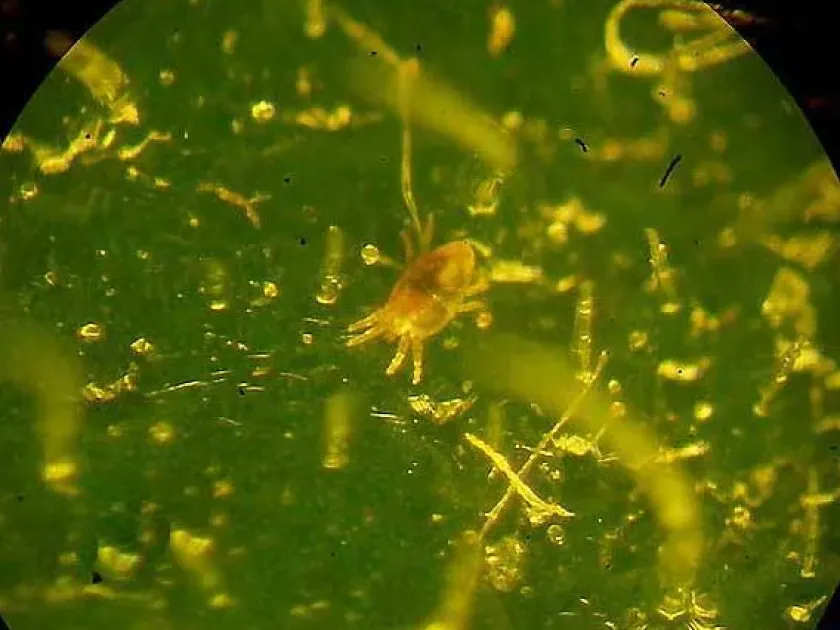
The flat mite Brevipalpus juncus belongs to the family Tenuipalpidae. These mites are microscopic, with a flattened body typically ranging in color from reddish to brown, making them difficult to spot without magnification.
Unlike spider mites, they do not produce silk webs, which often causes them to go undetected by growers until the plant health has significantly deteriorated.
The life cycle involves egg, larva, protonymph, deutonymph, and adult stages. Development is highly temperature-dependent, allowing for rapid population growth under warm greenhouse conditions.
Females often oviposit directly into plant tissues or bark crevices, which provides a level of protection against contact-based pest control methods.
As obligate phytophages, these mites feed on plant cell sap, leading to a steady decline in the host plant's physiological and metabolic health.
What it damages
This mite species affects a wide range of decorative plants, including species of the Juncaceae family, as well as various greenhouse flowers and fruit crops.
By piercing the epidermis with their stylets, the mites extract cell contents, which disrupts photosynthesis and stunts the overall development of the host plant.
In nursery settings, heavy infestations of Brevipalpus juncus can lead to significant economic losses by diminishing the aesthetic and market value of the plants.
The feeding sites created by the mites act as entry points for secondary pathogens, such as fungi and bacteria, leading to further necrosis and plant decline.
Severe infestations often manifest as leaf drop, abnormal shoot curling, and a visible reduction in the vigor of the plant during the growing season.
Signs of infestation
Initial signs of infestation appear as tiny light-colored stippling or chlorotic spots on leaves, which may eventually coalesce into large, discolored necrotic areas.
A bronzing effect on leaves is a hallmark symptom caused by the death of epidermal cells in response to the mite's toxic saliva during feeding.
Stunted internodes and deformed growth on young shoots are strong indicators of a established colony feeding on the active meristematic tissues.
Close inspection with a 10x lens on the underside of the leaves usually reveals the presence of bright red adults and their oval-shaped eggs.
The drying of leaf margins without the presence of webbing is a key diagnostic feature distinguishing this pest from common spider mites.
Control measures
Managing flat mites requires an integrated approach that combines improved cultural practices with the strategic application of chemical acaricides.
Sanitation is critical; pruning and destroying heavily infested plant material can significantly reduce the overwintering population of the pest.
Maintaining adequate humidity levels in greenhouse environments helps to mitigate the rapid reproduction rates favored by these mites.
Chemical control should rely on effective acaricides capable of targeting various life stages, including those hidden within leaf tissues.
- Regular monitoring and repeat applications with a 7-10 day interval are essential to break the mite life cycle.
- Rotate chemical classes to manage resistance effectively and ensure long-term population suppression.
Taxonomy
- Latin name
- Brevipalpus juncus
- Order
- Mites
- Family
- Tenuipalpidae
- EPPO code
- BRVPJU
Discussion
No discussions yet — be the first.