
Ferragut's flat mite
Brevipalpus ferraguti
Description
How to identify
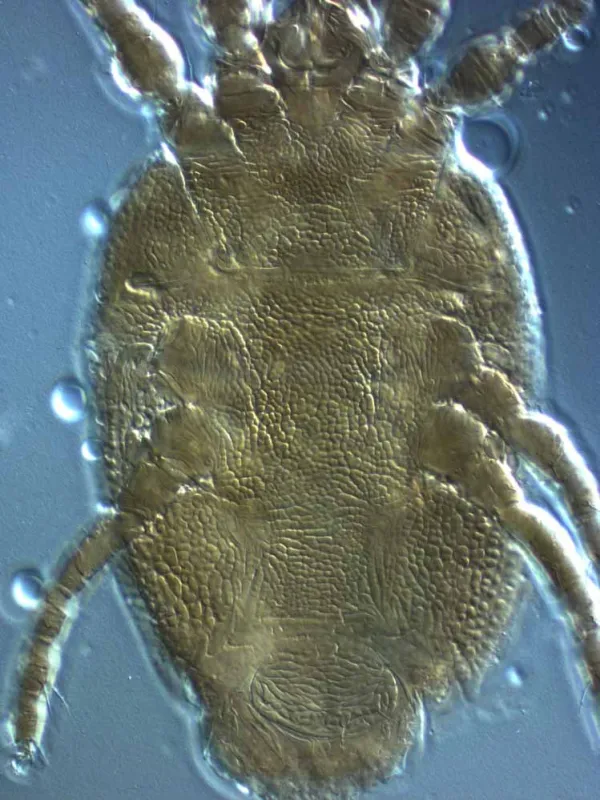
Ferragut's flat mite (Brevipalpus ferraguti) is a member of the Tenuipalpidae family, often referred to as flat mites. These mites are microscopic, typically measuring less than 0.3 mm in length.
Unlike members of the Tetranychidae family, Brevipalpus species do not spin silk webs, which is a key diagnostic feature when surveying for potential infestations.
The mites possess a flattened, oval-shaped body, usually displaying colors ranging from pale yellow to reddish-brown, helping them blend in with the leaf surface.
Their life cycle consists of the egg, larva, protonymph, deutonymph, and adult stages, all of which occur directly on the host plant tissue.
The reproduction strategy includes both sexual and asexual (parthenogenetic) modes, which contributes to their high potential for population growth under favorable conditions.
What it damages
This species is considered a polyphagous pest, capable of feeding on a wide variety of woody plants, ornamentals, and agricultural crops, particularly citrus and grapes.
They predominantly feed on the underside of leaves, along the midribs, as well as on petioles and young fruit skin, causing direct injury to the plant cells.
The feeding activity involves piercing the plant epidermis and extracting cell contents, which disrupts photosynthesis and induces localized necrosis.
In cases of severe infestation, the cumulative feeding damage leads to stunted growth, reduced vigor, and increased susceptibility to environmental stresses.
The cosmetic damage caused by these mites can render fruit unmarketable and significantly diminish the aesthetic value of ornamental plants in gardens.
Signs of infestation
Infestation typically starts with the appearance of small chlorotic spots on the foliage, which eventually coalesce into larger discolored or necrotic patches.
On citrus fruits, the damage often manifests as hardened, corky areas on the peel, which persist as the fruit develops and matures.
Affected leaves lose their natural luster, turning dull and grayish-brown, and may exhibit premature abscission if the infestation is not managed.
Presence of the pest can be confirmed by using a magnifying lens to spot the small, reddish eggs and the slow-moving adults tucked into the crevices of the leaf veins.
The lack of webbing, combined with specific necrotic patterns on the leaves and fruits, distinguishes this species from common spider mites.
Control measures
Management of Brevipalpus ferraguti requires the strategic application of acaricides that target all active life stages, particularly eggs and nymphs.
Regular scouting is essential for early detection. Inspectors should pay close attention to the underside of leaves and young plant tissue during dry, hot periods.
Cultural control practices, such as maintaining proper plant hydration and vigor, can make the host plant less suitable for rapid mite population expansion.
Resistance management is vital; growers should rotate chemical classes of acaricides to avoid the development of resistant populations within the garden or nursery.
- Sanitary pruning to remove and destroy heavily infested branches.
- Application of bio-rational pesticides like horticultural oils or sulfur-based products.
- Enhancement of natural enemy populations in integrated pest management programs.
Taxonomy
- Latin name
- Brevipalpus ferraguti
- Order
- Mites
- Family
- Tenuipalpidae
- EPPO code
- BRVPFR
Discussion
No discussions yet — be the first.