
Bradycellus harpalinus
Bradycellus harpalinus
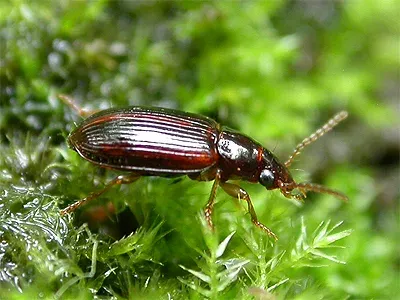
Description
How to identify
Bradycellus harpalinus belongs to the ground beetle family (Carabidae) within the order Coleoptera. These are small beetles, typically exhibiting a dark, brownish-black color often accompanied by a metallic sheen.
Adult beetles possess robust mouthparts designed for chewing, reflecting their status as facultative phytophages. This allows them to feed on both animal prey and plant material, including grain crops.
The insect features a dense head structure with thread-like antennae of moderate length. Their legs are well-developed, enabling rapid movement across the soil surface and through crop residues, where they typically hide during daylight hours.
The life cycle undergoes complete metamorphosis, including egg, larval, pupal, and adult stages. Activity is predominantly nocturnal, with beetles seeking shelter in soil crevices or under debris during the day.
Identifying this species in the field often requires specialized entomological keys, as they share morphological characteristics with many other small ground beetle species found in soil environments.
What it damages
This beetle species primarily targets cereal crops, including wheat, barley, and rye. They are particularly attracted to the reproductive stages of the plants during the grain-filling period.
In addition to cultivated cereals, the pest can sustain its population on various wild grasses, allowing it to persist in agricultural landscapes even during years when preferred host crops are rotated.
The adult beetles cause the most significant damage by feeding on the ears of grain crops. They consume the developing kernels, leading to shriveled grain and decreased overall yields at harvest.
Larvae, residing in the upper soil layers, may feed on germinating seeds and the root systems of young plants, potentially causing thinning of the crop stand in the early stages of development.
Severe infestations not only reduce yield quantity but also affect the quality of the harvest, as damaged grain is more susceptible to colonization by secondary fungal pathogens.
When it appears
The activity of Bradycellus harpalinus is strongly dictated by soil temperature and moisture levels. Adult activity peaks during late spring and throughout the summer months.
The period of maximum infestation on cereal crops coincides with the grain ripening phase. During this time, the beetles are highly active in searching for carbohydrate-rich food sources in the ears.
As autumn approaches and temperatures drop, the beetles enter diapause, retreating into deeper soil layers or dense vegetative cover to survive the winter season.
Spring emergence occurs once soil temperatures reach a critical threshold, triggering the resumption of feeding and reproductive activities after the overwintering period.
Environmental fluctuations, such as prolonged drought or excessive rainfall, can significantly alter the timing of peak activity and the overall reproductive success of the population.
Signs of infestation
The primary indicator of a Bradycellus harpalinus infestation is the presence of hollowed-out or damaged kernels within the ears, often appearing as distinct feeding marks on the grain hull.
Field monitoring during the night using supplemental lighting can reveal the presence of adult beetles feeding on the ears or moving along the stems of the plants.
Signs of larval activity include irregular patches in the field where seedlings are failing to thrive or show signs of root damage, leading to yellowing and stunted growth.
Damage to the grain may facilitate the entry of secondary pathogens, resulting in visible discoloration or mold growth on the ears affected by the beetle feeding.
- Feeding holes in developing kernels
- Reduced thousand-kernel weight
- Seedling stunting due to root damage
- Nocturnal presence of adults on ears
Control measures
Effective management strategies center on implementing crop rotation, which helps disrupt the life cycle of the beetle by removing its preferred hosts in consecutive years.
Mechanical soil cultivation, particularly deep autumn plowing, is an effective method for reducing the overwintering population by destroying their shelters and exposing them to natural predators.
Chemical control via insecticides should be reserved for cases where population density exceeds established economic thresholds, ensuring that applications are targeted and environmentally responsible.
Managing weed populations within and around the field edges is crucial, as weeds serve as alternative food sources and refugia for the beetles throughout the growing season.
Consistent monitoring using soil sampling and light traps provides the necessary data to forecast potential outbreaks and adjust protective measures before significant crop damage occurs.
Taxonomy
- Latin name
- Bradycellus harpalinus
- Order
- Coleoptera (beetles)
- Family
- Carabidae
- EPPO code
- BRDCHA
Discussion
No discussions yet — be the first.