
Bracteon litorale
Bracteon litorale
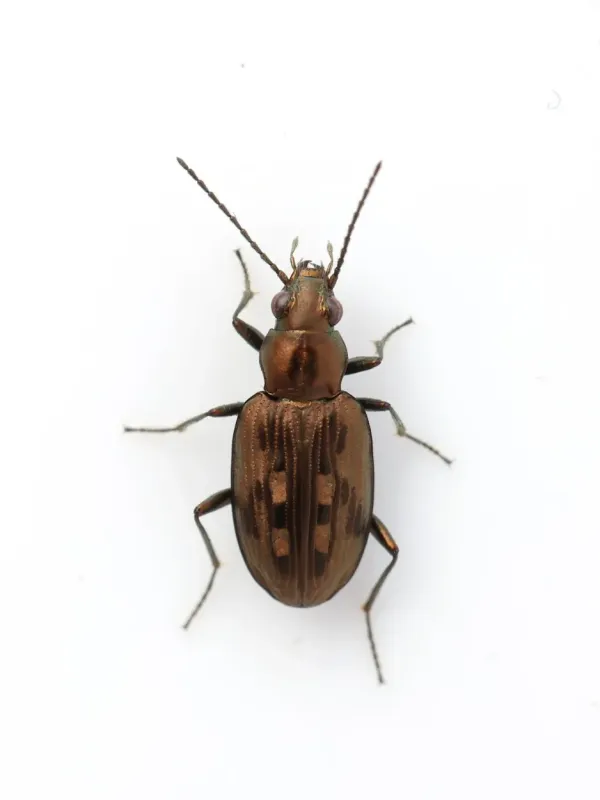
Description
How to identify
Bracteon litorale belongs to the Carabidae family, order Coleoptera. While ground beetles are primarily known as beneficial predators, some species, under specific environmental conditions, can be associated with damp habitats in agricultural fields and occasionally cause damage to young crops.
The adults are characterized by a typical carabid morphology: an elongated body, well-developed mandibles, and robust legs adapted for active movement on the soil surface. Their coloration is usually dark, sometimes with a faint metallic sheen.
The life cycle involves complete metamorphosis. Larvae develop in the soil, passing through several larval stages while remaining in the humid microenvironments of the soil profile.
This species is highly adaptable to variations in soil moisture, making it frequently found in reclaimed or low-lying agricultural lands where humidity levels remain high.
Biology of this species is tightly linked to the upper soil layers, which makes it a potential factor in the early stages of plant establishment.
What it damages
The damage is primarily caused to seedlings during the early vegetation phase. The pest may feed on the root system and the root collar of cereal and vegetable crops.
Crops in low-lying areas or fields with high soil moisture levels are particularly vulnerable, as these environments favor the presence and activity of the pest.
Damage to the roots disrupts the water and nutrient uptake of the plant, leading to stunted growth, yellowing of the leaves, and in severe cases, plant death.
The pest is not strictly host-specific, so it can impact a wide variety of cultivated plants, including forage grasses and commercial vegetables.
Economic damage is observed when the infestation leads to significant thinning of the plant population, necessitating re-sowing or emergency corrective measures.
When it appears
The activity of adults peaks in late spring and early summer, corresponding with the initial growth phases of most major agricultural crops.
Larval stages are most active in the soil during the first half of the summer, benefiting from favorable temperature and moisture conditions for development.
A second wave of adult activity may occur in late summer as the population prepares for overwintering within the soil profile or among crop residues.
Monitoring for this pest is best conducted through soil sampling and the use of pitfall traps placed in areas showing signs of seedling stress.
Fluctuations in climate conditions can significantly influence the emergence and activity patterns of this species, making site-specific monitoring essential.
Signs of infestation
The initial signs of infestation include patches of wilting or stunted seedlings, often concentrated in the moister parts of the field.
Close inspection of the root zone often reveals mechanical damage, such as bite marks on the root surface or partial destruction of the root collar tissue.
The overall crop development appears uneven, with patches lagging behind healthy sections, which often correlates with pest pressure in the soil.
The presence of adults on the soil surface, particularly under debris or in wet crevices, serves as a direct indicator of the species' activity in the area.
- Thinning of crop stands in low-lying areas
- Yellowing of lower leaves
- Stunted primary root growth
- Visible feeding marks on root collars
Control measures
Crop rotation is the fundamental method for managing populations of Bracteon litorale, helping to disrupt its life cycle in the soil.
Agrotechnical practices, such as deep plowing and regular soil cultivation, help to expose the larvae and adults to predators and adverse environmental conditions.
Optimizing irrigation management to avoid prolonged waterlogging of the soil makes the field environment less favorable for the pest's survival.
The use of systemic seed treatments is effective in protecting seedlings during the critical early growth stage from soil-borne damage.
Integrated pest management strategies should focus on maintaining natural biodiversity to encourage insectivorous birds and other predators that regulate ground beetle populations.
Taxonomy
- Latin name
- Bracteon litorale
- Order
- Coleoptera (beetles)
- Family
- Carabidae
- EPPO code
- BRTNLI
Discussion
No discussions yet — be the first.